The Rise and Fall and Rise of the Men’s Magazine
Esquire, GQ, Playboy, and MAMA
By The MAMA Editorial Board · August 25, 2026 · 18 min read
On a velvet beach far beneath the reach
Of those that come to pry and preach
The natural man that tried to stand is fallin'
Well, how long will it be before he sees
You own his legs, but his mind is free
Only you can tell, Miss Carousel
How long will he be crawling?
— Townes Van Zandt, "Fare Thee Well, Miss Carousel"
Curtis Yarvin once said Cthulhu may swim slowly, but he only swims left. A corollary: all culture eventually becomes fake and gay, and in due time all men’s magazines slowly slide into their final form: women’s magazines.
The question is why? How? Inquiring minds want to know. So, after semi-rigorously perusing nearly a century of archival magazine art, hunting for the funniest photos of fat swimsuit models and the most queer-psyoped think pieces masquerading as male culture, we have some thoughts and observations.
Inevitably, each of these stories comes with a multi-variant analysis: the death of print publishing, freely available pornography inflating the marketplace thereby devaluing nekkid ladies, and plummeting T-levels. Heck, maybe men just sat our white asses down and listened. Honestly, we care less about the why than the what. We’re reporters allegedly, and we are here to present the facts, and let God sort it out. And the fact is that, like some exorable law of publishing, every media company facing a crisis made the same pivot to femme it up, fag it up, and put a bird on it.
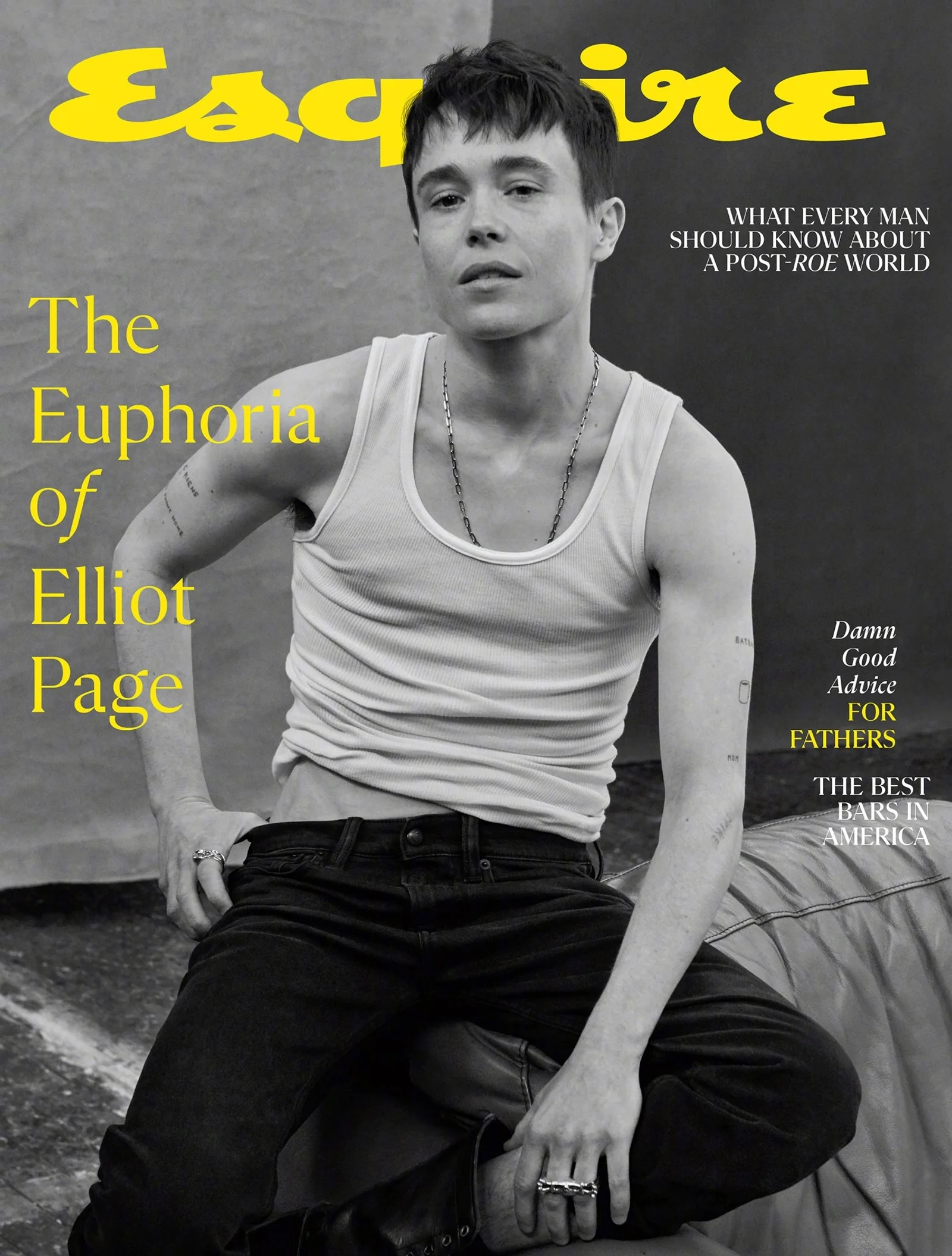
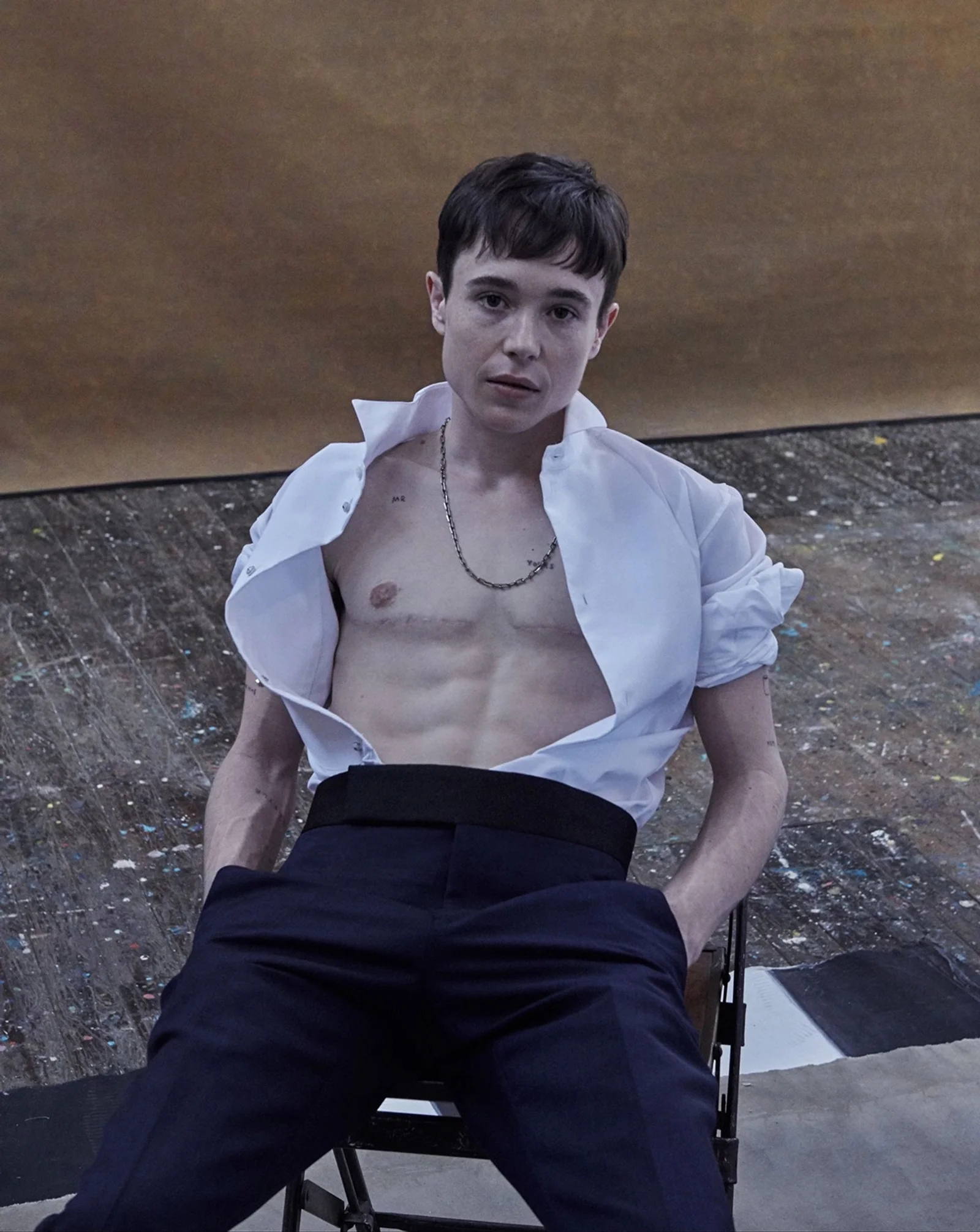
The final trans-formation took place in the Summer of 2022, when they ran a full cover story on “The Euphoria of Elliot Page,” paired with a smoldering Tiger Beat style photo-spread of Page showing off those new top surgery scars and posing like a boy band star in her new wiry gym physique.
ESQUIRE & GQ
“Esquire aims to become the common denominator of masculine interests….it never intends to become, by any possible stretch of the imagination, a primer for fops.”
— Arnold Gingrich, “Letter from the Editor,” Esquire, Issue #1
How did it come to this? How did Esquire, the OG “Quarterly for men” end up running beefcake spreads of Elliot Page’s top-surgery scars? Why did GQ go from Michael Jordan in a power suit to Pharrell in a floor length lemon-yellow Moncler ball gown? How did it all get so…um…foppish?
The likeliest explanation is that the “fruit” was in the seed, as it were. Both magazines were essentially born out of the fashion industry. Esquire was founded in 1933 as a consumer spinoff of Apparel Arts, a “shmatta”-biz trade rag for tailors and haberdashers, which itself later morphed into GQ. Their mission was to convince men that being really into clothes was actually quite masculine. They were selling suits. Esquire was an ad for the garment district, with a literary section.
And yet, they did a pretty good job, virtually inventing the men’s mag as we know it. Between the fashion spreads, their pages focused on the three B’s: brown liquor, boxing, and bullfighting — all presented with aspirational taste and intelligence.
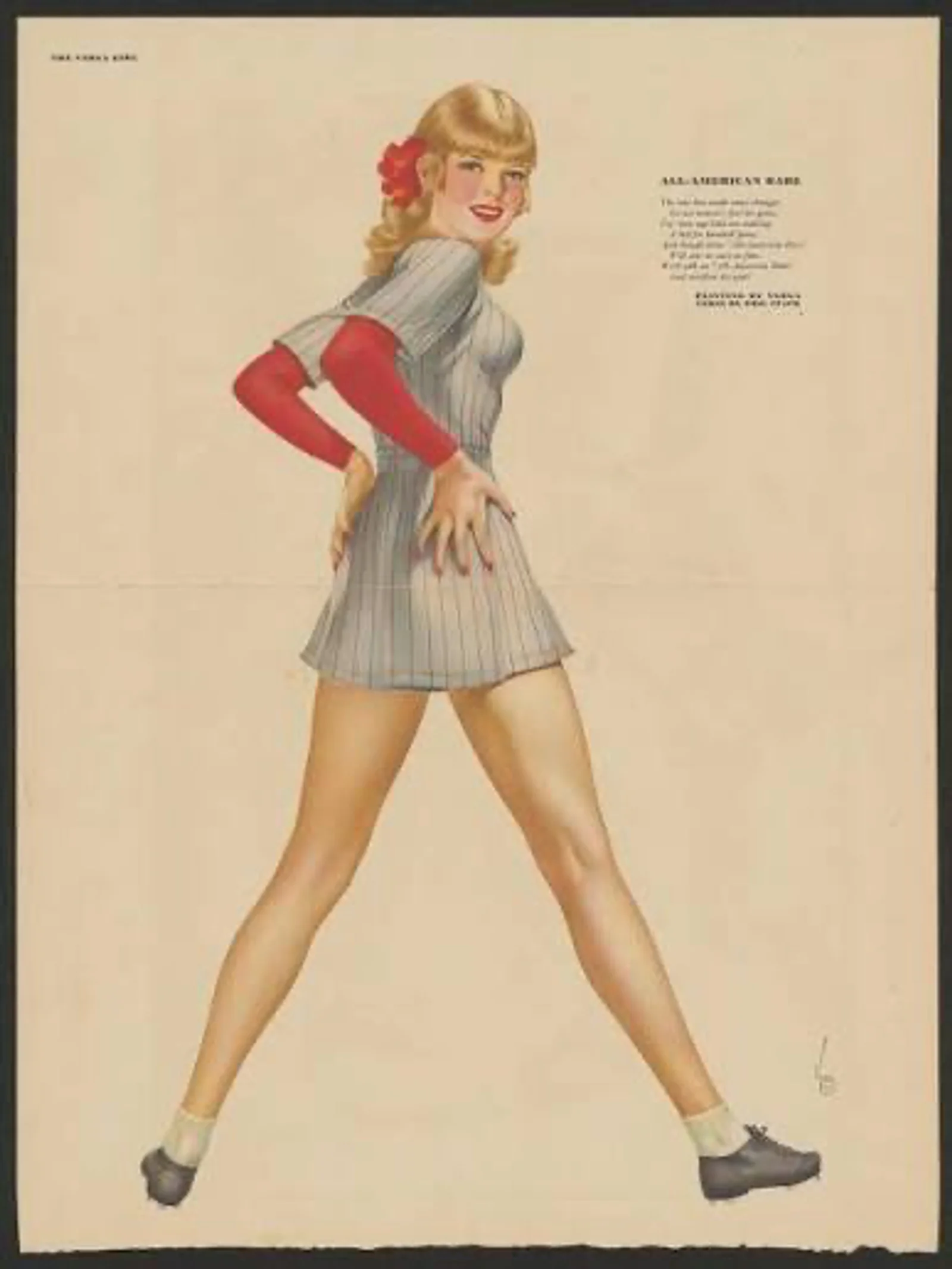
Hemingway was a totemic figure. They published him in the first issue, and in nearly every issue for the next three years. They created the first pin-up girls: sexy, iconic illustrations by Petty and Varga you’ve seen airbrushed onto the noses of WW2 bombers. These pics were so horny the Postmaster General deemed them too smutty and refused delivery, but Esquire went to the Supreme Court and won us the right to mail first-rate thirst traps.

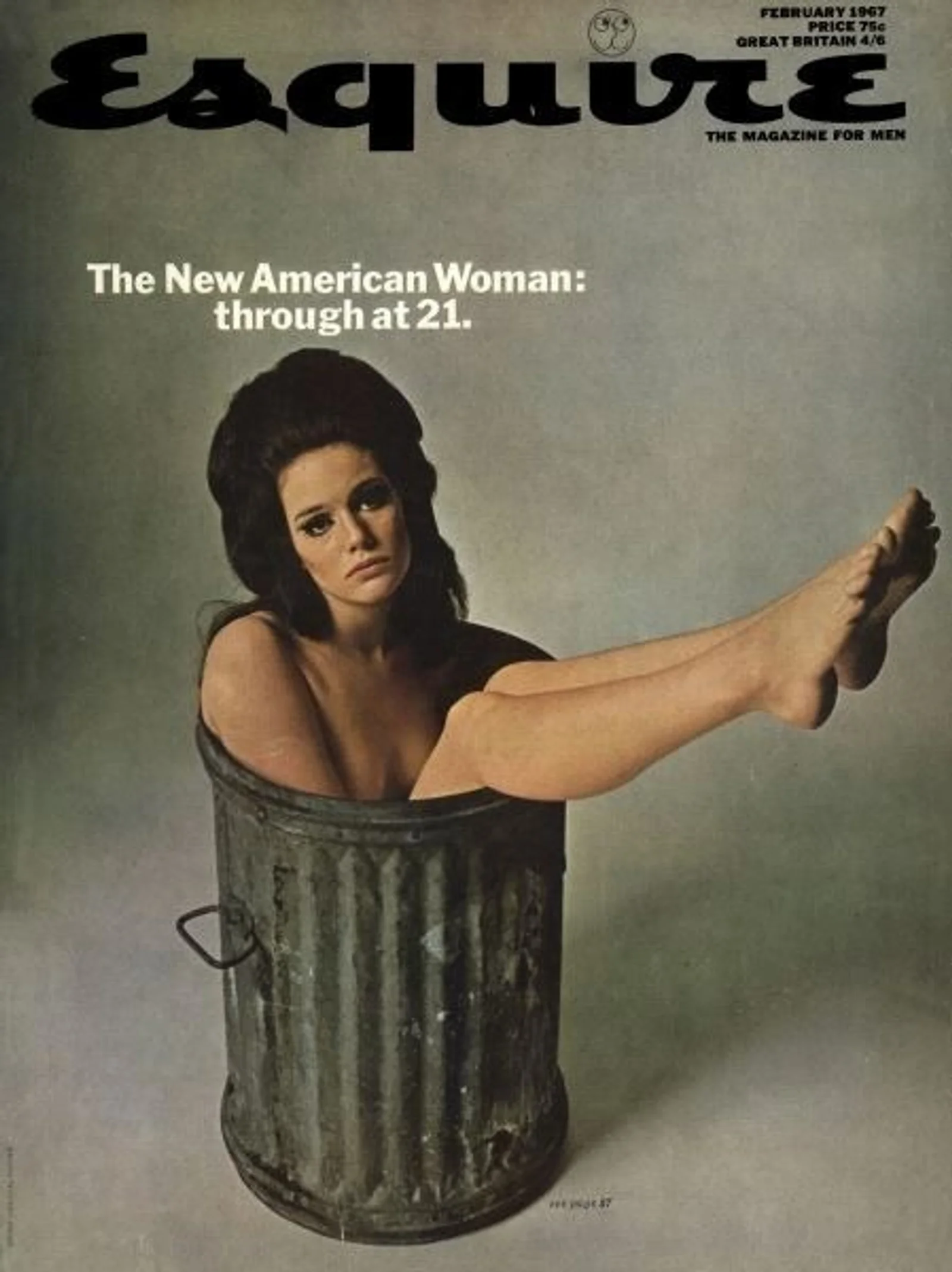
By the 1960’s, Esquire was the gold standard of male sophistication, and its writers were a who’s who of American male excellence. They published Updike, Vonnegut, Gay Talese, Tom Wolfe, Terry Southern, and Norman Mailer, helping give birth to the New Journalism movement. And under art director and ad legend George Lois (the original Mad Man), they addressed the emerging “battle of the sexes” like a smart man at a dinner party: amused, unbothered, and unapologetic. For Harlan Ellison’s article on the “New American Woman,” Lois put the model in a trash can with the phrase “through at 21.”
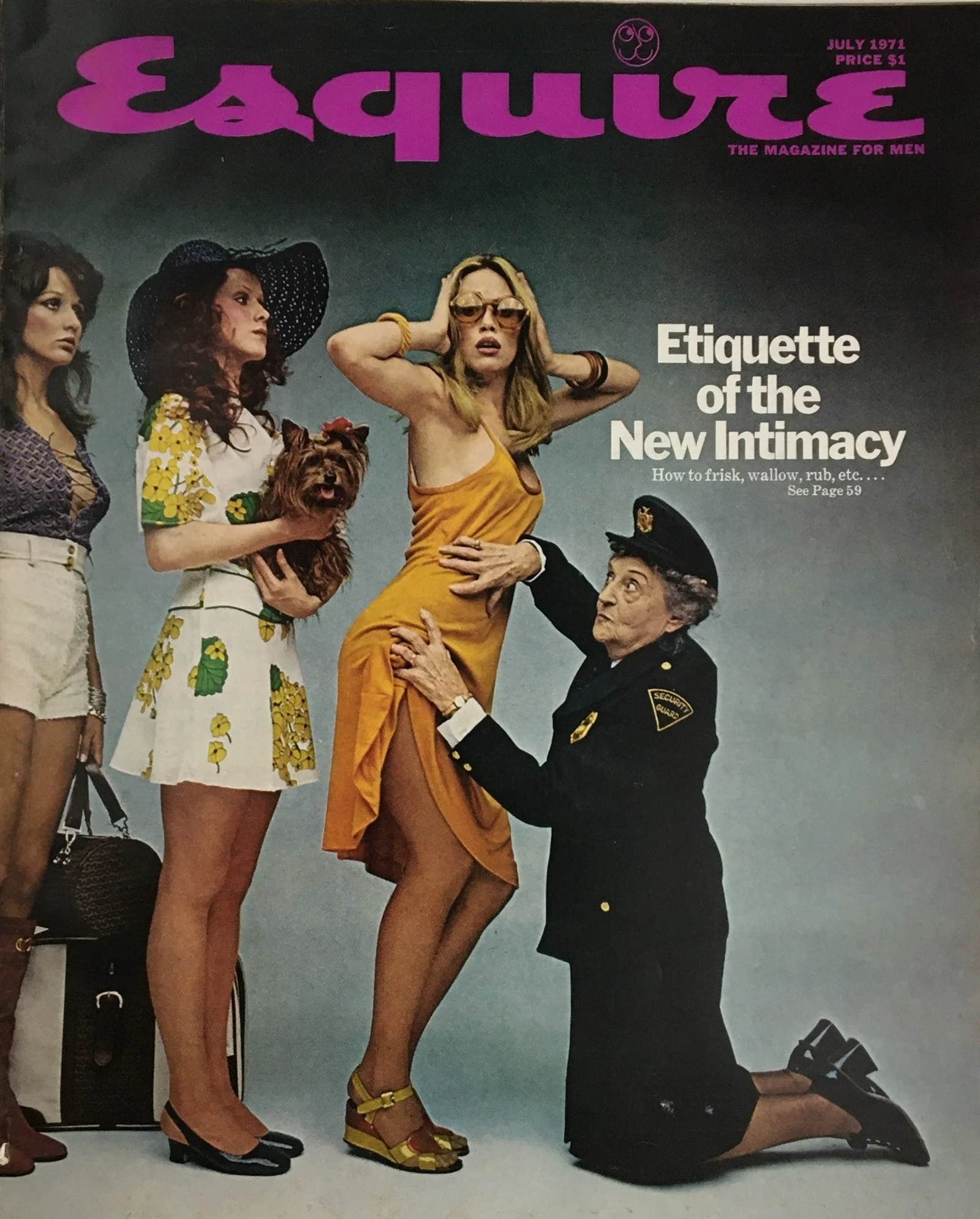
Flash forward to 2016, the year of our feminist reverend mother Hillary Clinton. By then, Esquire had taken a hard pivot and handed the keys to Jay Fielden, who founded Men’s Vogue under Anna Wintour. He immediately decided things gotta change around here. “There's no cigar smoke wafting through the pages," he declared, or perhaps cackled, “and the obligatory three B's are gone, too." The explicit plan was to add female readers in a new gender-fluid environment.
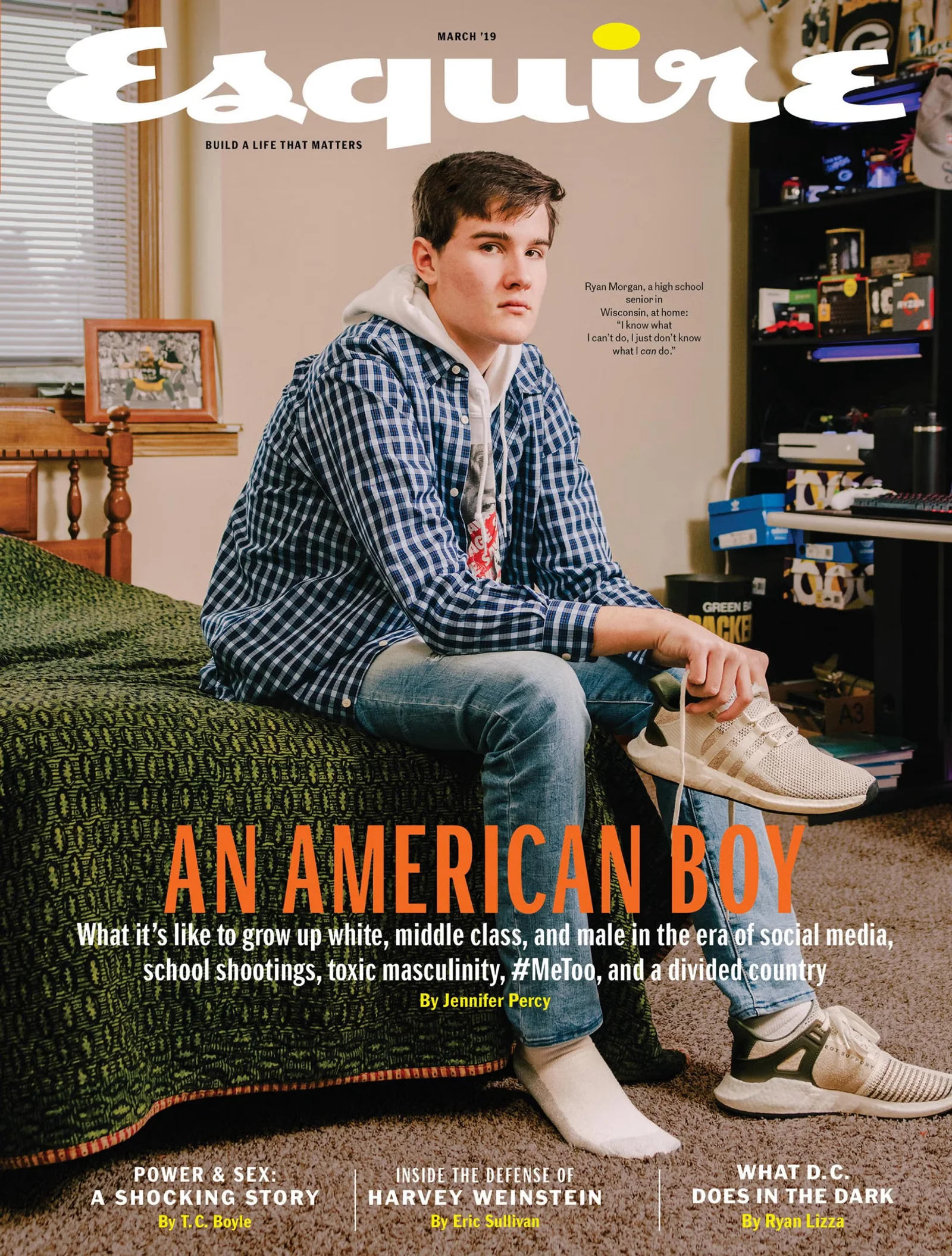
The apotheosis of this transition was the infamous American Boy issue. First note the new slogan. By then it had drifted from “The Magazine For Men,” to “Man at His Best,” and now, finally, to the ambiguous, genderless “Build a Life That Matters.” A picture of a sad, schlump-shouldered worried-looking boy came with a concern-trolling subheader about what it's like to grow up white and male in the era of toxic masculinity and #MeToo. This state of the modern young man piece was naturally written by a woman, Jennifer Percy, and she defended it from angry critics as proof of “how much work we still have to do to educate boys about inherited white male privilege.”
The final trans-formation took place in the Summer of 2022, when they ran a full cover story on “The Euphoria of Elliot Page,” paired with a smoldering Tiger Beat style photo-spread of Page showing off those new top surgery scars and posing like a boy band star in her new wiry gym physique. Esquire, father of the pin-up, now applied that grammar to a her-now-him, but not really, and for who? Other hers-became-hims? Hers who like him-former-hers? Not most men, anyway.
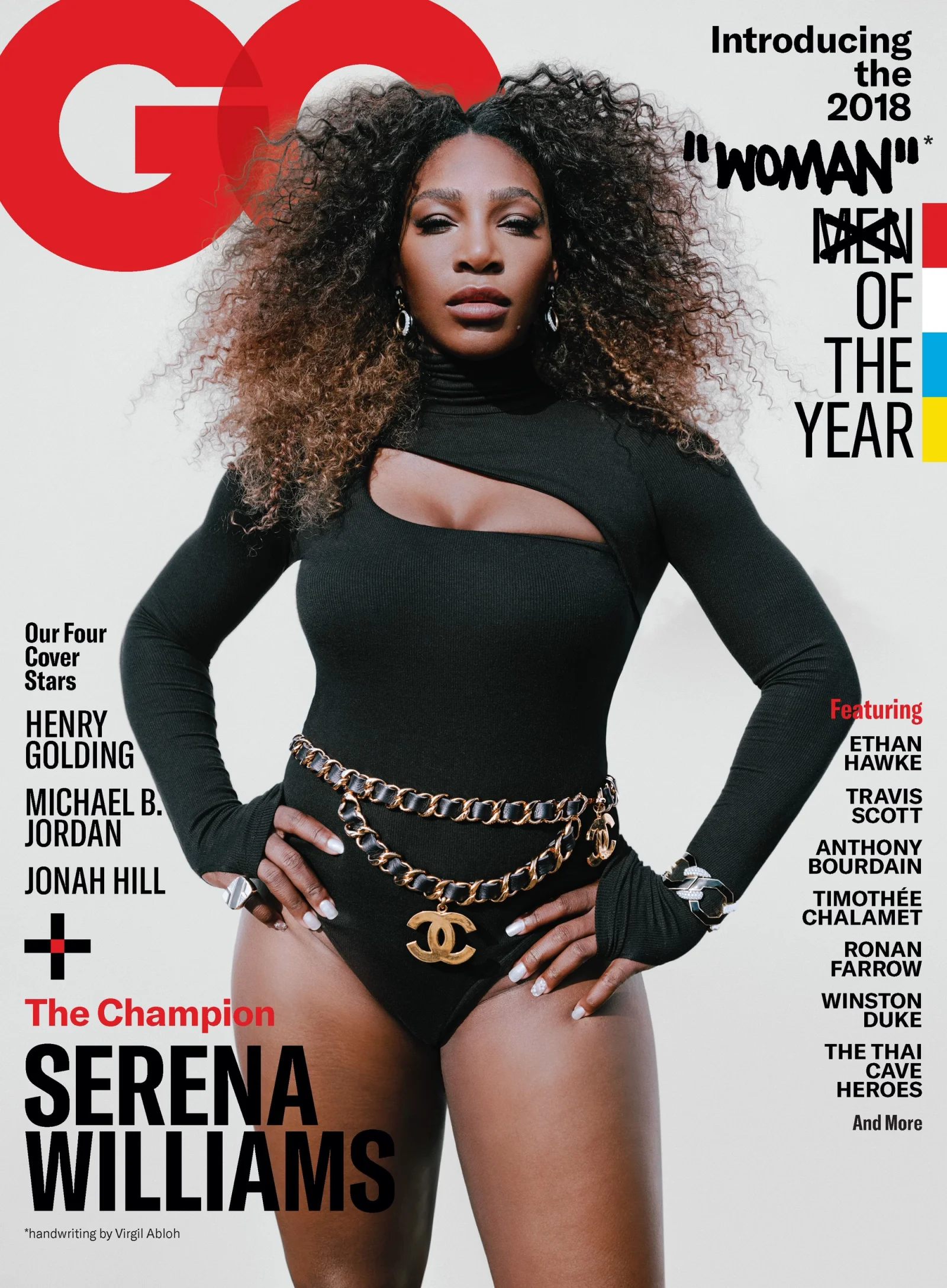
Meanwhile, GQ simply followed the fashion industry: queer, genderfluid, black, and gay, gay, gay. Editor Art Cooper had come up with the whole powersuit strategy in the 80’s to appeal to a decidedly male audience, using celebrity models known more for peak alpha dominance than their pretty boy faces. But by 2018, masculinity was on the societal chopping block. GQ’s annual “Man of the Year” went to Serena Williams, with the word “man” scratched out and replaced with “woman.” In 2019, GQ handed off their flagship to Will Welch, fresh off his pure-fashion spinoff GQ Style (which was already pretty advanced in terms of flaming faggotry).
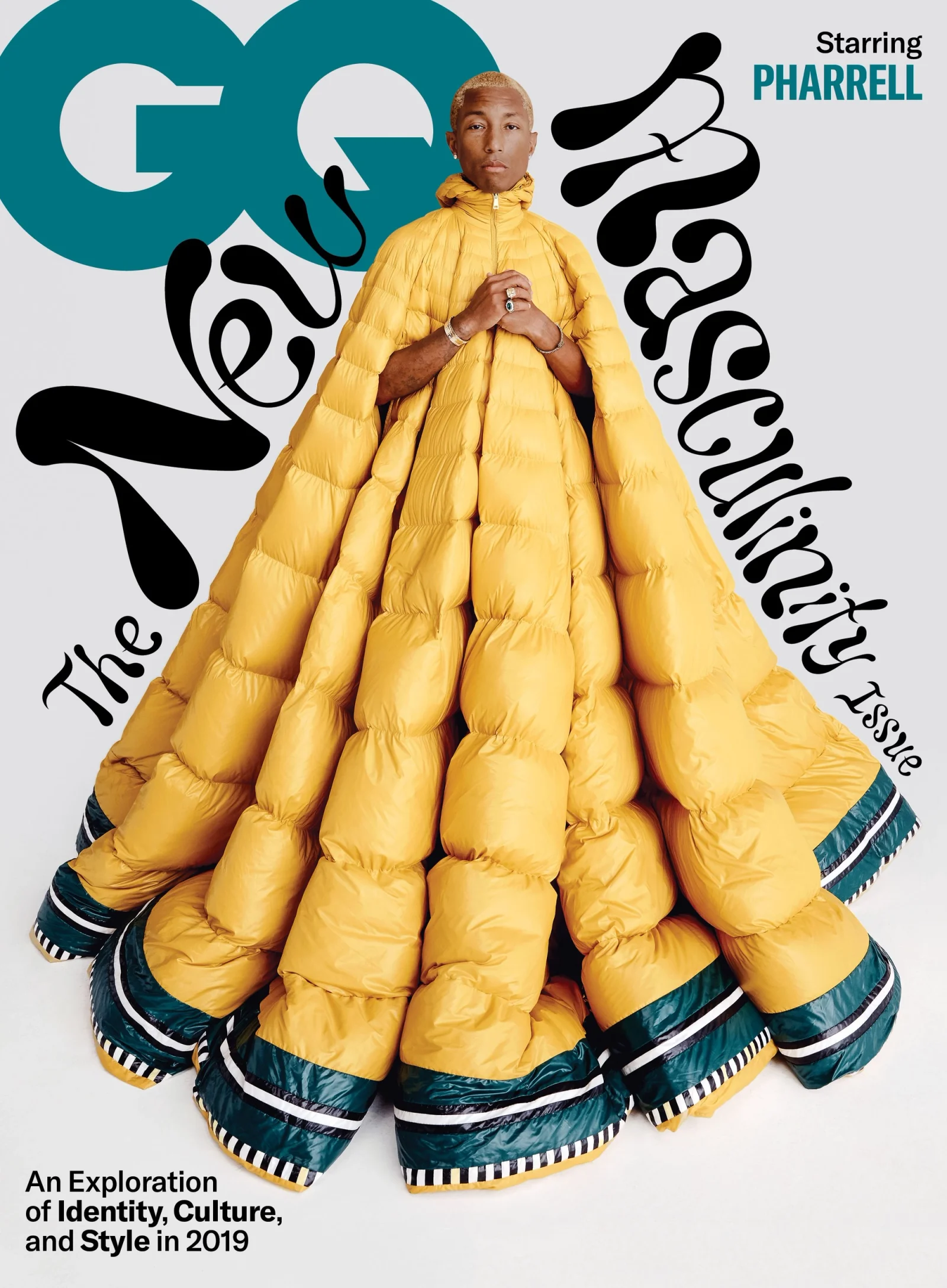
New editor Welch’s opening salvo was “The New Masculinity” issue, and he really threw it down. “If you’re not interested in fashion and style, you’re not gonna like this new GQ,” he stated, and promptly put Pharrell in a dress on the cover. Inside ran the beauty pages: "The Glorious Now of Men in Makeup.” Luka Sabbat, Billy Idol, Magic Johnson's son, all fully done up. EJ Johnson also wore a dress. It ran next to a series of interviews packaged as “Voices of the New Masculinity.” You know, new masculine voices like #MeToo's Tarana Burke, or Hannah Gadsby on “Why Men Should Be More Ladylike.”
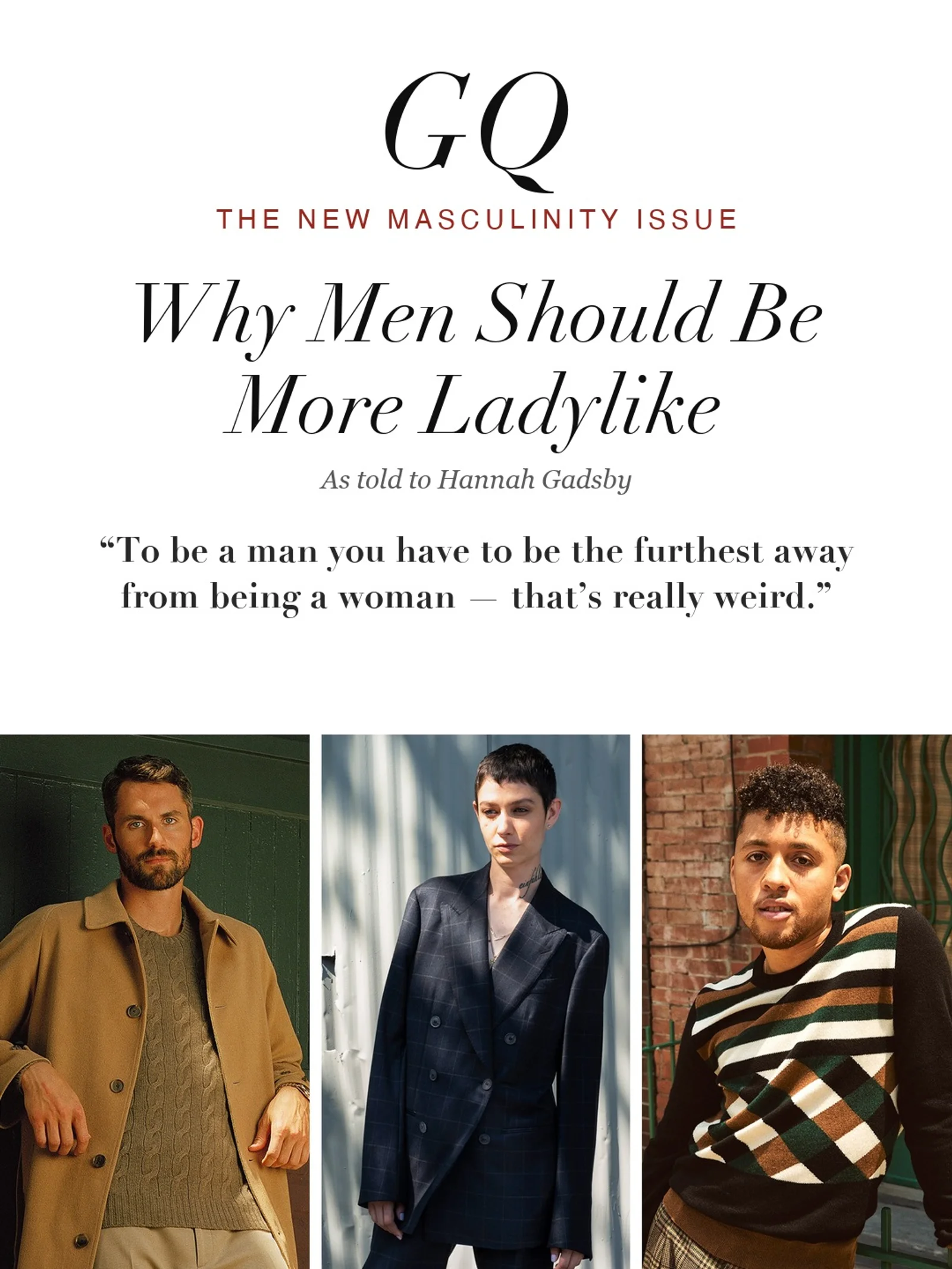
This was all probably inevitable. The fashion industry is, was, and forever shall be gay as a maypole. The suits and pin-ups were always the beard. Obviously, there was always a Queer Eye for The Straight Guy element, and we relied on our gay brothers to keep us well-dressed. They just dropped the “for the straight guy” part. In a sense, Esquire and GQ weren’t losing the plot. They were coming home. To their husbands.
PLAYBOY
“If you’re somebody’s sister, wife, or mother-in-law, and picked us up by mistake, please pass us along to the man in your life and get back to your Ladies’ Home Companion.”
— “Letter from the Editor,” Playboy, Issue #1, 1953.
“We simply cannot let discrimination be indulged and privilege weaponized to divide people. We need to take the time to listen and educate instead of coming from a place of pain and anger. Welcome to 2020. This is our vision for it.”
— “Letter from the Editor,” Playboy, “Equality” Issue, 2020.
Esquire may have been a “Magazine for Men,” but Hefner one-upped them. Playboy was “Entertainment For Men.” Hugh Hefner wasn’t selling apparel, or even girls, really. He was selling an idealized male lifestyle. The hi-fi stereos, the sweet bachelor pad, the killer record collection of Miles Davis and Frank Sinatra. And admittedly a lot of girls too, but only because that's what men find most…entertaining.
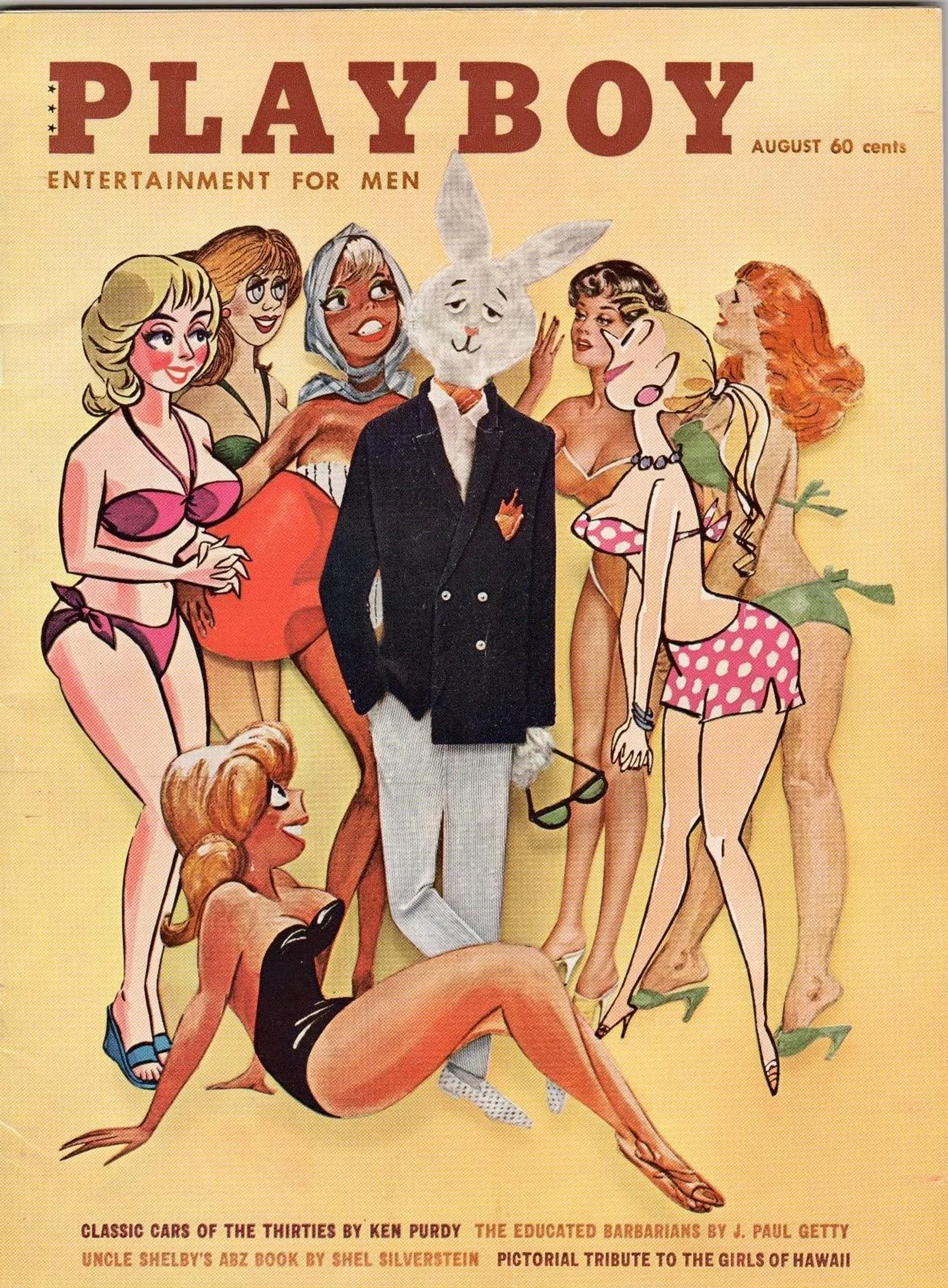
Like Esquire, that also meant great writing from Nabokov to world-class interviews with cultural figures like MLK and Ayn Rand, but their real prize jewel as a brand was the elevation of the pin-up to cultural monument, starting with Marilyn Monroe. For decades they had the highest quality nudes of the most beautiful women shot by the best photographers. Sexy, but with enough class not to scare off celebs like Farrah Fawcett, Sharon Stone, and Drew Barrymore. It wasn’t porn if you had good taste.
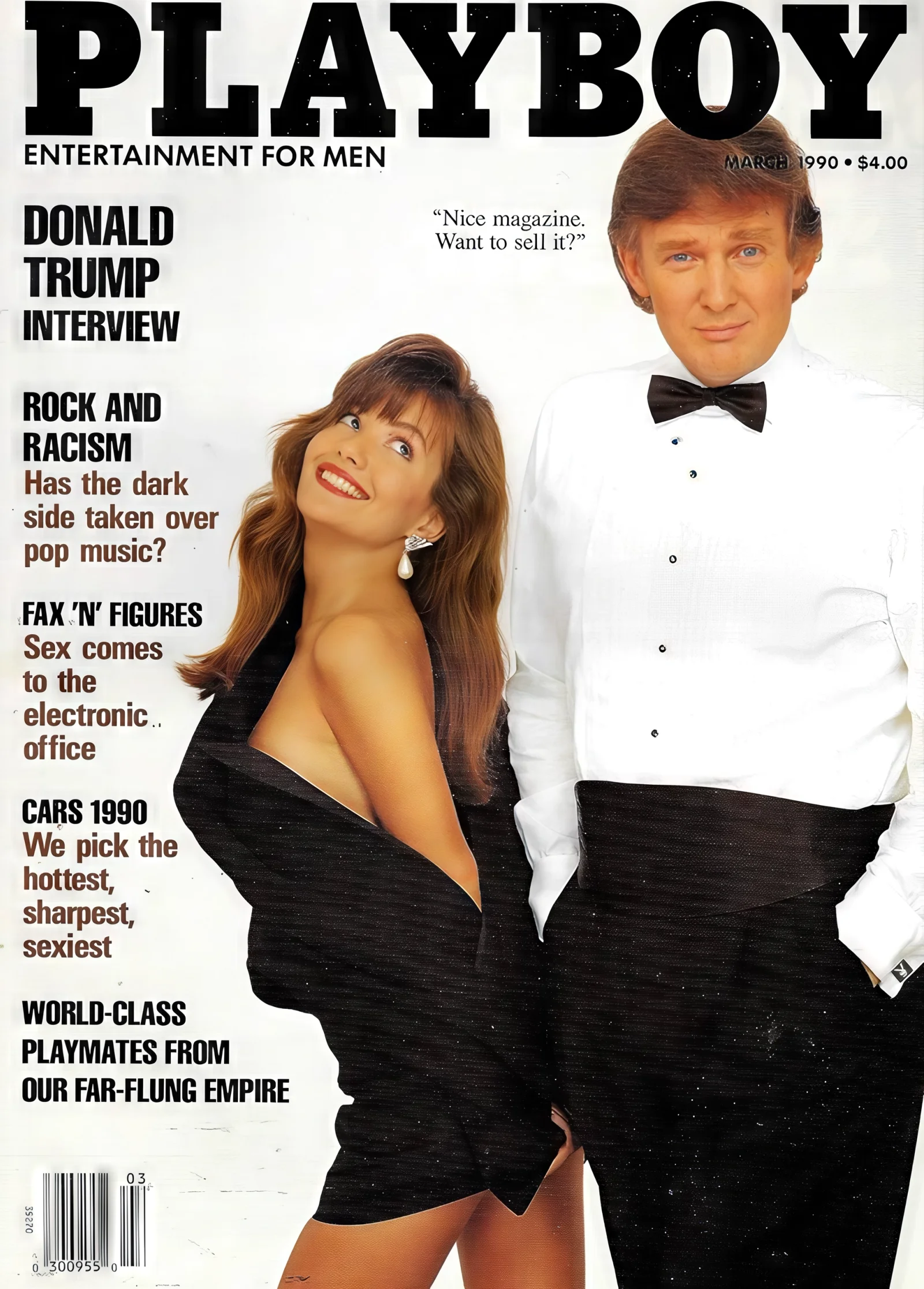
In the sunset years of Hefner’s life, things started looking tenuous. The magazine was struggling. The usual solution came down the pike. Make it less heteronormative. Stop being so toxically male. Appeal to women more. They dropped the bawdy cartoons. They dropped the party jokes. They dropped nudity. They even changed the tagline from “Entertainment For Men” to “Entertainment For All.” Everybody's invited, nobody's turned on.
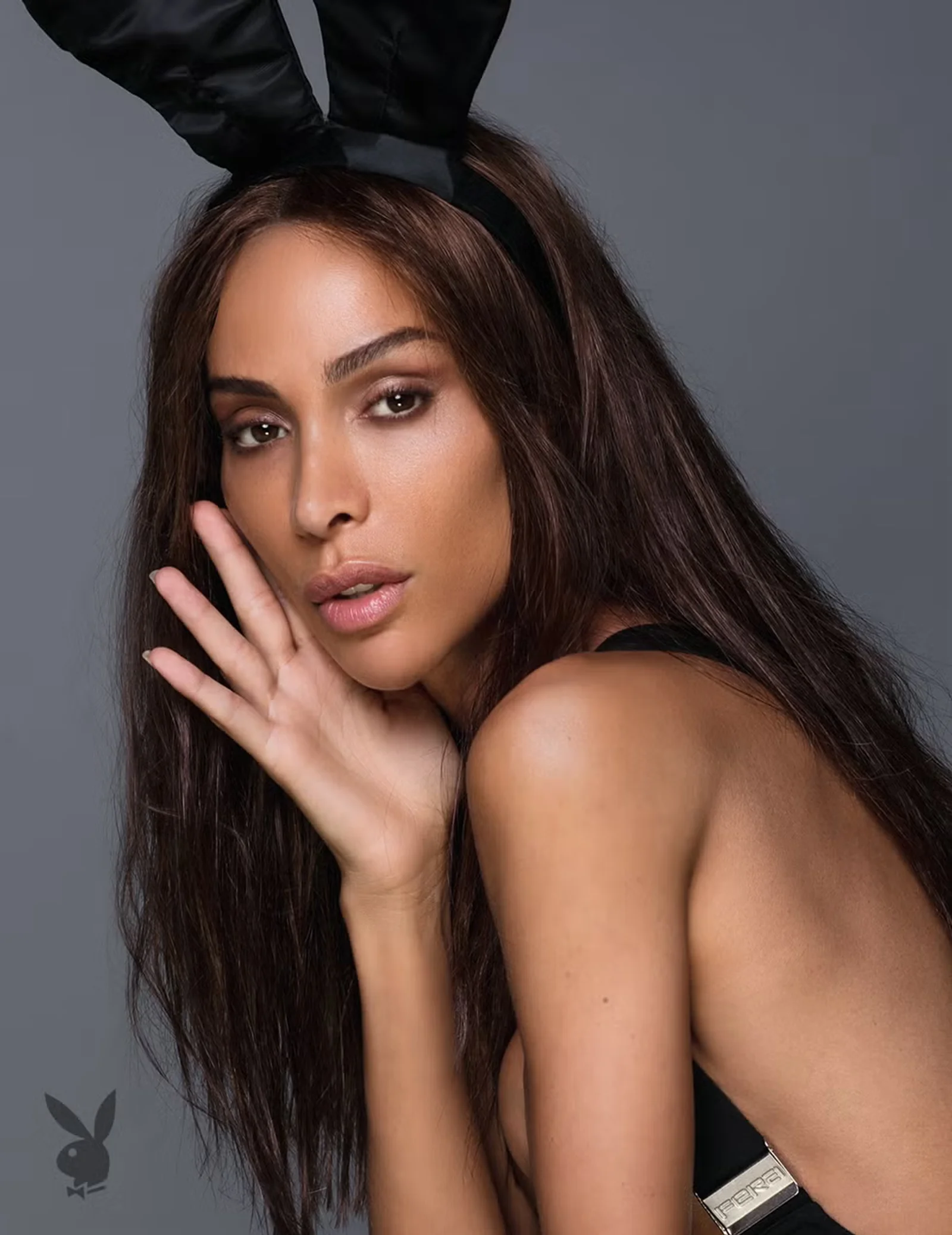
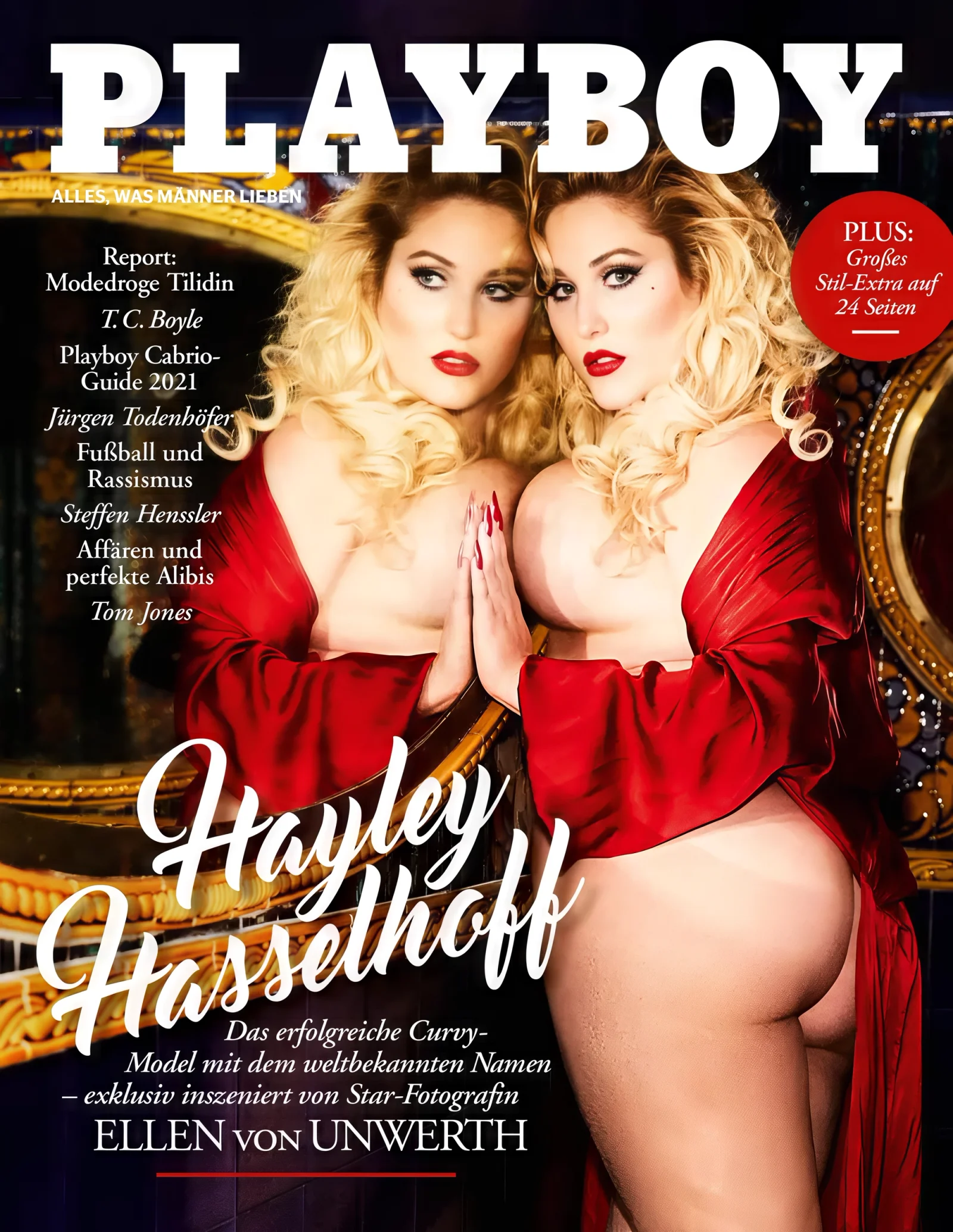
Then they put the nudity back (oops), but now with obese women and trans models. The first openly transgender Playmate, Ines Rau, dropped in 2017, quickly followed by Giuliana Farfalla. Playboy Germany ran a big spread with Hayley Hasselhoff, a fine fat heifer who may have been a more typical sex object back in Deutschland. Things are weird there, so we’ll cut ’em a break.
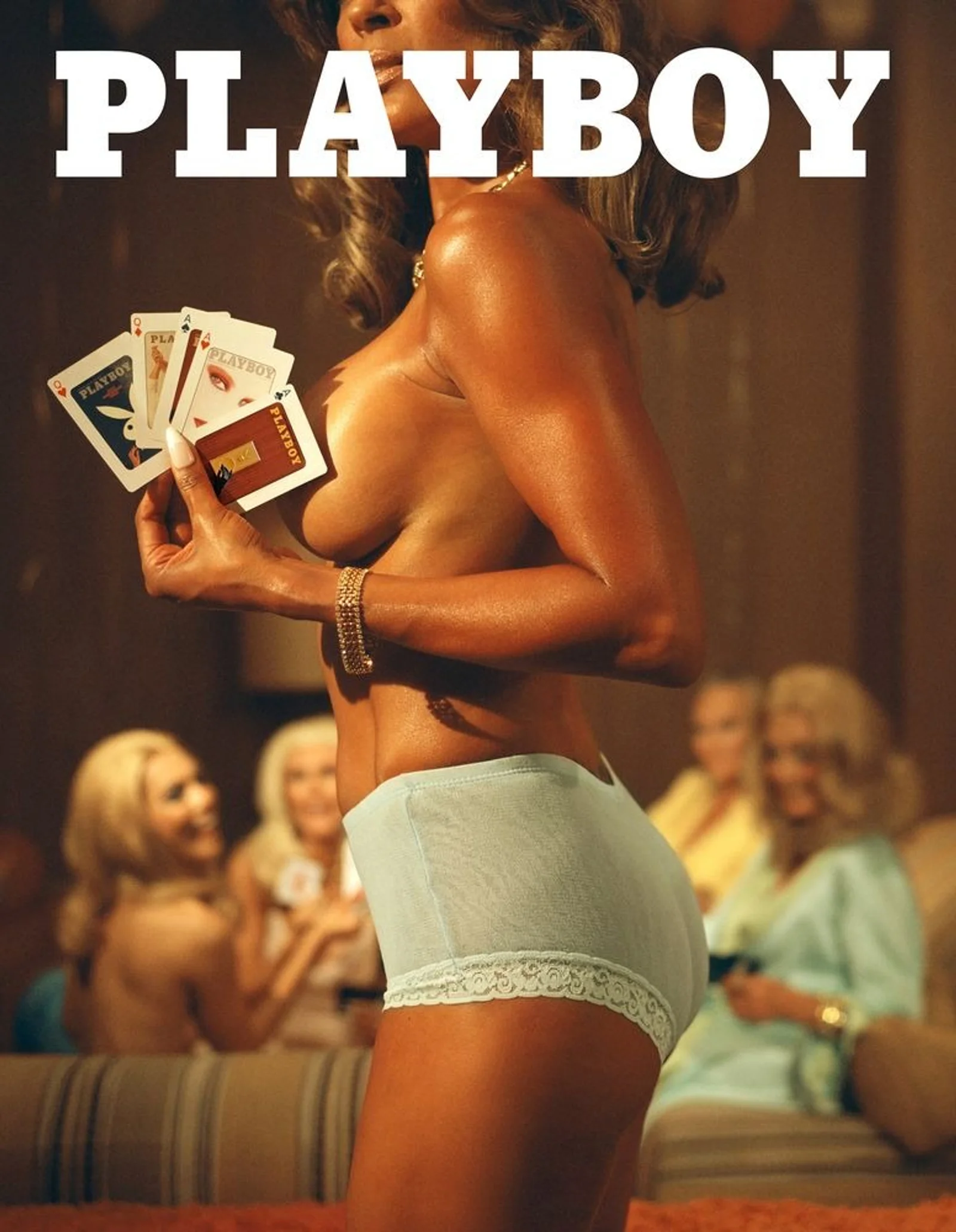
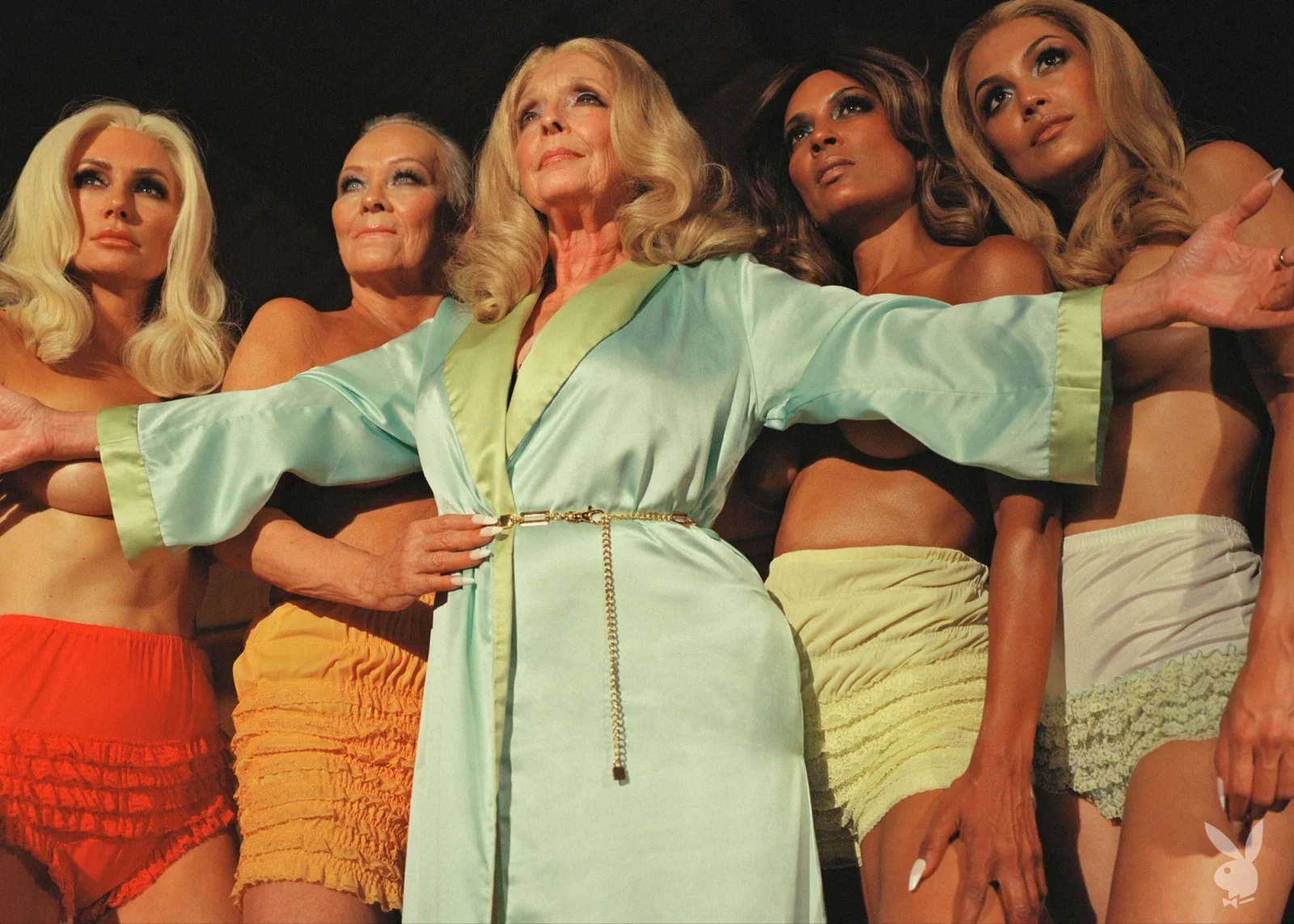
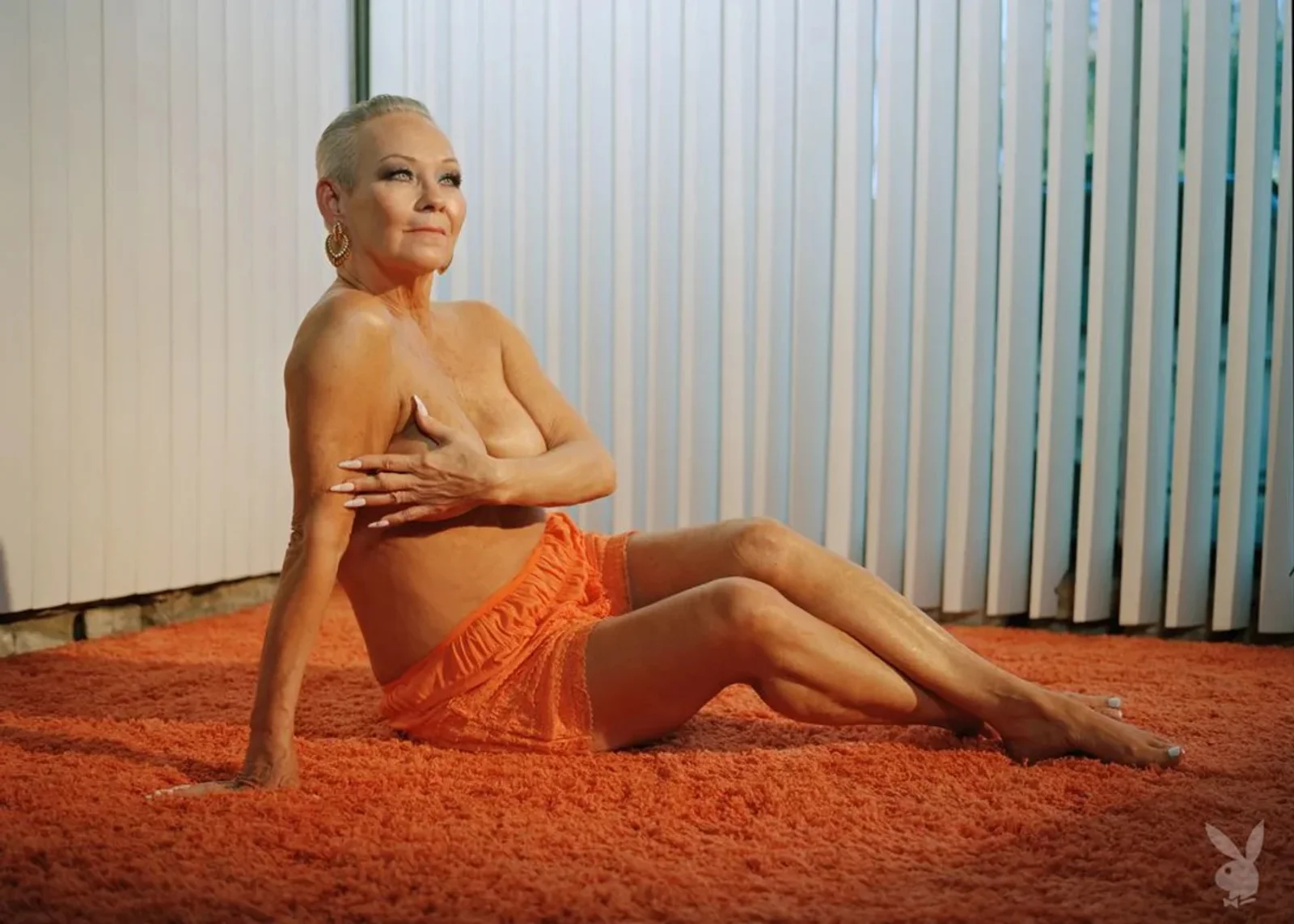
In the Winter of 2020, they launched the first (and last) Playboy "Equality" issue. It was bleak. Peak woke packed every page. They played all the hits. Think pieces by gender studies professions on abortion. Profiles of genderbending country musician Orville Peck and Katie Hill, the brave revenge-porn survivor. The letter from the editor declared that, “fighting for equality means actual visibility,” and they proceeded to make everyone visible we didn’t want to see. In a tour-de-force of audience hostility, their centerpiece was a 12-page spread of returning playmates that ran like an AARP sponsored special — five menopausal wannabe Marilyns, aging up to 77 (as a bonus, one of them was one of was a prominent Bill Cosby victim). All photographed by women. Playboy, once synonymous with the male gaze, now had none.
SPORTS ILLUSTRATED
“It really angered us. People were offended by her size and called her a plus-size model and fat and, ‘What is this girl doing on the cover of SI Swimsuit?’ . . . [It] was the tipping point for the brand and for us as an editorial team where we realized, ‘Enough is enough. Women have been picked apart long enough, and we certainly don’t adhere to a single vision of beauty.’”
— MJ Day, Editor of Sports Illustrated Swimsuit
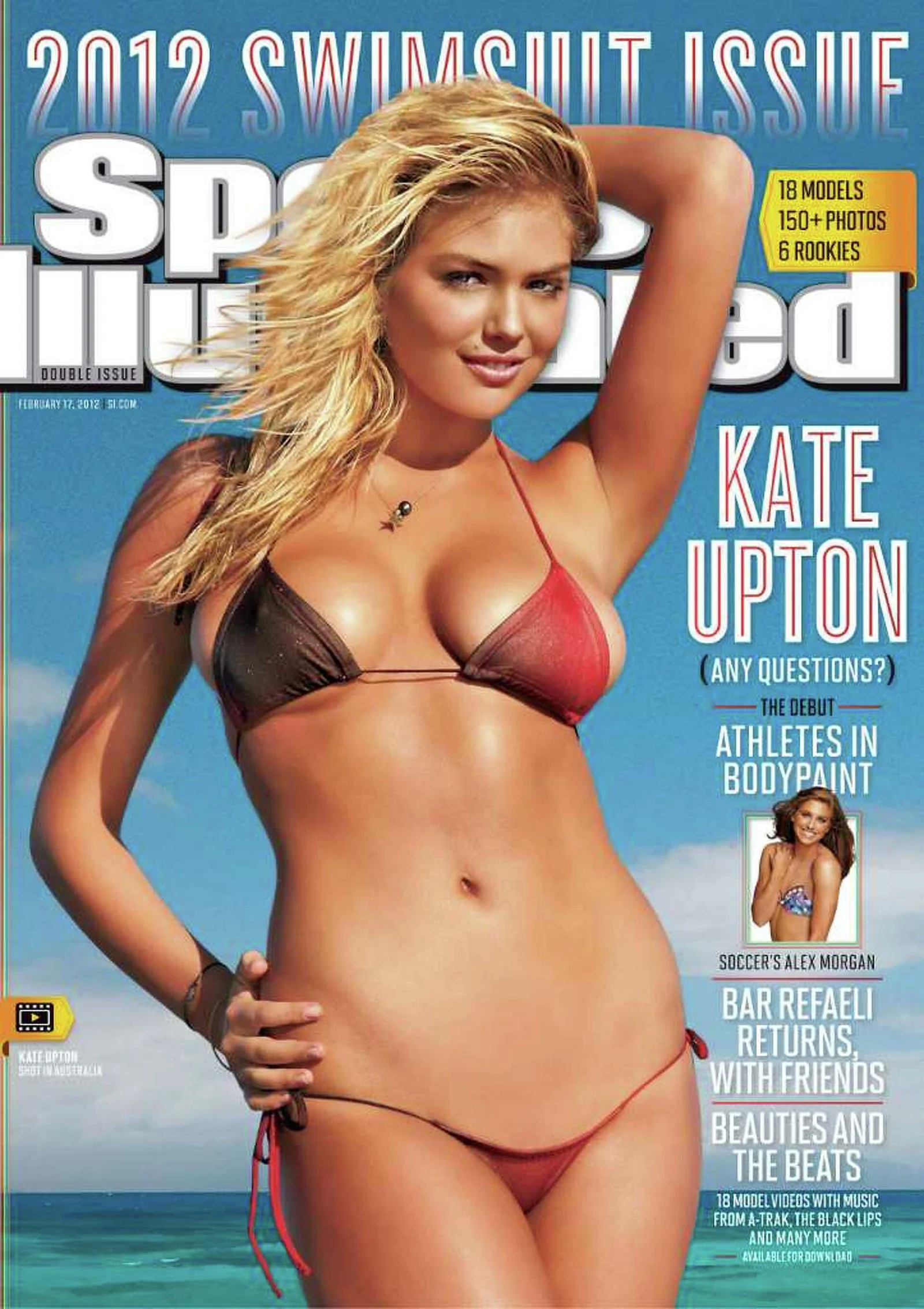
Meanwhile, Sports Illustrated’s misguided and cursed re-brand of their annual Swimsuit Issue went on a similar anti-diet, and stands out as one of the more instructive examples of the new gynocracy cucking everything we hold dear. In 2012, after a voluptuous tit-spilling photoshoot, some meanies on the internet called Kate Upton fat. So when new editor MJ Day took the mantle in 2014, it was an opportunity for her and her millennial staff to DO SOMETHING ABOUT IT.
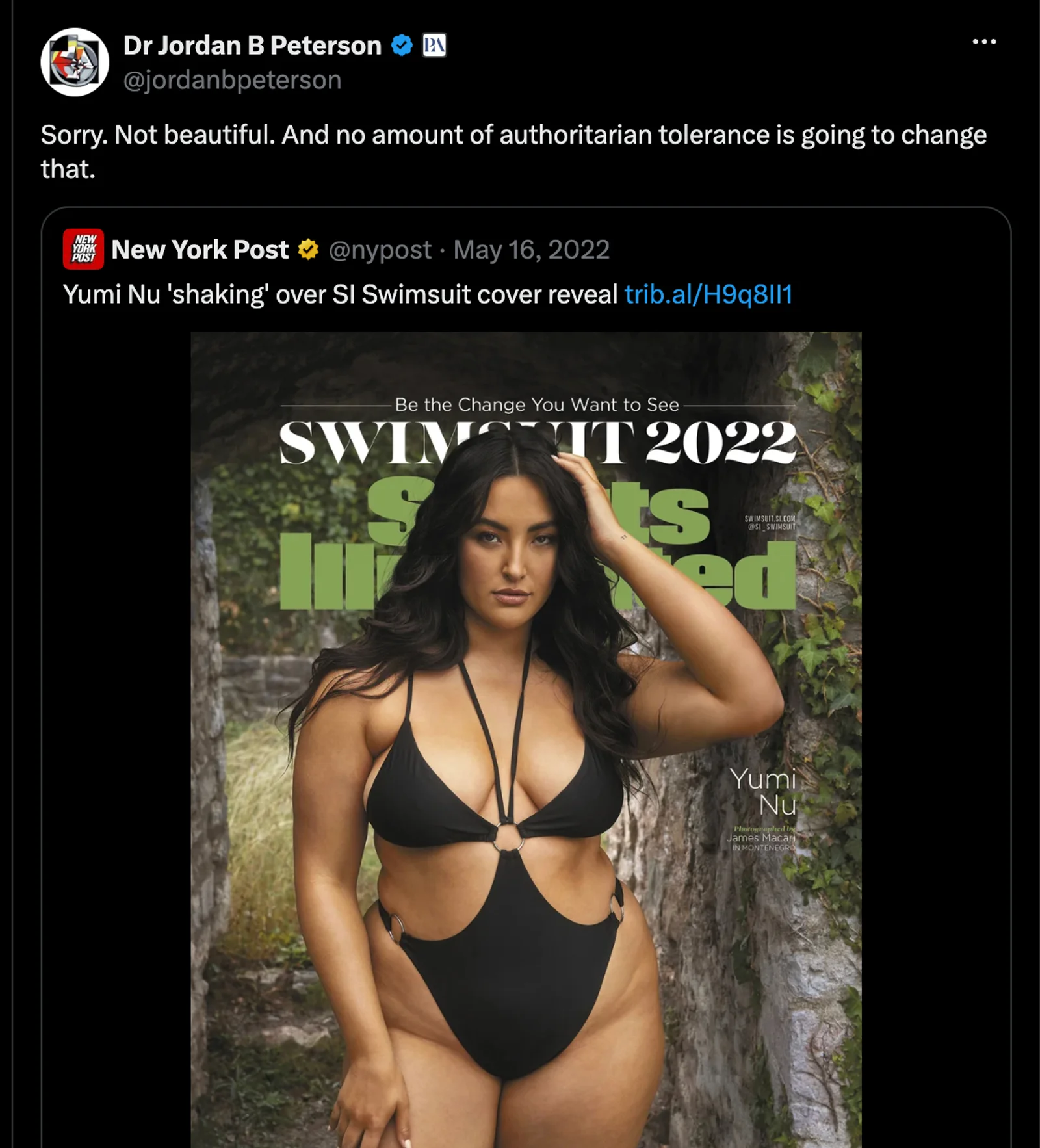
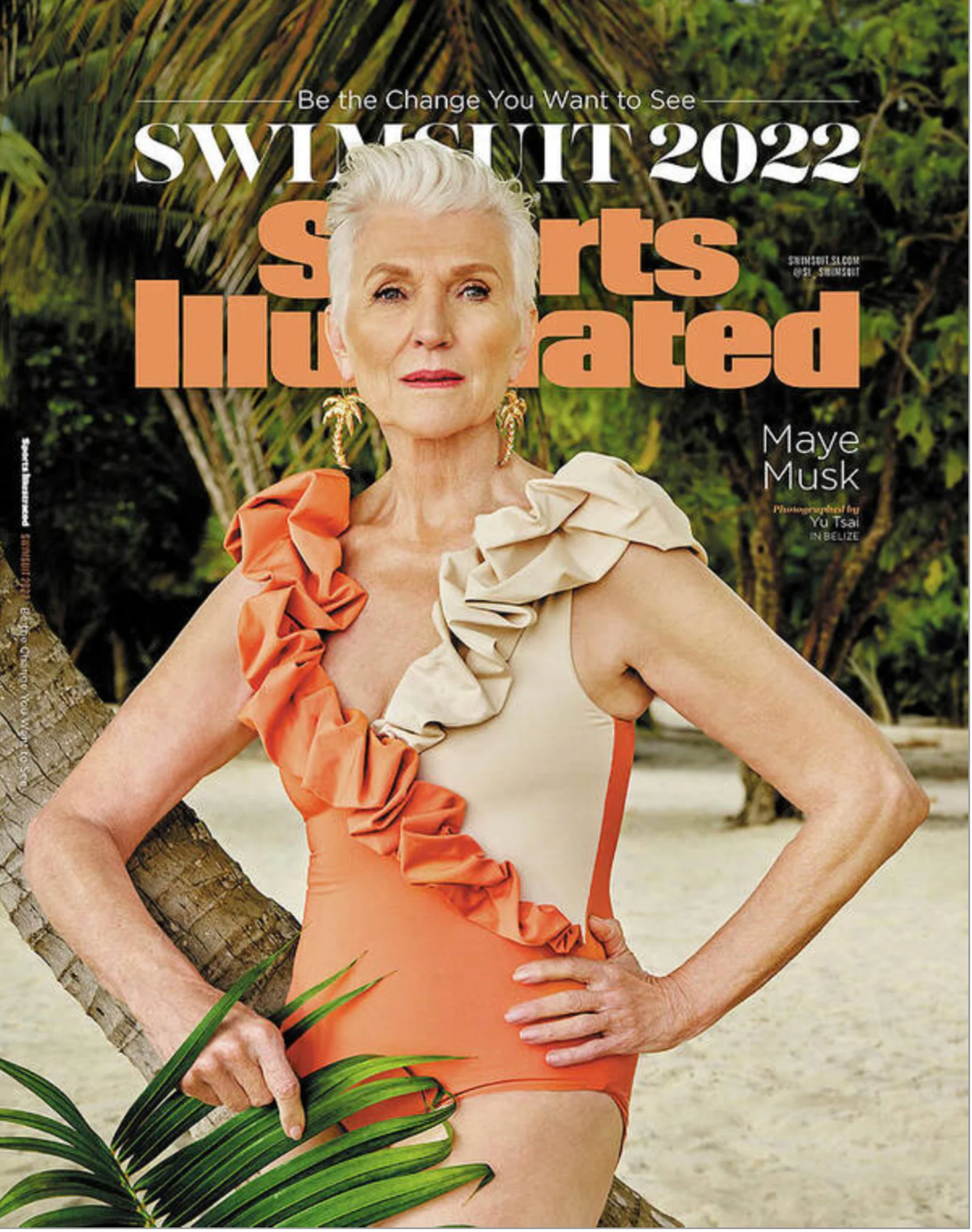
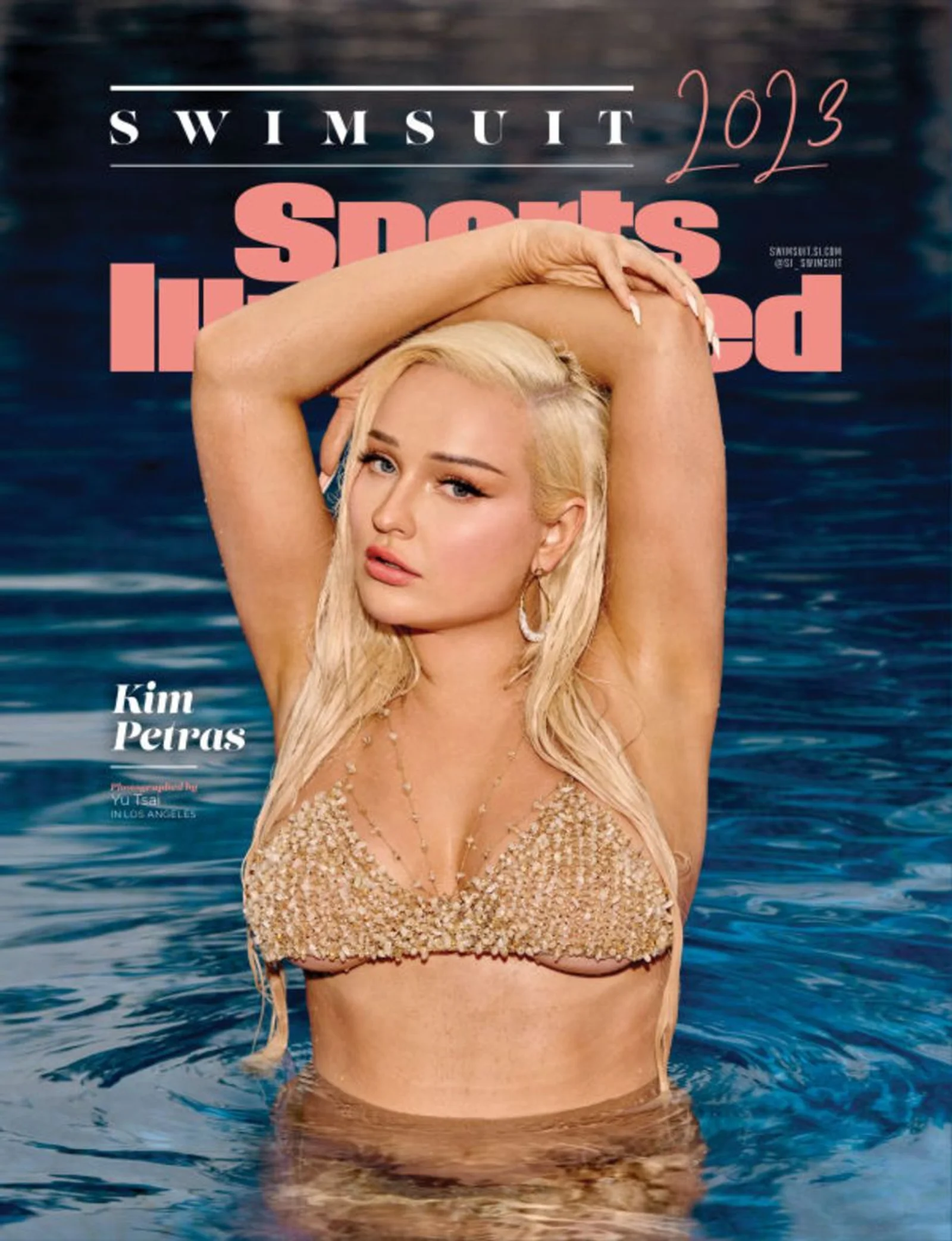
So, despite the annual swimsuit spread being the best-selling issue of an already 80% male magazine, things started getting “body positive,” AKA fat. It began with Ashley Graham, the first plus-size cover girl, in 2016. Then, bigger, Hunter McGrady, billed like a circus freak as the curviest model in SI History. And bigger, Yumi Nu, a model so chunky she broke Jordan Peterson’s brain (again). That same issue delivered their first septuagenarian, 74-year-old Maye Musk (yes, Elon’s mom). Martha Stewart broke the record next year at 81, sharing the cover slate with the trans pop star Kim Petras, in an issue we hereby dub, “The Granny and the Tranny” issue.
MEN’S HEALTH
Men’s Health, like bodybuilding, men’s wrestling, and nazi “body beautiful” aesthetics, was probably always pretty homosexual. It had serious “down low” energy. Each “cover story” was exactly that—the kind you need for wifey, that is. It was the one about why you, her straight male husband, were collecting a magazine whose monthly photo sets featured fully oiled, hairless, perfect male torsos. The New York Times described its philosophy as using "the formula of best-selling women's magazines” by catering to readers’ anxieties about their bodies. Very sus.
The downlow-ness of Men’s Health was best exemplified in their unspoken relationship with their audience. Plausible deniability requires two parties to participate in the pretense. It's gotta swing both ways. That’s why the girl asks if you “want to come up for a cup of coffee?” not, “do you want to come up and fuck?” You both know what she means, but if the feeling’s not mutual, everyone involved can walk away socially unscathed. Maybe she really just wanted to have that cup of coffee.
To the point: the Men’s Health 44-question reader survey, notably never asked about sexual orientation. What magazine doesn't want to know “who its readers are?” PinkNews accused Men’s Health of gay erasure. They didn’t understand. Men’s Health didn't want to know how many gay readers they had. They knew, they just didn’t want the receipts. Plausible deniability was the beating heart at the core of gay titillation. That was the entire point.
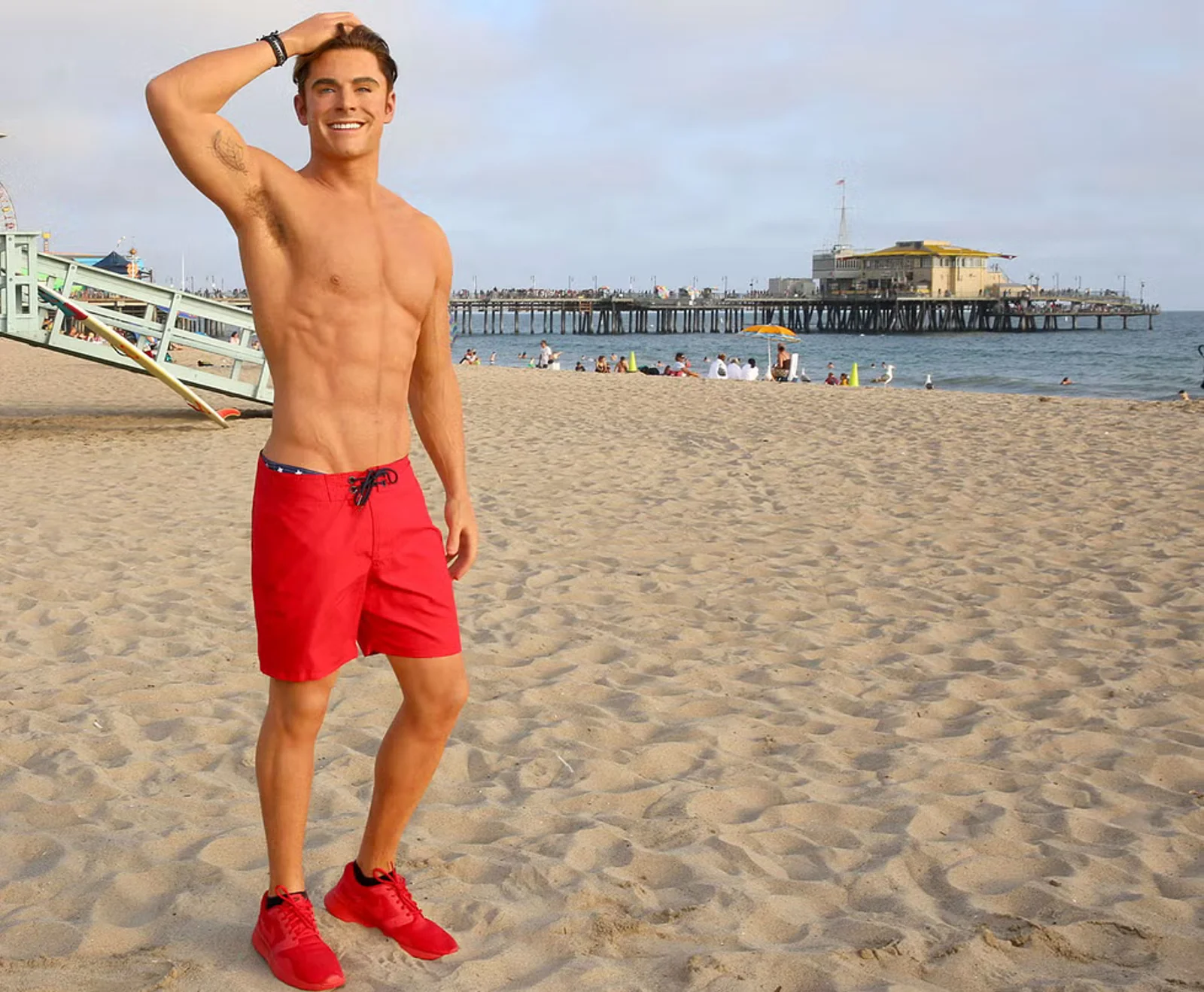
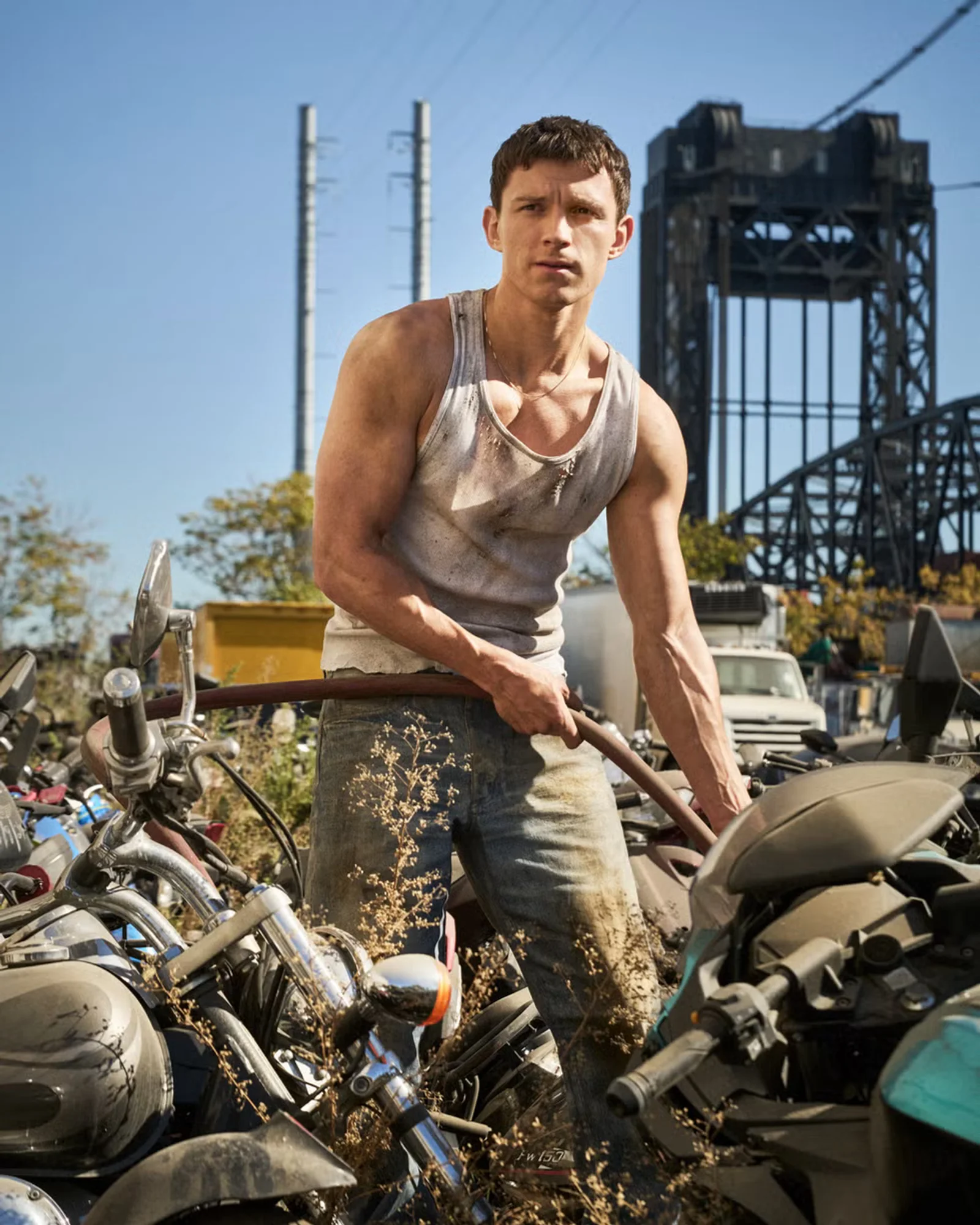
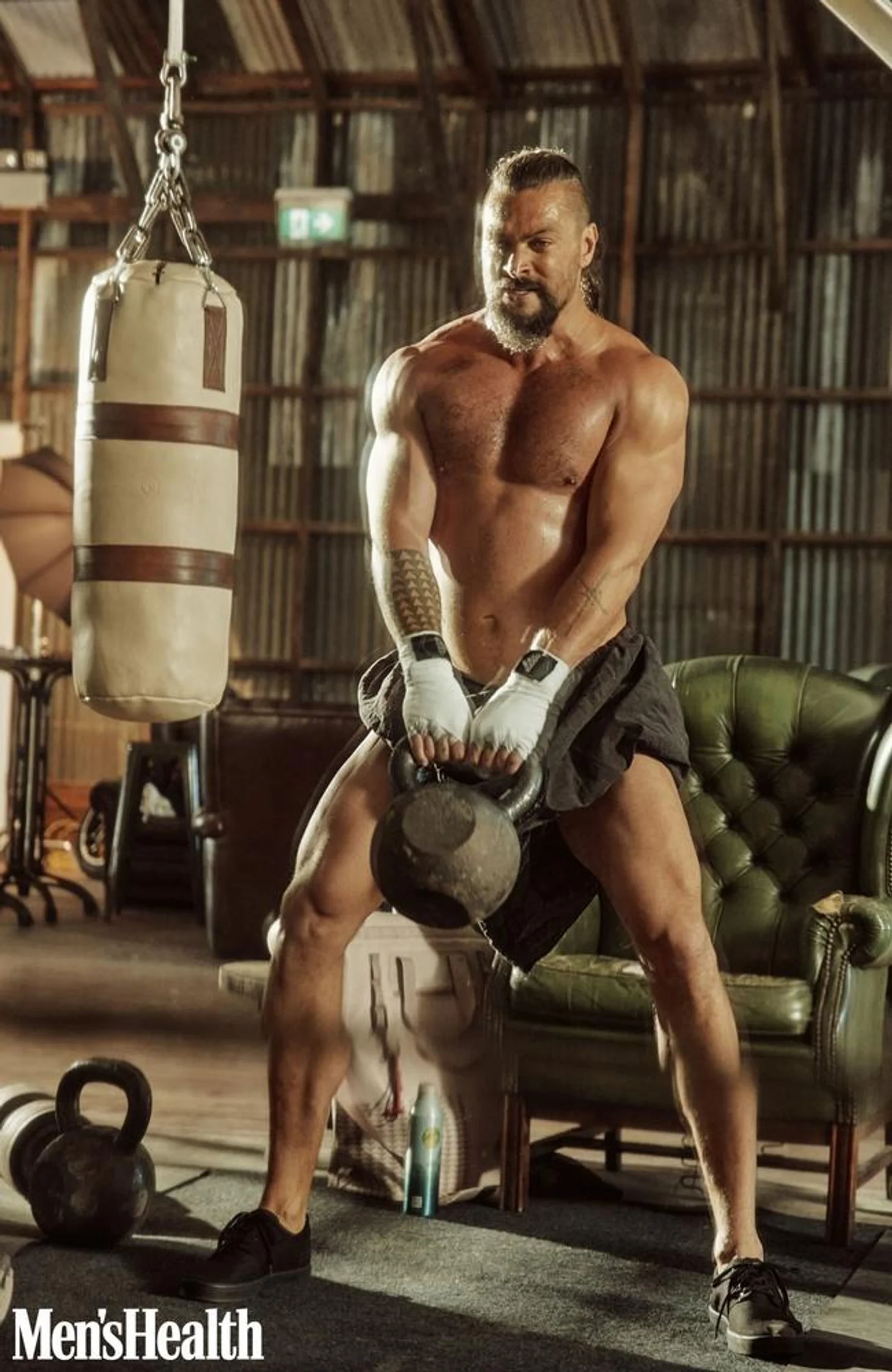
And this plausible deniability wasn’t just between the magazine and its readers, the benefits extended to the parade of celebrities gracing its pages. Men’s Health was where you could get the best look at glistening, shirtless, famous hunks and twinks this side of a Bryan Singer pool party. Zac Efron’s Baywatch bod, Tom Holland as a construction worker in Prada jeans, shirtless Jason Momoa’s grunting expression as he swung a kettlebell at pelvis height with the overhand grip of a sweaty facefuck. Maybe these weren’t for jacking it, and straight guys just really want to look at those pictures and aspire.
You can’t really complain about the gayification of something that’s already gay. However, once the magazine moved online, Men’s Health’s deniability got less and less plausible. An obsession with anal sex began to emerge, with pieces on “Love Butt Stuff? Here are the 4 Best Pegging Positions,” and "Americans Wants to Try More Anal Sex and Bondage and We’re All For it” and “The Male G-Spot is Real." It had evolved from a health nut mag made by a couple guys from rural Pennsylvania who just really liked organic gardening and having great abs (and there’s nothing gay about that), to a content pipeline that would raise eyebrows in Out magazine. The jig was fully up, which is a shame, because we all know homosexuality is way more fun when it's sneaky and subtextual. We all miss when it was our little secret, don’t we?
THE LAD MAGS
We come not to bury Maxim, but to praise it.
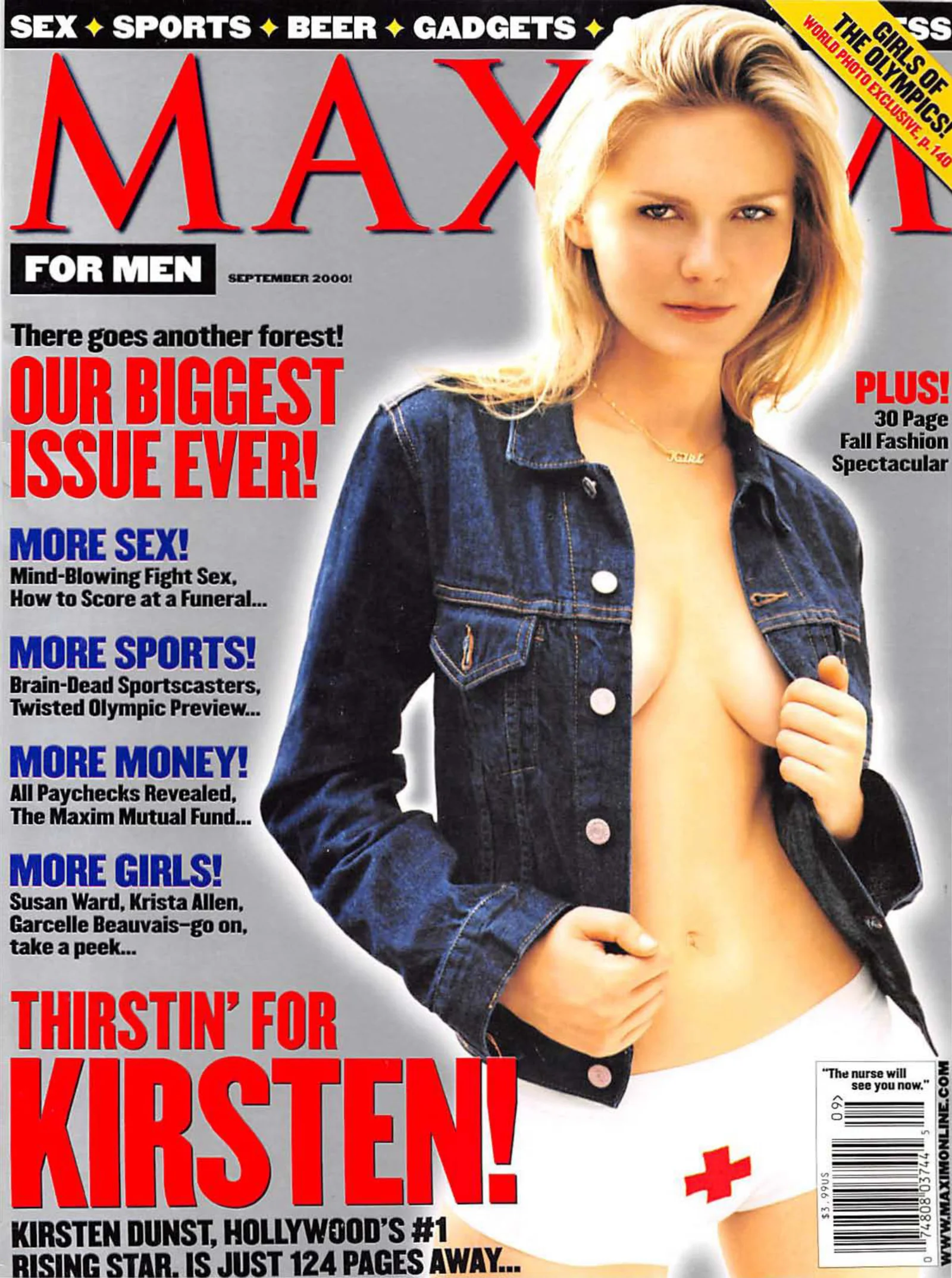
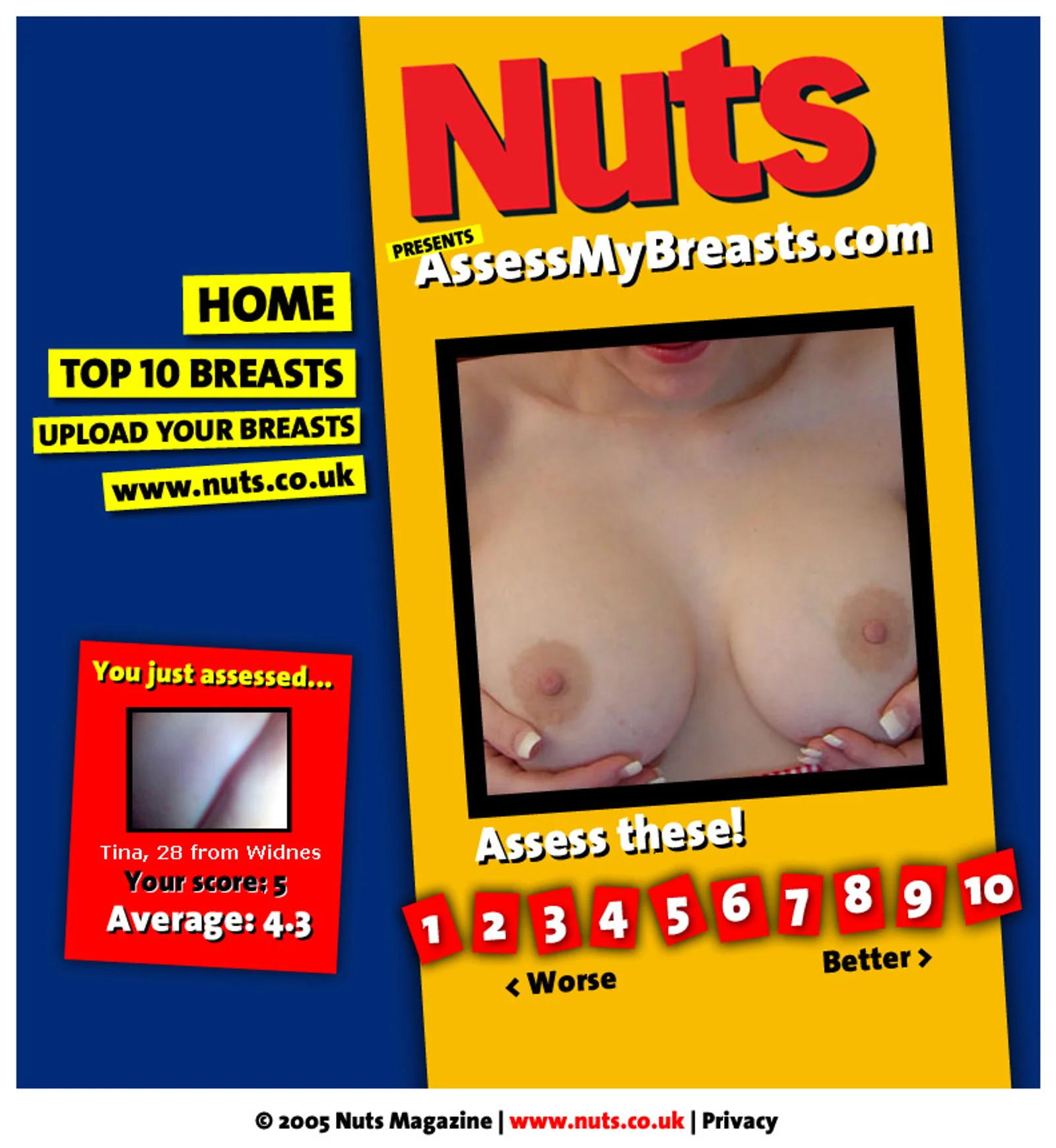
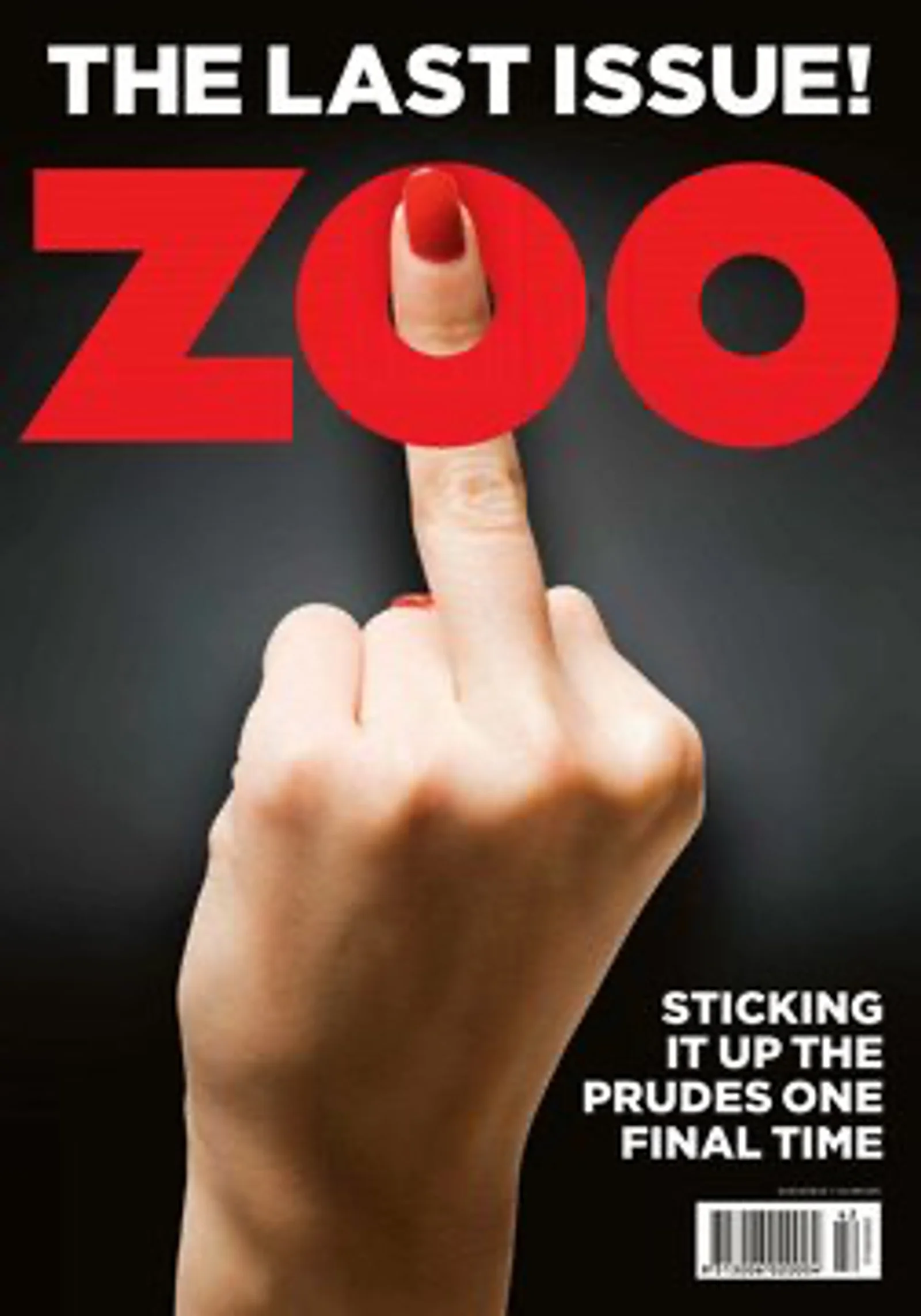
Couldn’t be a history of the men’s mag without pouring one out for the “Lad Mags,” a British invasion of shamelessly vulgar, juvenile, and retarded magazines born in the 90’s as an explicit pushback against the upmarket foppery of the Esquires and GQs of the world. Loaded launched in 1994 with an actual printed manifesto: "dedicated to life, liberty and the pursuit of sex, drink, football and less serious matters.” Nuts magazine had a reader feature titled "Assess My Breasts.” Zoo had a contest to win a boob job for your girlfriend. Their advice column told a reader to “cut his ex’s face; no one will want her.” They sneered at mainstream men’s mags, and the mainstream mags sneered back. GQ’s editor said they were “aimed at losers…their advertising is beer, underwear and condoms.”
Working class culture is always the last holdout against feminizing bullshit. So while some of these beer soaked bro mags can still be seen in the wild (FHM reborn as some off-brand South African website), most died noble deaths, with their beer goggles on and their dicks hard. Those still around during the culture war years also had to endure a feminist-led “Lose the Lad Mags” campaign, where lawyers threatened suits arguing shop-girls were being sexually harassed just by having to handle mags at the register. At MAMA Mag, we bow down and pay respect to our dead homies.
Back to Maxim, the last lad standing. Maxim Founder Felix Dennis should probably be on some kind of Mt. Rushmore of based retards. In the 70’s, when his underground mag Oz was convicted of obscenity at the Old Bailey in London, the judge let him off with a lighter sentence than his colleagues on grounds he was “very much less intelligent.” We say it was a situation of pearls before swine. This man built a publishing empire from nothing, and spent it well, blowing $100m on crack-fueled binges with as many as 14 mistresses at a time. He once claimed to have pushed a man off a cliff for beating up a woman.
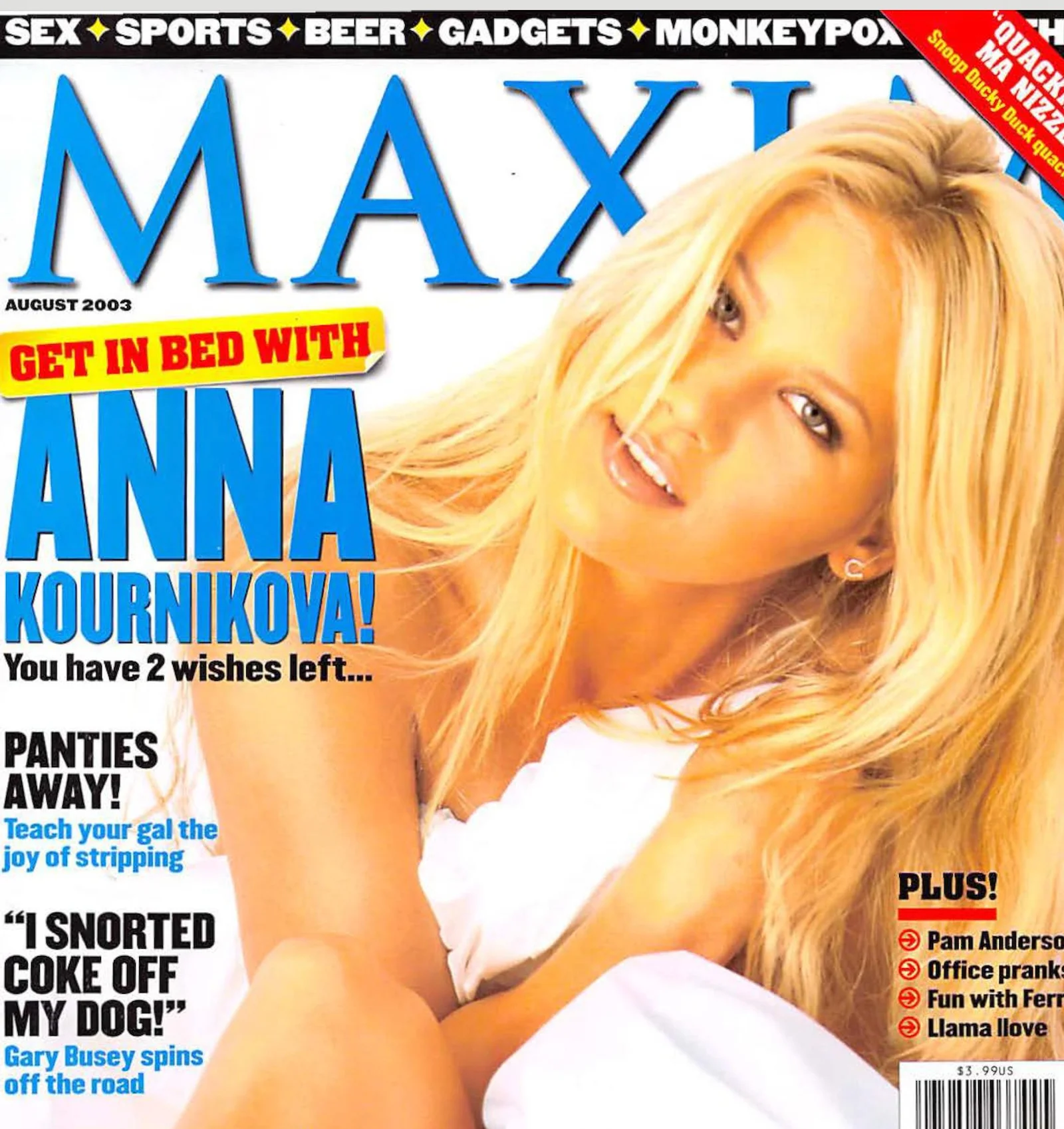
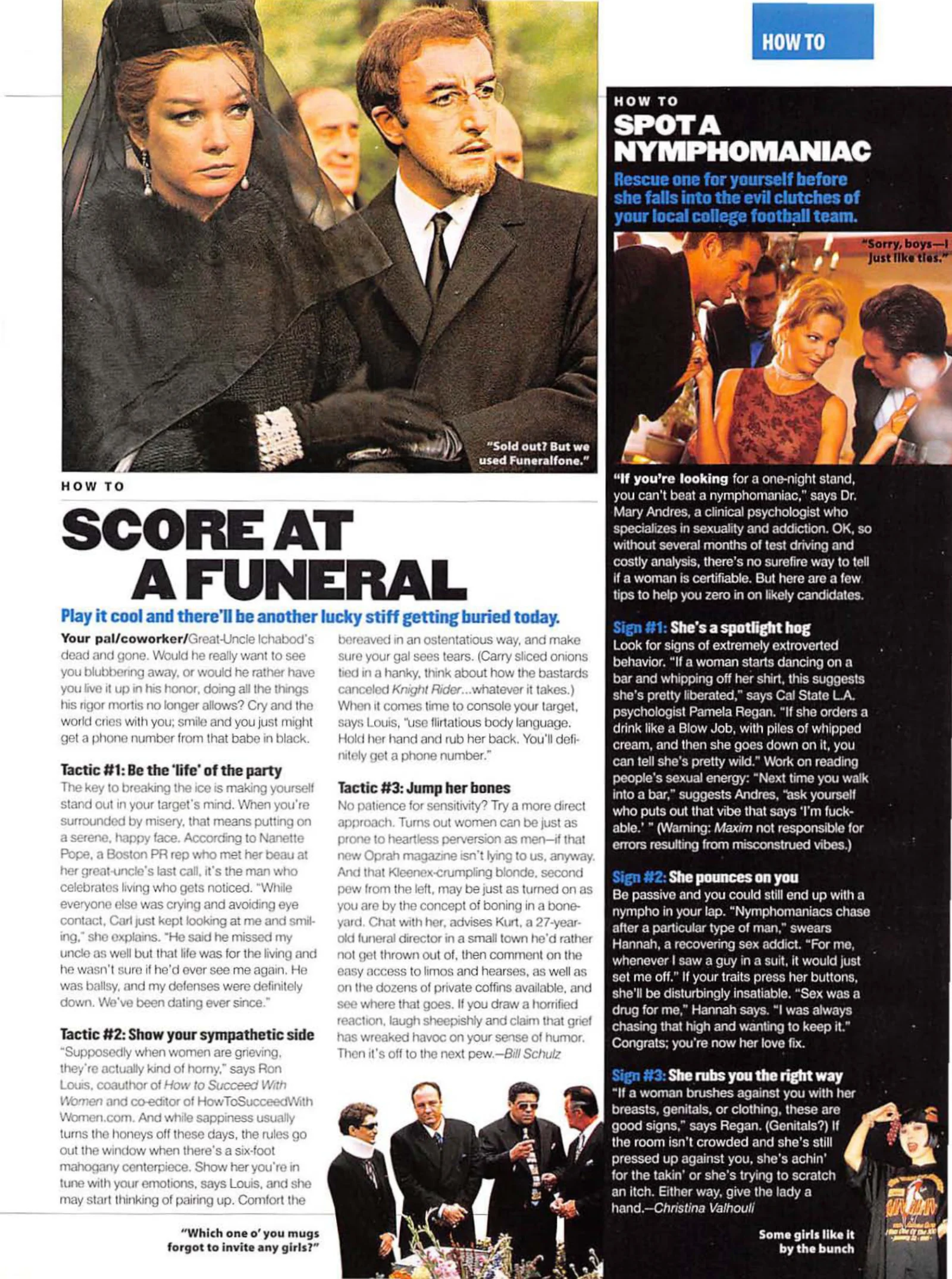
Dennis founded Maxim as a working class reproach to GQ, a Hustler to their Playboy. The mission statement: “it's OK to be a guy.” The first words on every Maxim cover, in bold, were SEX and SPORTS and BEER and GADGETS, and sometimes MONKEYPOX (see prescient banner image above from all the way back in 2003). They always had a stacked, shiny bikini babe on the cover with endless ways to get “sex” into a headline (Pretzel Sex! Voodoo Sex! Endless Sex!) with bonus classy eyegrabbers like, “I snorted coke off my dog” (Gary Busey) or “How to Score at a Funeral.” Play it cool and there’ll be another lucky stiff getting buried today, they advised.
Maxim vastly outsold GQ and Esquire combined.
In 2007, Dennis sold out for a cold $240 million. By 2014, the Steak 'n Shake guy was able to scoop it up in a fire sale for $12.6 million. He hired Kate Lanphear, the style director of the New York Times' fashion magazine, by way of Elle (starting to sound familiar, no?). She got right to work: her first “Hot 100” ranked Taylor Swift number one. Boom. It opened with an essay by Roxane Gay. And the hotness list was now a ranking of “the most influential women in pop culture, sports and business.” AKA, not hot.
How were they able to get away with this? Harvard MBAs may cite declining male readership in general, but that’s pure chicken and egg and they know it. A self-fulfilling prophecy by which every publication can use male disengagement as an infinite justification for getting gayer and lamer forever.
The Daily Beast anointed Maxim "Your New Feminist Bible."
Kate Lanphear’s pièce-de-résistance was putting Idris Elba on the cover, breaking an 18-year streak of oiled, Bruckheimer-style babes, which is literally all we know about Maxim, because we’re not fucking plebes. Anyways, “MAN UP” it said next to him, as we were asked to fixate our masturbatory gaze at a British black chad in a leopard-print coat.
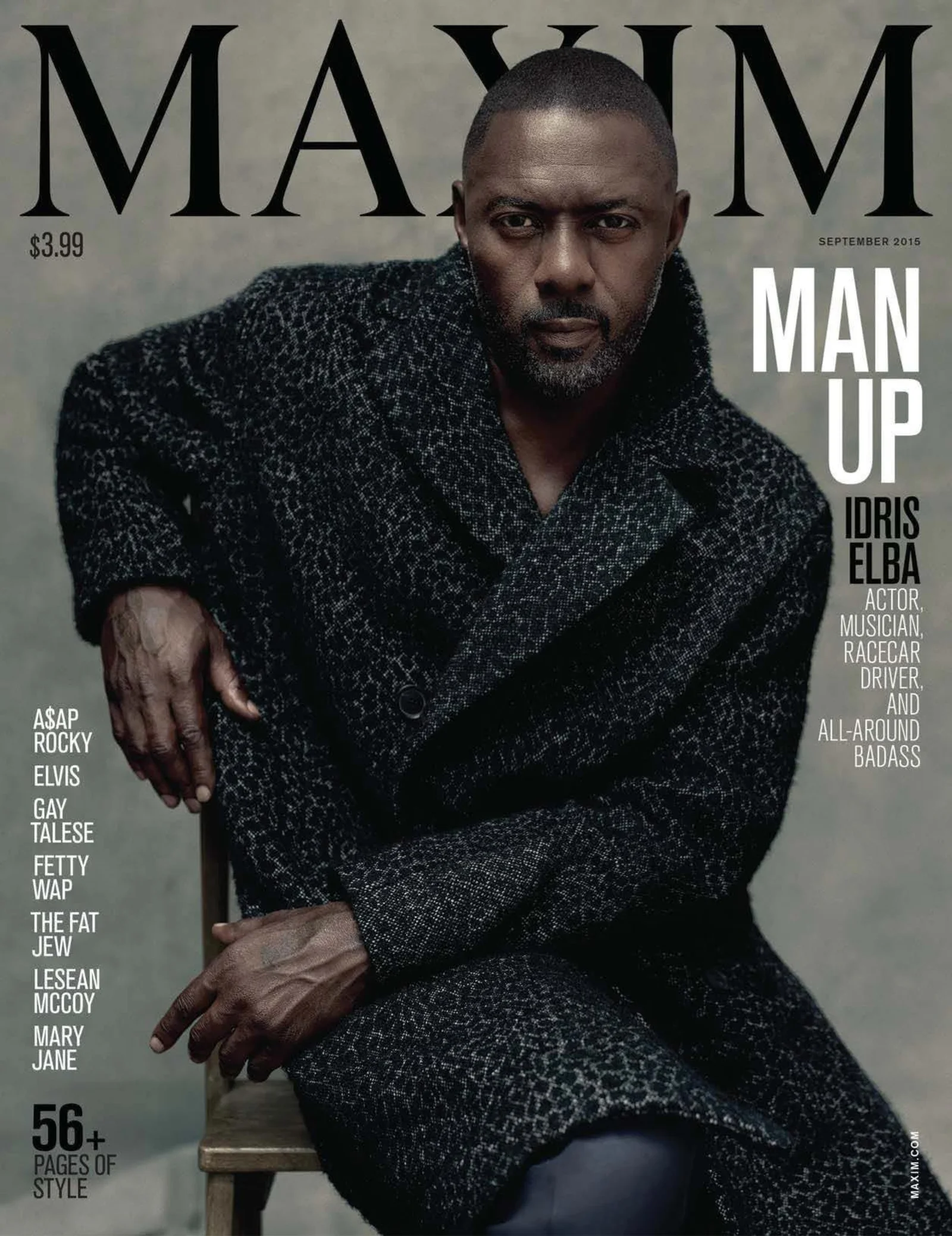
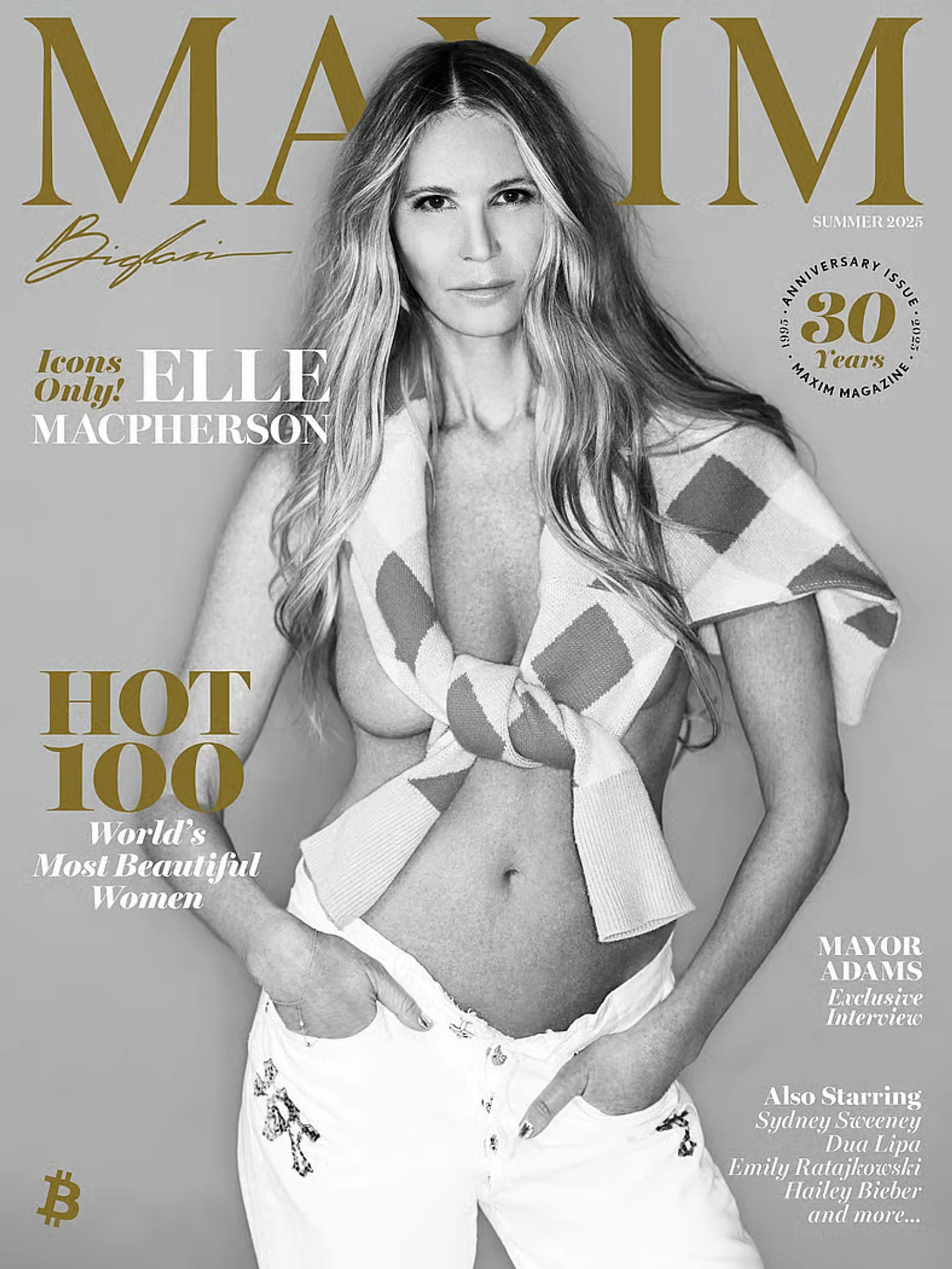
Lanphear only lasted eight issues. Maxim put the girls back, but no more vulgar jokes. They rebranded to become a "premium" magazine (beer and condom ads out, Prada and Calvin Klein in), and it’s been Instagram-safe ever since. And there it sits today, with Elle MacPherson as their latest “Hot 100” cover star….at the hot old age of 61.
MAMA MAGAZINE
Founded in 2026, MAMA Mag is the only remaining men’s magazine that is not yet gay, though possibly cringe, and definitely infested with lecherous Jews, based retards, blowhard skinny-fats, and nefarious investors. It is called MAMA Mag because “He-Man Woman Haters Club” was already taken. So far, we have managed to offend groypers, tankies, Zionists, run clubbers, Substack refugees, Trad Caths and raw milkers, AI utopians and skeptics, and women either too attractive, or not attractive enough to be a beautiful mid.
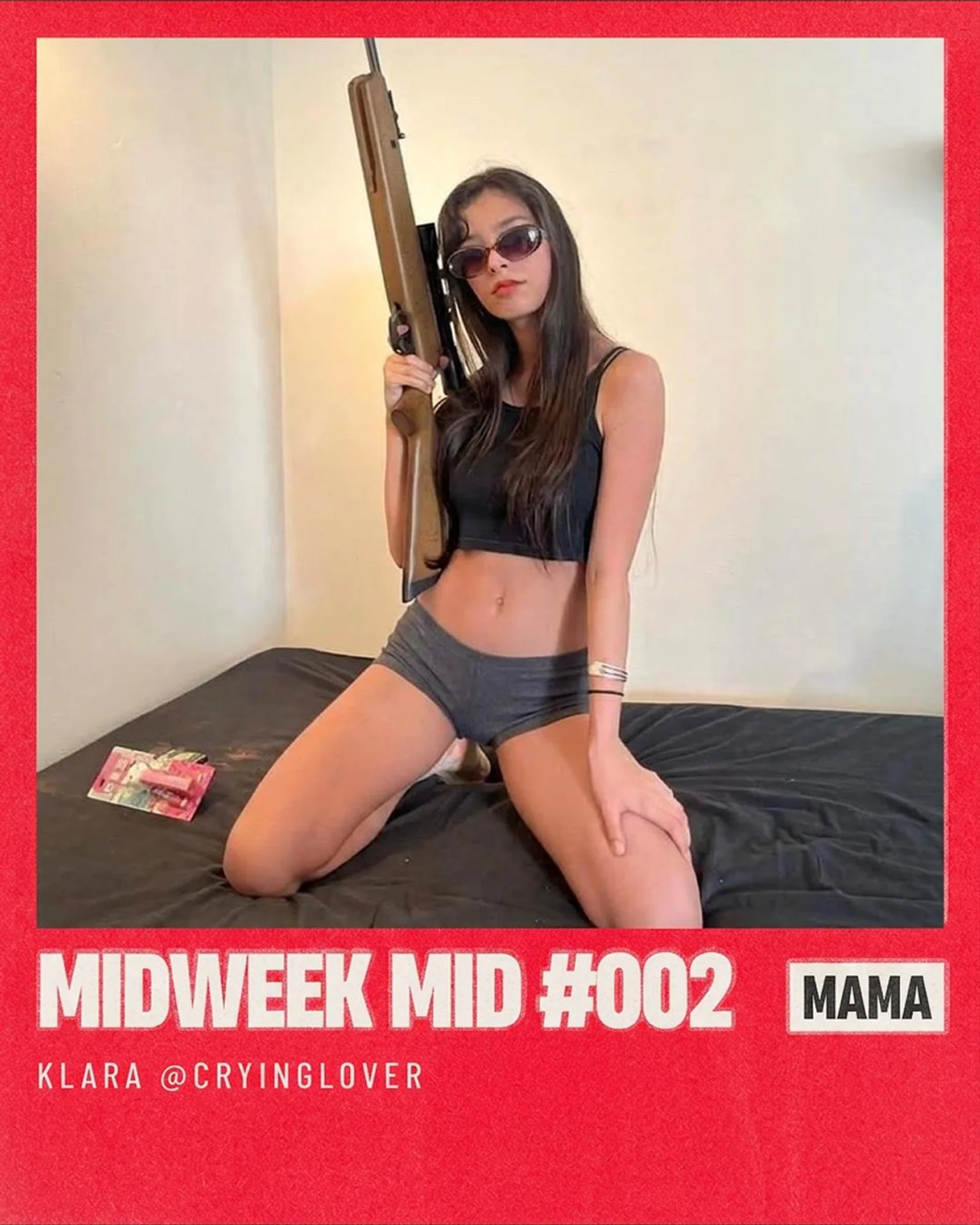
If you aren’t on the list yet, we’re working on it and will get there, if God is good. All are actually welcome, if they’d stop being whiny babies and just have a little fun. We also like cocaine, long walks on the beach, and saying the n-word, because we still think it's funny in 2026, but lack the honorable conviction of true racists.
In reality, MAMA only wants one thing and it’s fucking disgusting: great writing. There’s nothing we love more than finding great writers and giving them just enough leash to hang themselves, preferably with their dicks in their hands. We even pay the same as Playboy.
We look forward to our final ascension: no longer being for men. The gateway drugs are clear: fashion, health, and fairness. Look for the signs. Our first photoshoot showing off the best new outfits. Publishing female short story writers. A lurking and curious fascination with six pack abs. Worrying about your skin. We vow to do none of these, til we’ve reached peak success and the bidding is high enough.
And hopefully one day we’ll turn gay too, because it’ll mean we got rich. See ya on the mountaintop.