Chud Sells Blood
I’m not poor, just a temporarily embarrassed white man
By Sperry Collins · August 20, 2026 · 8 min read
It all started when I got sideswiped by a taco truck on the RFK Bridge, an event for which my master’s degree had not prepared me. Fearing an insurance hike, naturally, I paid out of pocket. Then came a bad crypto bet, a rug pull, and a job market that made me envy the optimism of the caste system: at least in death, one might escape the permanent underclass. These are the times that try men’s souls.
My Instagram algorithm, besides the debt relief ads and old friends sipping spritzes in Saint-Tropez, offered one pale glimmer of hope: cold hard cash in exchange for my plasma.
If I missed any of the final three true-or-false questions, I’d have to wait six months before coming back. They amounted to: Having AIDS is bad if you want to donate blood. True or false?
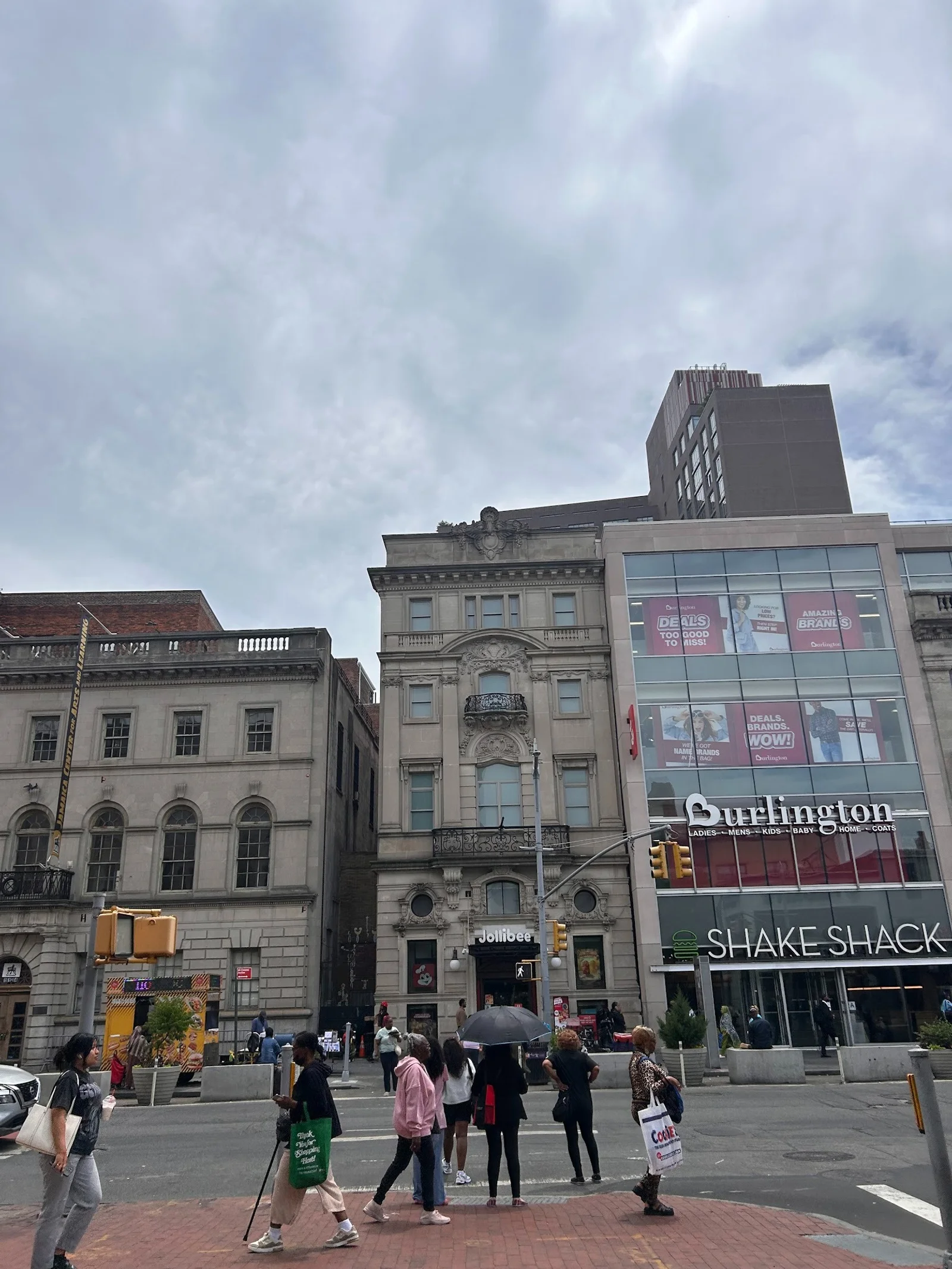
Oldham Health operates plasma donation centers around the New York metropolitan area. I visited the one in beautiful Jamaica, Queens, right down the street from a Jollibee. I told myself I was not the sort of person who sold plasma. Just a temporarily embarrassed white man.
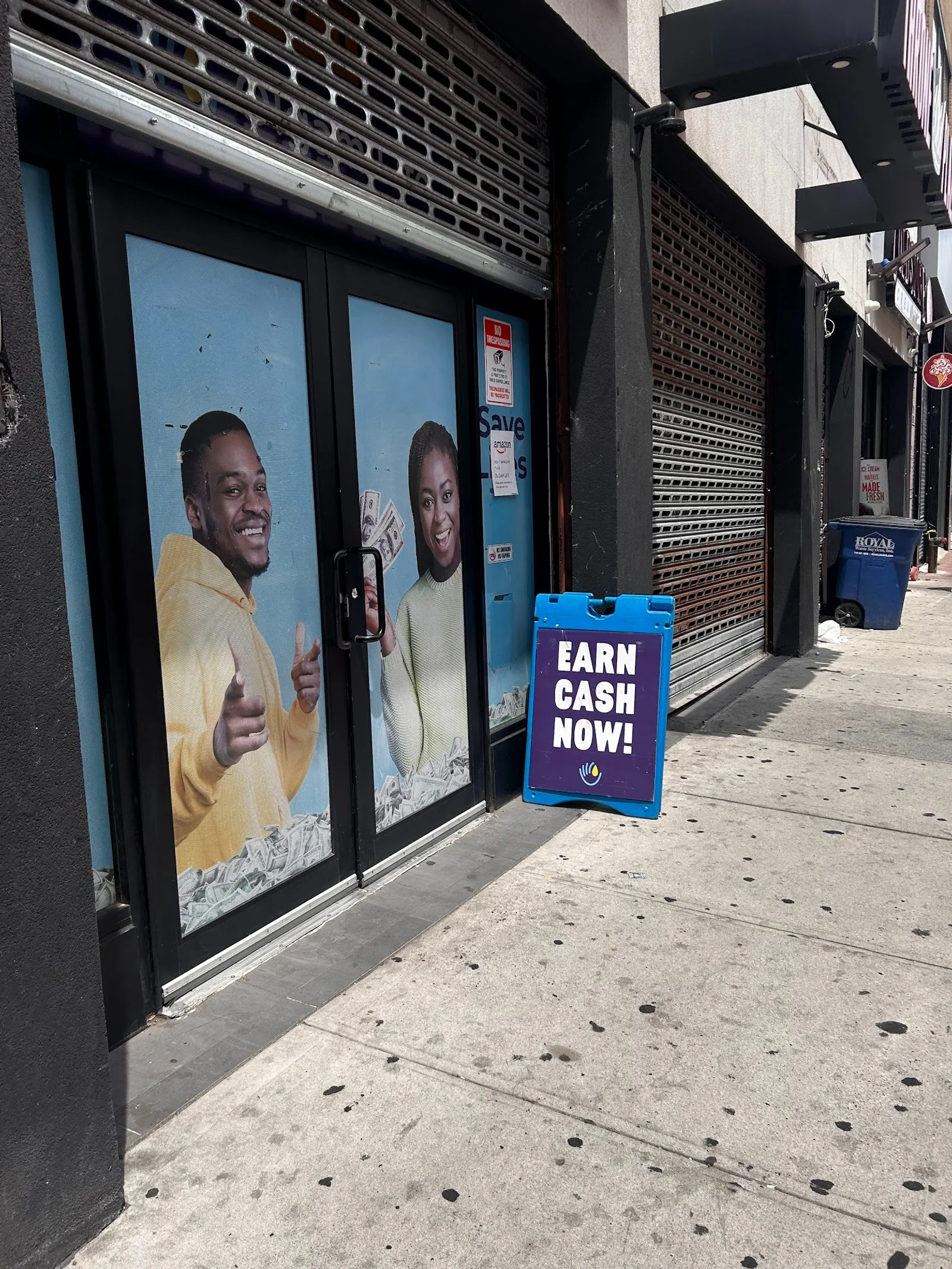
A metal gate blinked a half shut greeting. A plastic sign read: EARN CASH NOW! The doors had badly photoshopped pictures of black people waist deep in piles of cash, one pointed finger guns at me. As I stepped through the doors of the establishment, decorated with their smiling faces holding fat wads of cash, I descended down the stairs into the donation center.
I stepped into a liminal space removed from time. The Backrooms of blood. A cross between a doctor’s office waiting room and a Howard Johnson lobby, with a smack of dilapidated DMV. Brightly lit, with modern LED chandeliers, corporate patterned wallpaper, and a broken water fountain with a flaccidly optimistic sign reading “hydrate while you wait.” A speaker in the ceiling blared out the full eight-minute version of “Mirrors” by Justin Timberlake. Three women draped themselves across the stairs like seals in the sun.
I went to the door in the back corner, excited to be a “first-time donor.” A woman took my papers, set up my account, then raised an 8x11 sheet of risk factors and asked me to read them aloud.
“Have you had sex with more than one partner in the last six months? No.
“Have you taken any medication for the prevention of HIV/AIDS?” No
“Have you paid for sexual activity?” No. I’m here selling my blood. I can’t afford hookers.
A blood hostess ushered me through a locked door into a long hall of booths. At booth three, a heavyset Black guy about my age, dressed in blue scrubs, asked my name and date of birth.
“Sperry Collins. June 6th, 1998.”
“Happy birthday in a week.”
“Thank you, uh—”
“Tyrone.”
“Thank you, Tyrone.”
“How are you feeling today?”
“I feel alright.”
“Have you had anything to eat today?”
“A little Arby’s bacon, beef, and cheddar.”
“YUCCCCKKKK. Arby’s. Man, why?” He laughed.
“Well, it was on the way. And I had a coupon.”
“I get you. I’m the same way with the Domino’s by my house. Sometimes I get back and it’s like, well, shit. Time for Domino’s.”
“I heard dat,” I said, because I like to fit in.
He asked me more questions, then took my blood pressure, pricked my middle finger, and stuck a thermometer in my mouth.
“Your iron’s good. Protein’s good, too. Come with me.”
Tyrone brought me to a beautiful young black woman in a lab coat. She had glasses, her hair was pulled up, and her smile was unrelenting.
“Ethel, this is Sperry. He’s a first-time donor. Sperry, Ethel is head phlebotomist today.” She turned her head. I offered my hand, but she raised her white medical gloves.
“Very nice to meet you. I always take good care of first-timers. And aren’t you dressed nice? Pull those sleeves up.”
I always wear a dress shirt and a tie. At sixteen, while waiting at an Apple Store in my school uniform, a businessman offered me a job. It was total boomer fantasy made reality. I took his card and never followed up. Ever since, I’ve overdressed in the hope that another stranger might mistake me for an on-the-spot hire; another business card might just be a ticket out of the horde of the dispossessed.
“Oh, that’s a green vein if ever I’ve seen one. Do you work out?”
“A little, you know.”
“Well, you’re gonna be easy to stick. You don’t have to worry about leaving here with a bunch of holes from us looking for a vein.”
“Well, that’s a relief,” I said honkily.
“Alright,” said Tyrone, “almost there.”
He ushered me to an unairconditioned room and asked me to complete a questionnaire. If I missed any of the final three true-or-false questions, I’d have to wait six months before coming back. They amounted to: Having AIDS is bad if you want to donate blood. True or false?
He pulled an envelope from his lab coat. “This is the cash card. They don’t give you bills. Watch yourself—there are fees if you use it wrong. Sixty dollars today, fifty next time. You can donate twice a week.”
Sixty dollars opened a world of possibilities: a Polymarket bet on whether Trump will say “Allah” on TruthSocial, a handsome edition of Being and Time I’d seen at the Strand, a single Uber Eats Taco Bell delivery. But this money wasn’t for gambling, Heidegger, or Taco Bell. It was for my wife, our future children, a quiet home with a white picket fence, a driveway, and maybe even a dog. Put the needle in, doc. I’m ready to ascend.
Tyrone then brought me to a large room divided by a short wall. On one side, a few donors sat waiting. On the other side were rows of royal blue recliners made of vinyl. In each of these recliners sat a donor, plugged into a massive computer centrifuge. They looked like Neo in the Matrix pod.
A short hunched man with jagged teeth went back and forth between the donors and a trash closet. His bald head shone in the LED light as he trundled a medical-waste bin filled with bloody tubes, saline bags, and hypodermic needles. I took my place among the waiting donors to “My Boo” by Usher and Alicia Keys. My sole fellow Caucasian was a pale boy in an anime T-shirt, locked into a Clash of Clans match.
I sat for 20 minutes before Ethel called from over the dividing wall, “Sperry?” I went over. To my left was a middle-aged Indian woman who appeared to be praying.
“How’s it going?” Ethel asked, preparing her equipment.
“It’s going well.”
“Glad to hear it. I’ll slide the needle into that nice green vein. The cuff will tighten and loosen; squeeze your fist when it tightens. I know it’s your first time, so if you need anything, ask.”
She covered the bend above my elbow in yellow-brown betadine and slid in the needle.
“Did that hurt?”
“Just a pinch,” I said.
I reclined and smiled back as my red blood coursed through plastic tubes into the machine beside me. The rows of chairs faced one another, so every donor had another donor directly across from them.
As I sat there in a kind of trance, alternatingly tightening and releasing, I noticed an aspect of the machine that had slipped by early. The plasma, once separated out, was collected in a massive bottle. It’s one thing to see your blood; quite another to see that fluid of protein, water, and cells that constitutes about half of your actual blood volume sitting in the sort of vessel you bring water to the beach in. This was grosser to me than the blood in the tubes, or the bloody bags in Igor’s cart. It resembled dehydrated urine. I gagged, but 60 bucks is 60 bucks.
I suddenly felt a cold zip in my arm. My blood, a lighter shade of red, and mixed with a saline solution, was being given back. It was actually kind of pleasant, like the last few sips of a jasmine tea. As my plasma bottle rose to the top and the number on my screen approached 1000, I readied myself for escape. The light blinked green and made a quiet beeping sound.
“So how was it, Sperry?” Ethel asked as she removed the needle from my arm.
“Not too bad, all in all.”
I thanked her, said my goodbyes, and briskly found the exit. I climbed the stairs, passed the smiling faces of the rich blacks on the doors, and marveled at all the things I could turn $60 dollars into. The first investment in my family’s future, I decided, would be a Gatorade.