Drinking on the Job: Billionaire Thai Boys' School
False documents, Catholic guilt, and the occasional suicide
By Andreas Bordin · October 12, 2026 · 12 min read
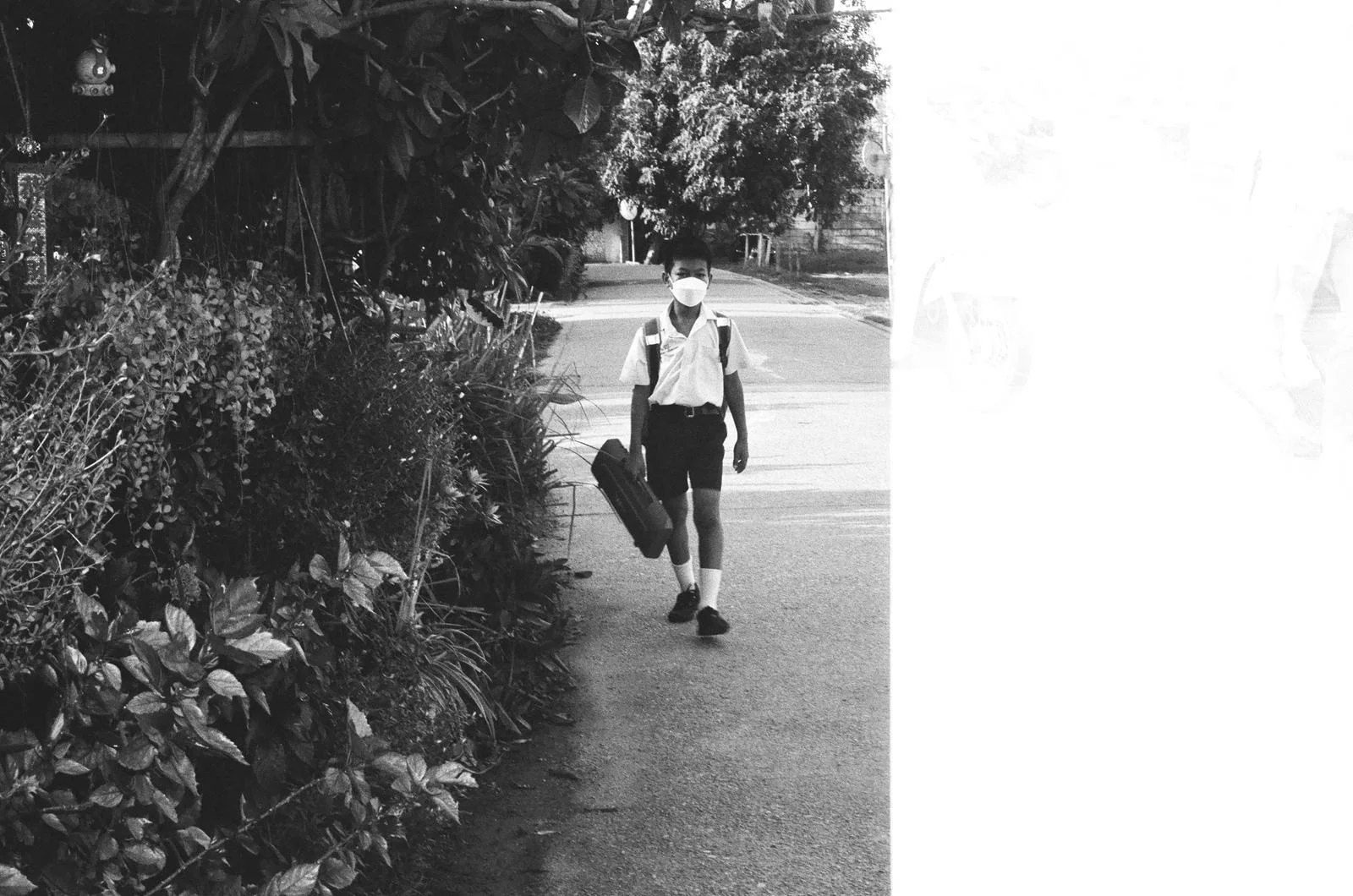
Every morning at Assumption College, I stood at the gate with my gay Irish colleague as the heirs and heiresses of Thailand’s elite stepped out of imported supercars. Between arrivals, my colleague told me things he didn’t want anyone else to know. He had a Filipino boyfriend. He worried about what would happen to him when he died. Did I know a good estate lawyer in Bangkok? I had only just met him. We were supposed to be checking shirts and trousers.
The school’s reputation had helped bring those cars to the gate. Colleagues told me about the prime ministers who had attended. The current prime minister, Anutin Charnvirakul, was an alumnus. He was the man who helped decriminalize marijuana in Thailand and later negotiated a ceasefire in the border war with Cambodia. Others included Prasert Prasarttong-Osoth, founder of Bangkok Airways, net worth $4 billion. Or Suphachai Chearavanont of the Chearavanont family, which controls CP Group, one of Thailand’s largest conglomerates, with an estimated family net worth of $53.3 billion. It’s often said that CP is the real king of Thailand.
Every year tens of thousands of Americans move abroad to teach English. The demand is high and the rent is low. If you’re lucky, you end up at a place like Assumption College. The school’s crest appears on bumper stickers around Thailand. There were Thai-Chinese aristocratic families for whom sending a son to AC was a continuation of something their fathers and grandfathers had done. But inside the English department, staffed by degenerate expats, we whispered about false documents, Catholic guilt, drinking on the job, and the occasional suicide. For a brief but glorious time, we were allowed to leave campus between lessons. Passing time between the food stalls and coffee stands and a hidden bar in the back alleyways. There was absolutely nothing to stop a teacher from having a few beers at lunch.
I worked there for a few weeks. That was long enough to discover the discrepancy between the school I had been told about and the staffroom I had joined. It was also long enough to start drinking between classes and decide that the real problem was the school.
I do not remember who it was or what I lectured on, but halfway through the lesson, I felt a wave of nausea wash over me and had to book it to the bathroom to puke. Some boys were in there and heard the whole thing. I splashed water on my face and walked back to class, afraid I would be found out.
Before my interview, a Ugandan teacher with a British accent asked what they were paying me.
“I don’t have an offer yet. The posting said 55,000 THB,” I said.
“They only pay me 40 because of my Ugandan passport. But really I am from the UK!”
That was his explanation of the difference. I hadn’t seen his contract. But he was clear about what he believed mattered. My predecessor had a master’s degree and had earned more, he said. Qualifications could help, provided you had what he called “a solid passport.”
The longer term teachers spent most of their time recruiting me as an ally in their blood feud with some other faction of the teachers. The Ugandan was trying out American things on me that interested him—Instagram reels of Lizzo and Ketanji Brown Jackson, and some particular theory of masculinity related to Will Smith attacking Chris Rock at the Oscars. I had little to offer. I knew almost nothing about Africa. In Bangkok, my associations were the Nigerian pimps selling drugs and pushing women around across from Nana Plaza. Once I watched an Arab who looked like Osama bin Laden haggle with the black prostitutes before turning toward the ladyboy freelancers. I’d seen Nigerian restaurants around the city, but never a Ugandan one.
I brought up the Nigerians, which provoked a disgust I hadn’t expected.
“They go everywhere on the continent, everywhere in the world, with hubris,” he ranted, in tones that sounded lifted from The Protocols of the Elders of Igboland—a hostility whose history I knew nothing about.
He also told me more about the American I was replacing. Apparently there had been complaints about his hygiene. Sometimes he brought in kimchi for lunch. He had worked at Boeing and was somewhat arrogant about it. This was the sort of information you got before learning anything about the classes you were taking over. Someone left, and the people who remained explained what had been wrong with him.
“He might have killed himself,” one offered.
“Yeah, I wouldn’t be surprised. He had money problems,” said another.
The head of department was a Canadian who, I was told, had previously been a lawyer in Regina, Saskatchewan. The interview focused more on when I could start than on how I taught. At the end, he stood up and revealed that he wasn’t wearing shoes. An ingrown toenail covered in fungus caught my eye. Circulation problems, he explained, before slipping into flip-flops.
The school itself depressed me. For a place with that reputation, the facilities were deteriorating. The elevators were semi-functional, and I remember the smell of fish paste and sewer gas. But I had arrived needing a job, and the speed with which they seemed prepared to give me one was convenient.
My Irish colleague was called Liam. Gate duty became the place where he worked through whatever was troubling him. Sometimes we would go for drinks during the day to pass the time. Back in Ireland, he said, he had lived in a caravan park, walked the cliffs, and struggled with the shame of being gay. He attributed it to Catholic guilt. Now he was in Bangkok, working at a Catholic boys’ school, asking a near-stranger to keep his relationship secret.

There was his brother’s drinking, an accident he had been involved in, his health, his boyfriend. He wanted to save enough money for the two of them to move to the countryside in the Philippines. The practical question was how to leave the boyfriend something if he died first.
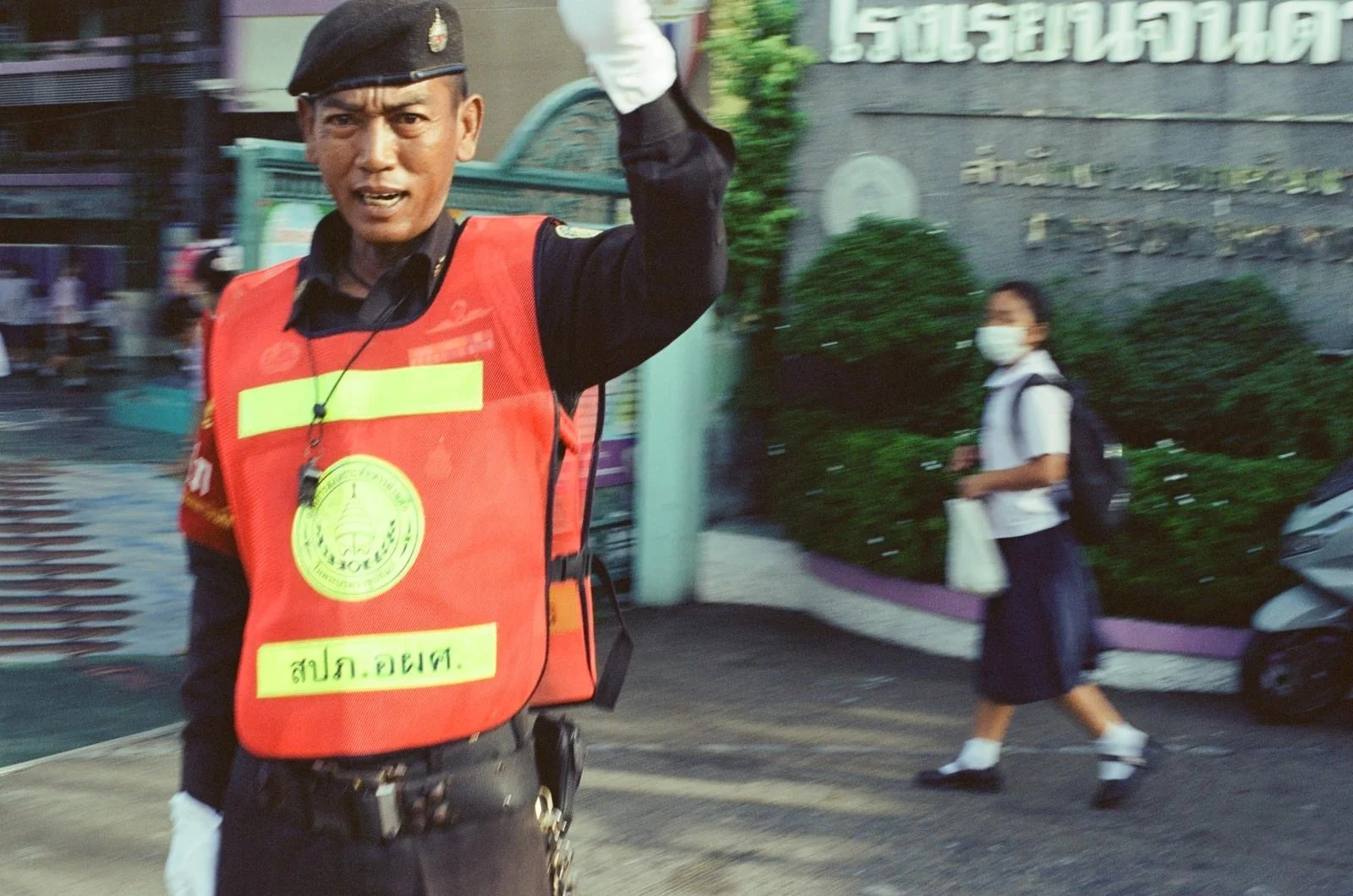
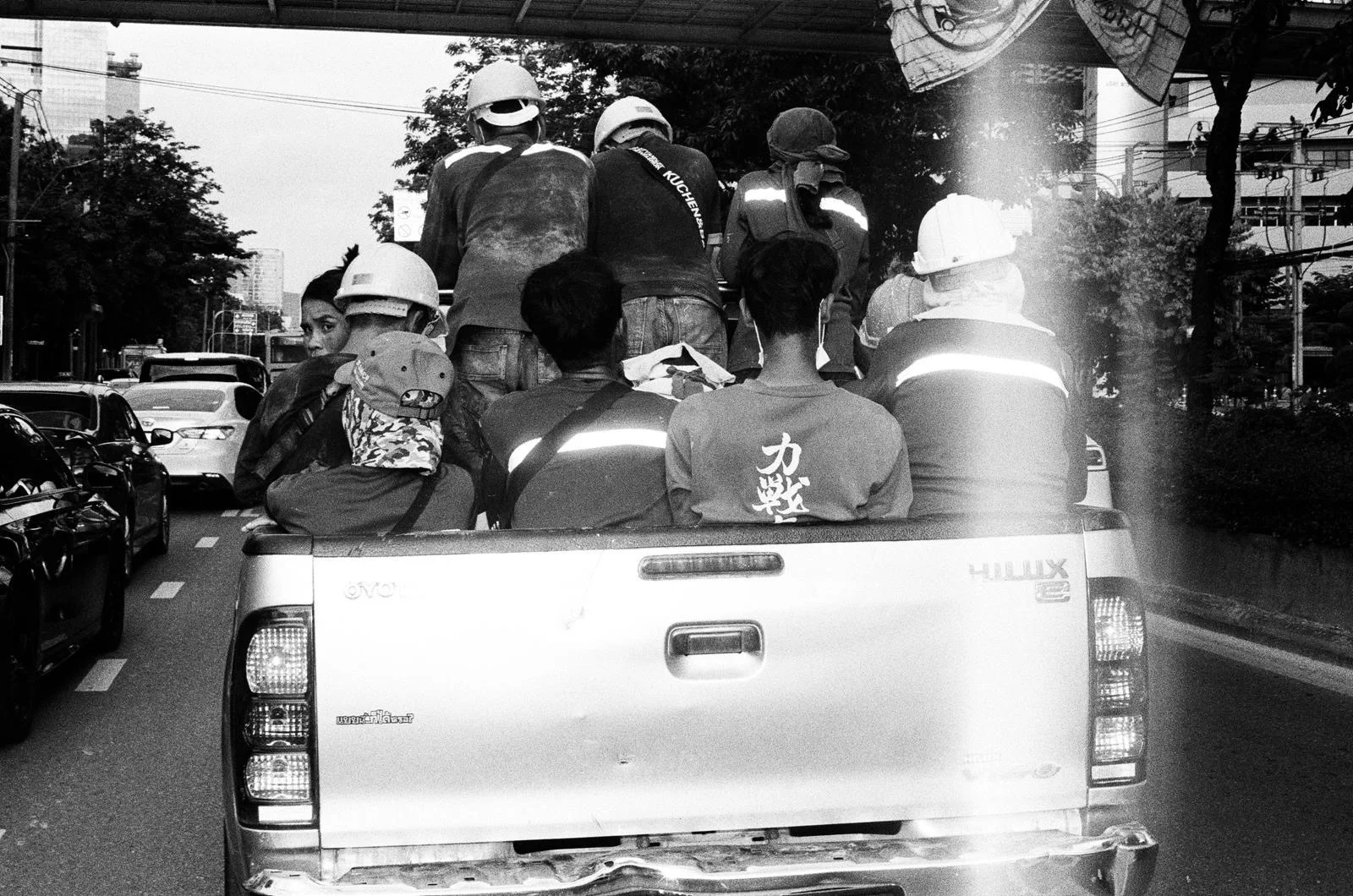
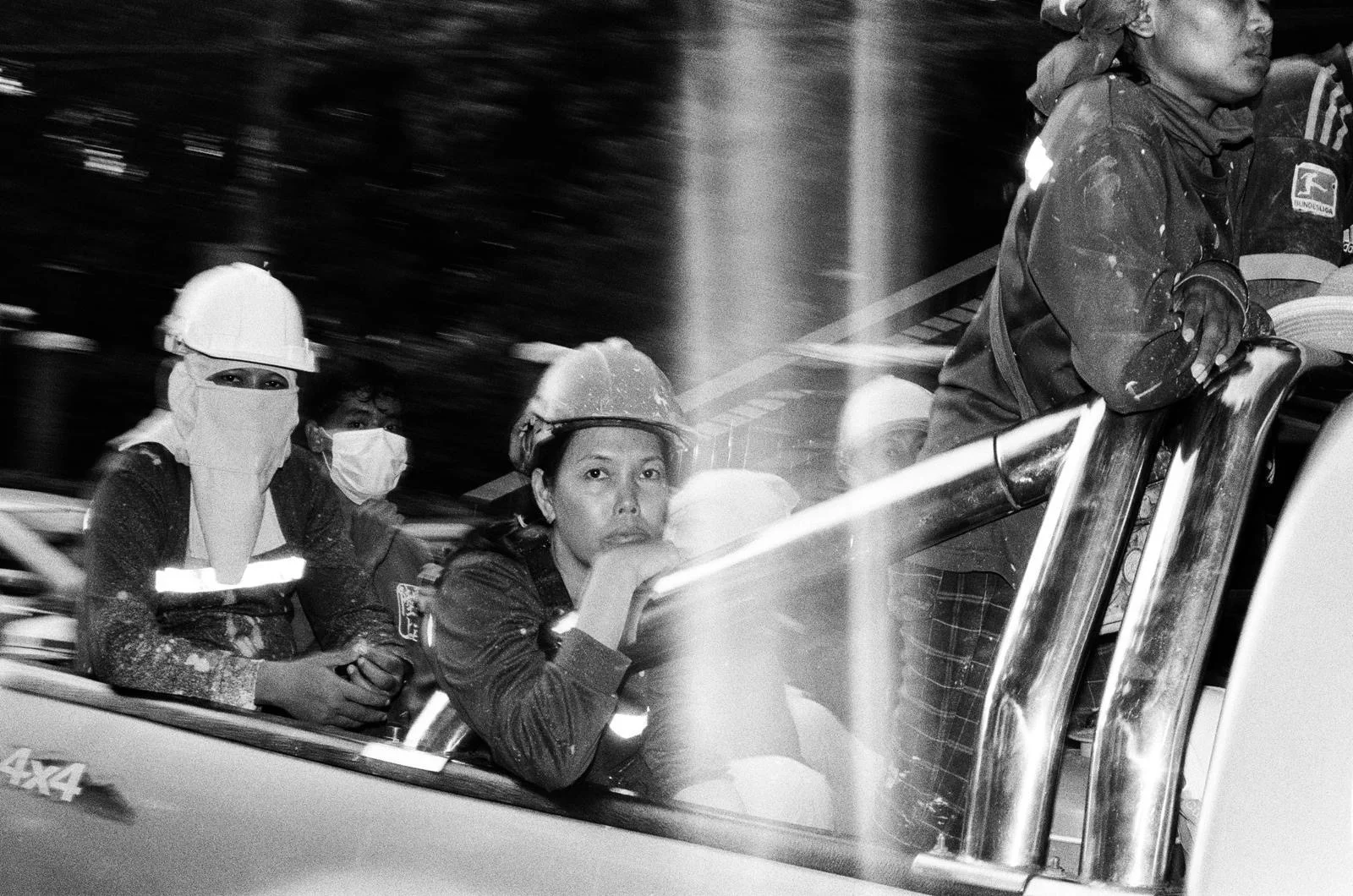
The boys kept arriving. We checked their uniforms and watched the traffic: motorbike taxis; trucks full of Burmese workers with thanaka on their faces; whole families packed onto scooters; cement trucks; squads of Muay Thai fighters in sweatsuits jogging down the road.
One morning, when the boys were allowed to dress down, a student arrived in a tube top and booty shorts. His mother dropped him off in a Lamborghini SUV. There was some confusion about whether he would be allowed into the school. A priest took out a ruler and measured the shorts while another member of staff took photographs.
Liam made some remarks about the kid and the stories other students told about him. Apparently he was the school slut. “They all fook that ladyboy,” he assured me. “They fook him in the jacks between classes. They even fook him in the chapel.” I was curious about how Liam knew any of this, and he said because the students told him. Everyone knew everything about everyone there. More importantly, who their parents were and what families they came from. What aspect of the economy they ran or how connected their family was to one of the dominating conglomerates like CP Group, Siam Cement Group, or Thai Beverage. It was apparently no big deal. His father was affiliated with a cement conglomerate. Reporting such an incident would just cause problems.
Once, a colleague on a motorbike tried to squeeze past a raised truck outside the school and was knocked into the road, taking a Thai couple on a scooter down with him. Everyone was shouting before he had gotten up. School security intervened. I watched him go to an ATM and come back with a few thousand baht for the couple. He wore a neck brace around the halls for a few weeks afterward.
There was plenty of that in the staffroom. I did my share. Other people’s lives became irritating stories you had to hear before your first class. My South Asian deskmate stood over my desk with a coffee, talking about Bradford, his estranged daughter, and whatever else was on his mind. I later learned he got stoned before school, which explained the air of idiotic discovery he brought to every thought. I wanted him to stop. Liam talked about his boyfriend. The Ugandan talked about his pay. Everyone seemed to want something from me, even if it was only a few minutes of attention.
What I wanted was to leave campus whenever I wasn’t teaching. Initially, we could skip out between lessons for street food and coffee and beers. You could get a massage and get jerked off if your timetable allowed it. I would come back a little boozed, and it made things easier. Those were my best lessons.
This was after the birth of my first kid, and things were hectic at home. The slipping out for beers between classes started to get a little out of control. At the local shops, you could get a shot of lao khao, or Thai moonshine, for about thirty baht. Once, I had just finished a shot when I saw a janitor from the school. He smiled at our shared malfeasance. He was next in line with the same order. I bought him his shot, and from then on, he always gave me a knowing look in the hallways.
The lao shots were heavy and disorienting. Sometimes, on days when I had no afternoon classes, I would stumble for miles to kill the time before properly clocking out. One afternoon, I made it all the way to Chinatown, where I liked to browse the teas and eat Penang curry at a place tucked behind a temple. I had been having trouble with my back, and one of the vendors recommended a shot of lao from a jar with a cobra inside. I knocked it back and felt the fire run through me, ready to fuck or fight whoever crossed my path.
A few minutes later, I received a call saying I needed to cover for a colleague who had gone home ill. I do not remember who it was or what I lectured on, but halfway through the lesson, I felt a wave of nausea wash over me and had to book it to the bathroom to puke. Some boys were in there and heard the whole thing. I splashed water on my face and walked back to class, afraid I would be found out. I wasn’t.
Then teachers started leaving campus in groups, five or six of them at a time. Word got around to the admin, and we were told we could no longer leave during working hours. An unreasonable restriction. It interfered with the part of the job I liked best.
On days when I finished teaching hours before the end of the workday, I sat at my desk until it was time to join the queue at the scanner. People waited for four o’clock so they could leave without a deduction. I found the whole arrangement intolerable.
Liam continued his accounts of life outside the gates. One morning, he arrived bandaged and limping after being attacked by soi dogs. He was furious with the dogs and the woman who fed them. Then the conversation came back around to his mortality and his boyfriend.
I had my own, less ambitious version of that plan: find another school.
The final argument was about my leaving campus to get a coffee. In actuality, I had gone out for a few drinks. I hadn’t missed a class. At the time, that seemed to me to settle the question.
I told myself that I hated the school. I hated the rich parents and their companies. I hated the department, the conversations, and the hours at my desk. There was always another objection available, and most of them sounded better than admitting how much I resented having to stay semi sober and remain at work until four.
One morning, I arrived early, returned the textbooks I had been issued, collected the few things on my desk, and left. I found another teaching job in Bangkok, somewhere I could come and go between lessons.
A few months later, my wife and I went into a seafood restaurant in Chinatown. We followed a maze of stairways and corridors, passing through part of the kitchen and winding around in the culinary backrooms of Thailand. They served whole fried sea bass with green mango, chili, and lime sauce.
The back room felt like somebody's apartment. The hostess seated us beside Liam and his boyfriend.
Empty Changs covered the table. Liam was slumped in a plastic chair, but when he recognized me, he straightened up. He seemed to be working out how to explain the man beside him.
I already knew. I knew about the village in the Philippines he wanted to retire to. I knew how often Liam thought about dying. His guilt and the walks on the cliffs. He had told me all of it while we watched the boys come through the school gates.
“Oh hey, this must be that friend you were telling me about,” I said.
That seemed to square everything away.
There was always somewhere else to go, somewhere the arrangements were slightly better. You could spend years like that, imagining you would eventually drink and fuck your way into nirvana, taking the same habits from one address to the next. I had found a job that let me drink between lessons. For the time being, that was enough.