“It’s Lame!”: Why are Idiots Harassing Carriage Drivers in Central Park?
Have horse rights gone too far?
By Jack Ludkey · November 18, 2026 · 9 min read
“It’s lame!” yelled a woman with dyed hair and a clenched jaw. “That poor horse!”
Central Park on a beautiful fall day. The pedicab drivers harassed pedestrians, carriage drivers bummed cigs, and a man stood on the corner in a Scarface hoodie hawking bootleg headphones. 59th Street and 5th Avenue, the worst section of Central Park: noisy, always shaded, $7 hot dogs, and full of horses thirsting to kill Indian tourists.
Any day now, the mayor’s office will announce that Mamdani has signed Romanch’s Law into effect, banning the 168-year-old institution of Central Park horse carriage rides forever.
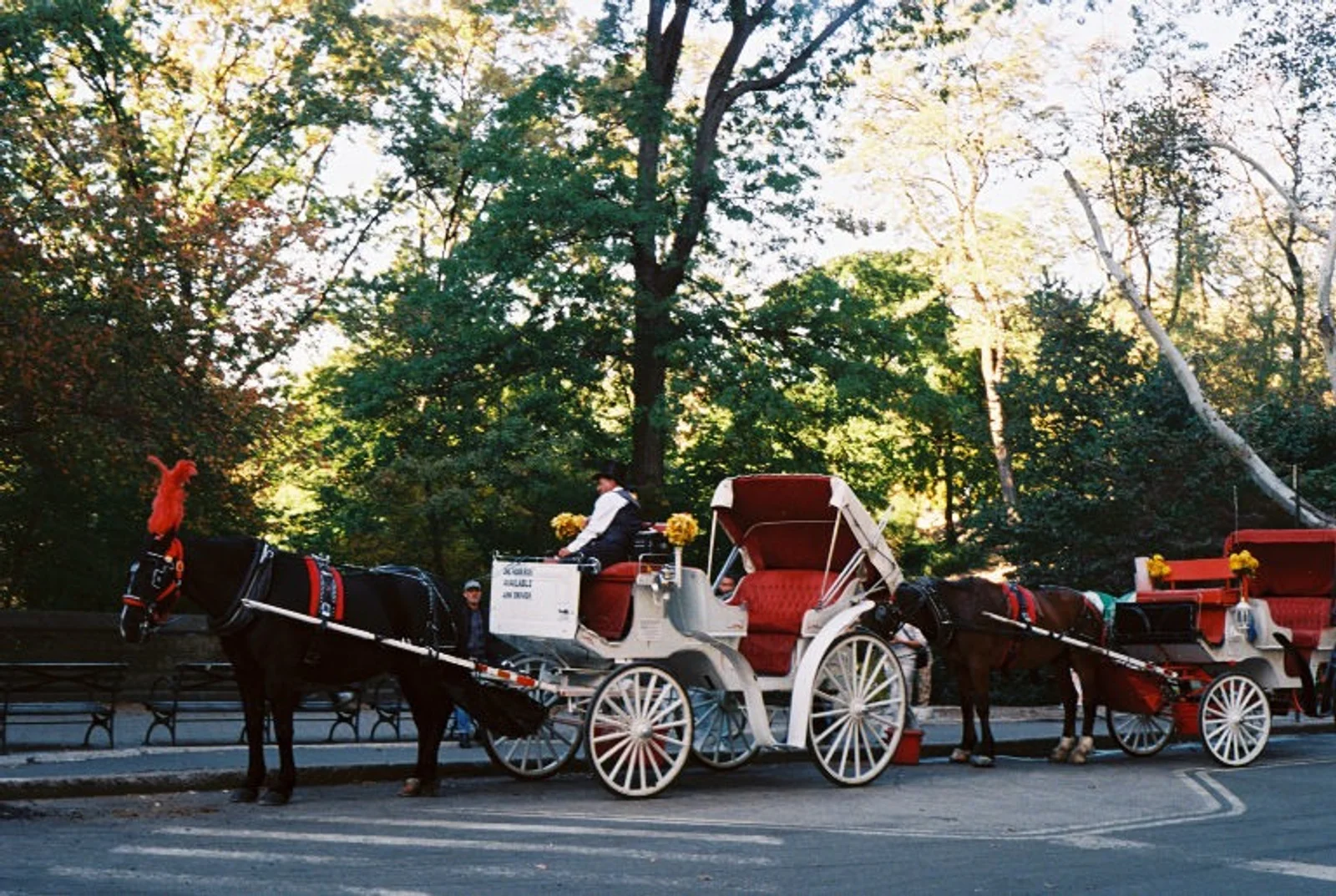
“It’s lame!” she shrieked again. Her boyfriend held her back as she lunged toward the carriage driver and the perfectly healthy horse.
“It’s just resting! It have a rest! Look it up! Use ChatGPT!” responded the carriage driver.
I stood between them and sipped my coffee. The woman pulled out her phone to record the horse, tears streaming down her face.
“Do you know her?” I asked the carriage driver.
“No.”
“Does this happen a lot?”
“Basically every day,” he said.
It’s hard to believe such a quaint industry could be so controversial. TWU members and NYCLASS members pitted against each other in a zero-sum civil war for horse emancipation. An issue the average person has no opinion on, subjected to radical polarization by the few people who are willing to extort, defame, and threaten at all costs.
When a horse rests, it often cocks its knee back and dangles its hoof like a human doing a retard impression. This causes good Samaritans to wrongly assume the horse is injured, and that the carriage driver is abusing it by forcing it to give people rides. No amount of explaining solves this problem, a microcosm of the war over horses’ rights.
In 1910, at the peak of their pre-car enslavement, approximately 128,000 horses powered New York City. The first form of public transportation was a multi-horse drawn omnibus that debuted in 1832. By 1958, designs for Central Park explicitly accommodated horses. Unlike most local diversions, carriage rides are “real.” They have operated continuously in the city since the pre-industrial age. Though they have moved from a necessity to a luxury, scenic carriage rides remain a staple New York experience for tourists and couples on campy dates.
Romanch’s Law will phase out and ban these rides by 2028. The New York City Council voted 40–7 in favor of the ban on October 22nd. Though the issue was hotly debated, pressure has risen since the death of the bill’s namesake, Romanch Mahajan.
On June 17th, a carriage driver attempted to take a routine picture of an Indian family sitting inside his carriage. For some reason, one of the horses bolted for an unknown reason, perhaps from a spark from a stray wire. The 18-year old Mahajan was thrown from the carriage and later pronounced dead from blunt force trauma to the head. The family then filed a $105 million suit against the city. The tragic accident lit a fire under human and animal rights activists to finally end the practice.
“The social media, it makes this job hard,” the Brazilian carriage driver told me. “People get tricked and have feelings and opinions on things they know nothing about. This horse just resting a leg. She think it's crippled.”
He pointed to the woman who refused to leave and was still crying.
“Do you want a button?” another driver named Ayman asked me.
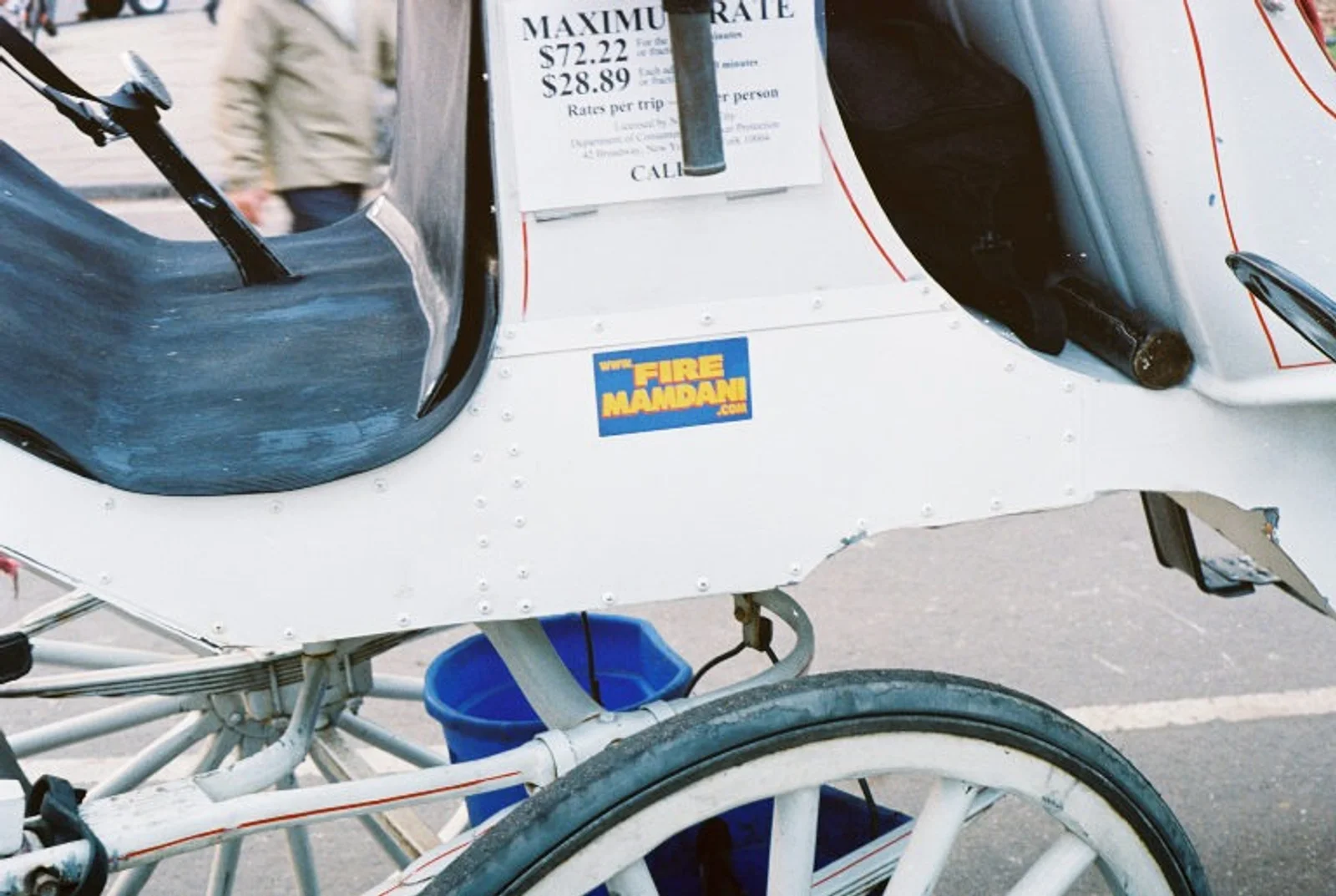
Ayman handed me a button with “FIRE MANDAMI” on it. He pointed to his carriage, which had a bumper sticker as well.
Horse carriage drivers are part of the Transport Workers Union (TWU) which represents over 40,000 transit workers in New York City, including train conductors and bus drivers. It’s a powerful union, the reason many transit workers haven’t been replaced already.
The drivers have a good setup. They mostly hang out in the park smoking cigarettes, grooming their horses, and giving a few rides an hour. Their true enemy is NYCLASS, an animal rights group with over 30,000 followers on Instagram that is dedicated to “saving” the carriage horses from their jobs, because if there’s anything this group of rich-kid socialists hates, it’s jobs. The group was founded by horse enthusiast Steve Nislick, a former chief executive officer of Edison Properties, the real estate development company behind Manhattan Mini Storage.
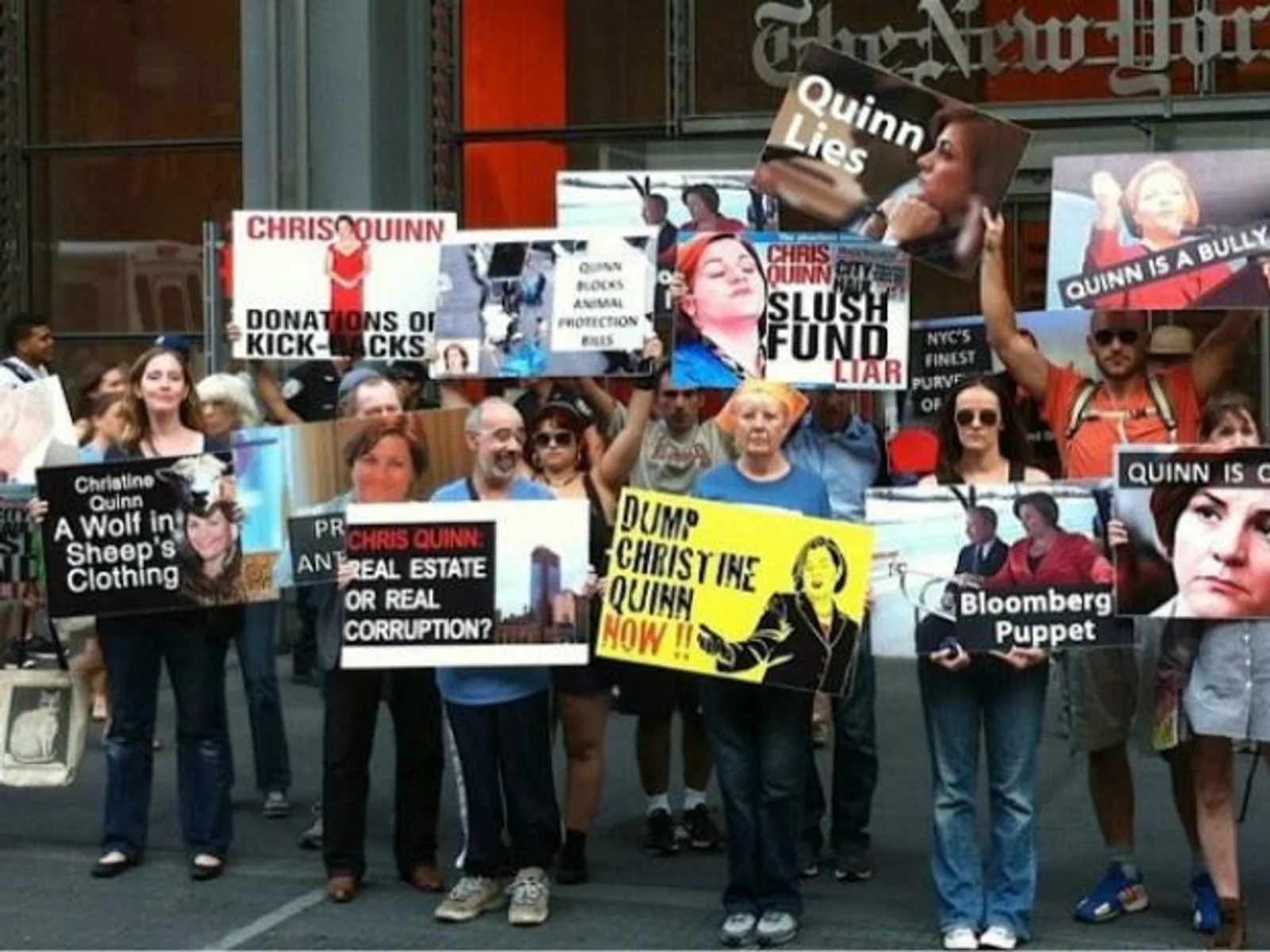
NYCLASS isn’t your typical animal rights group. In 2014, it paid large fines for violations connected to the City Council elections, illegally coordinating expenditures on behalf of candidates. In that same year, its members protested former speaker of the New York City council Christine Quinn, who refused to make the carriage ban part of her mayoral platform. The activists heckled Quinn at press conferences and fundraising events. The group also spent millions of dollars on attack ads and mailing pamphlets labeling her an animal hater. They were later investigated by the FBI to determine if their treatment of Quinn “went beyond the normal rough-and-tumble of politics and drifted into extortion.”
In 2025, the TWU levied a million-dollar lawsuit against NYCLASS for a “smear campaign” that contained “malicious lies.”
“When I met [Nislick], he wasn’t really political; he just understood, as a horse lover, that having horses pull carriages in traffic was cruel.” Said John Phillips, the director of the League of Humane Voters, a non-partisan animal rights organization.
A young Indian family loaded themselves into a carriage while I spoke to its graying driver.
“It’s prime NYC real estate, they want the land, that’s it,” he said. “It’s all money! That’s all it ever is!”
He tipped his cap to me as the fall day faded. In the back seat, the family took daytime selfies with the flash on.
Is it cruel to make a horse pull a carriage? On one hand, it seems very simple. Some horses are bred to pull carriages, some are bred to run fast, some are bred to be beautiful. Draft horses, which are the ones found in Central Park, are bred to pull heavy loads.
But there are legitimate concerns, many of which have already been addressed by legislation. Temperature limits regulate hot summer days, but the radical wing of the animal rights movement represented by NYCLASS will accept nothing less than total abolition.
Since 1982, 30 horses have died on the job. The most recent fatality occurred over the summer when Deniz, a 16-year-old gelding, ate a poisonous Japanese yew plant in the park. His owners, brothers Nurettin and Ummet Kirbiyik, are now suing the Central Park Conservancy for negligence.
“It used to be better, ya know? Before all these pedicabs came and everyone taking photos of us,” an older South American driver told me. “I came here in ’95, walked by the park, and saw a sign saying they was hiring. I took a course a few week later and boom, now here I am.”
I made eye contact with one of the African pedicab drivers. He flashed his extremely white teeth and walked towards me.
“You want a ride? Very cheap?” he asked.
The carriage drivers glared at him, disgusted at the thought of the African-driven pedicab industry eventually absorbing the market share of the mostly South American carriage drivers.
I talked to one of the rare lady drivers, named Jill. She was chipper and upbeat and didn’t seem that concerned about the ban. She pulled back her purple-dyed hair and made a signal to her horse, who leaned over to give her a kiss on the cheek.
“I bought him from the Amish,” she explained. “He was too lazy to work the fields, so they put him up for sale. The lazy horses are great for the city.”
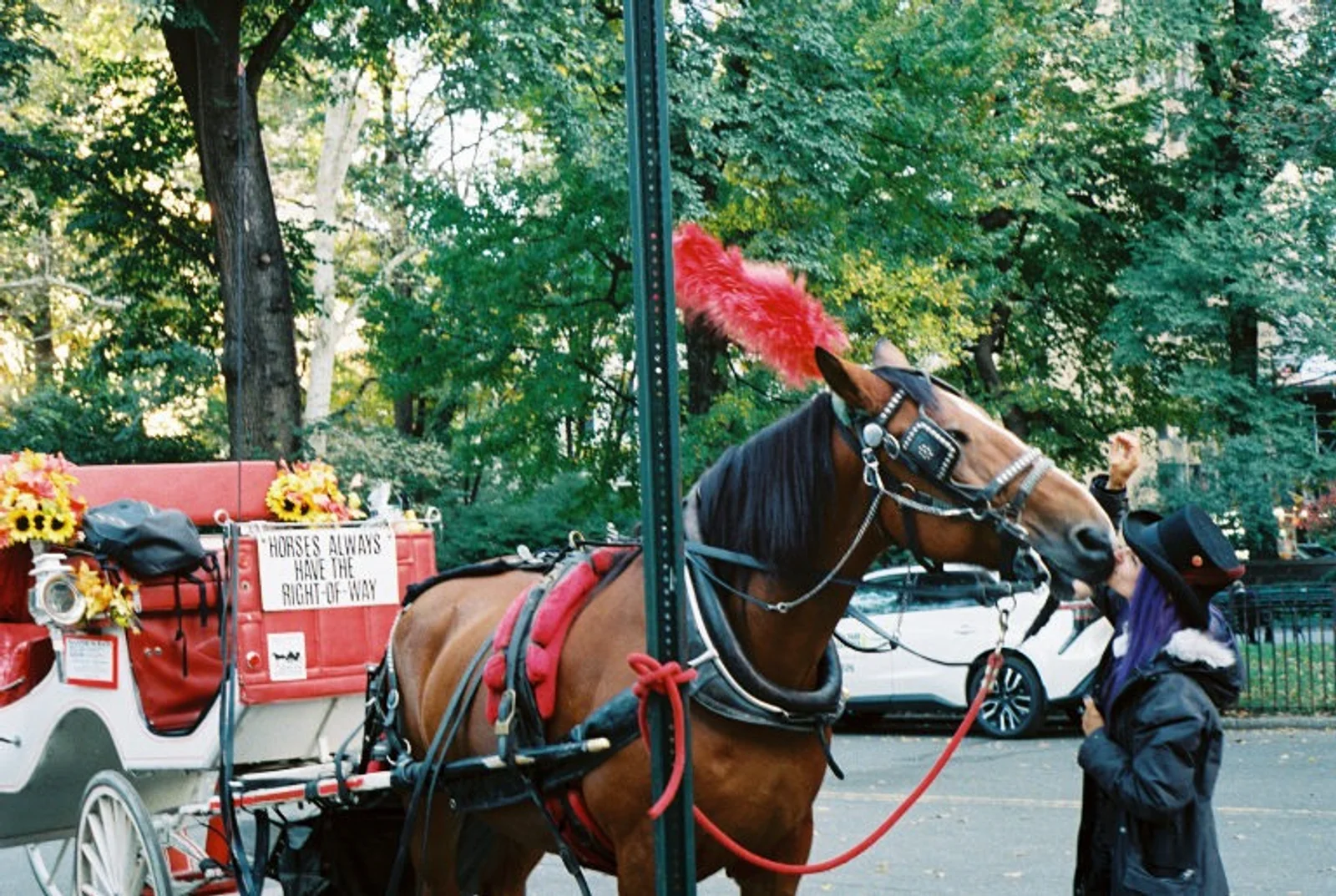
She explained that carriage medallions worked just like taxi medallions.
“I mean, I own both my horses, but a guy in Ireland owns this carriage, so the medallion is his.”
The number is strictly limited—only 68 medallions in the whole city, with a collective value once totaling $25 million, now rapidly approaching $0.
“Are the top hats optional?” I asked.
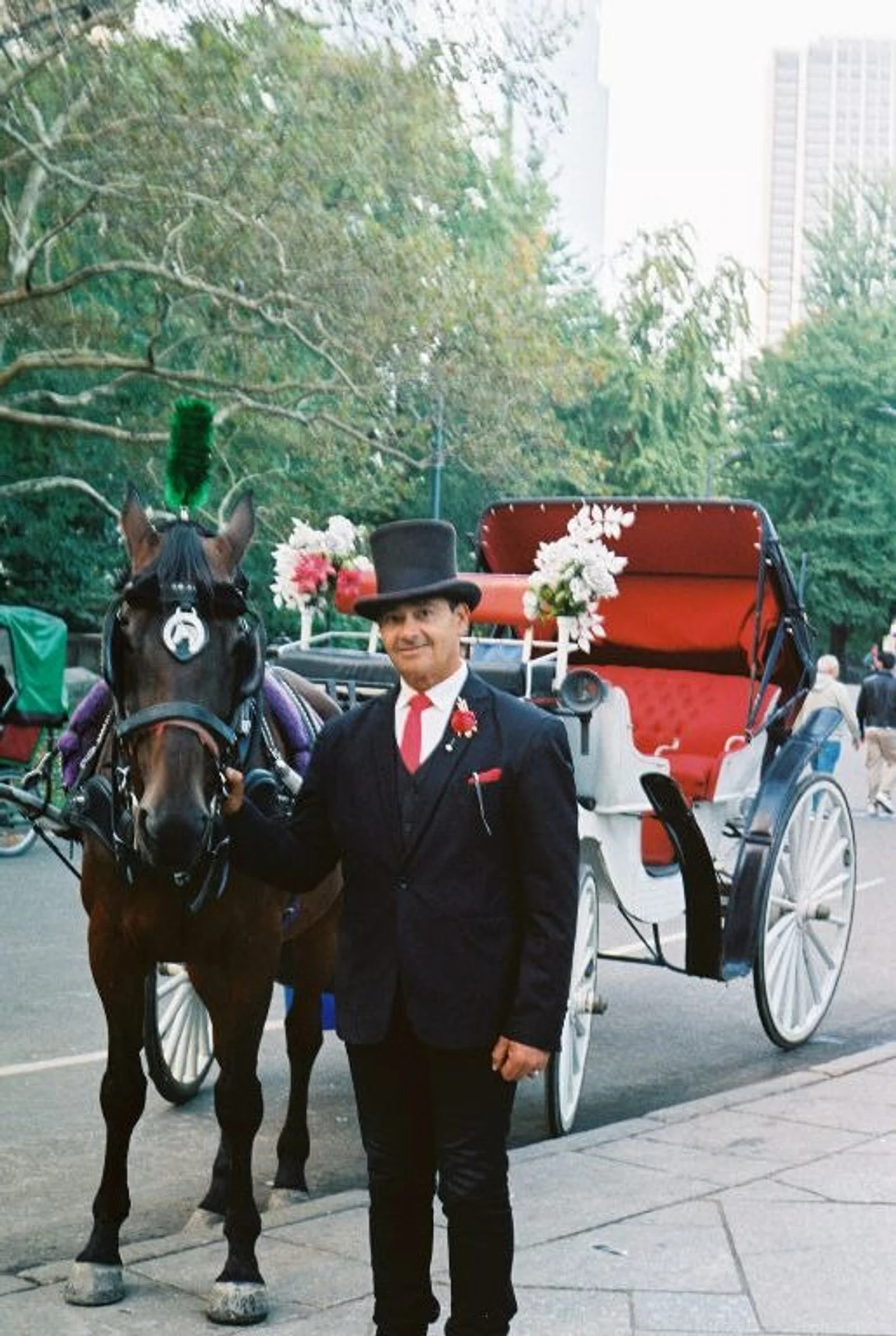
“Yeah, I like to dress up and look the part, but you can wear whatever you want, really.”
“Are you worried about the ban?”
“It just doesn’t make sense constitutionally. I mean, they want to take away the carriage medallions, which are owned by people. The state can’t just take your property.”
“Do you get angry when people think you’re abusing the horses?”
“I mean, yeah, I love this horse more than anything. And if I do lose my job and the stables are taken away, I’ll have to move somewhere so I don’t have to sell him.”
It’s hard to believe such a quaint industry could be so controversial. TWU members and NYCLASS members pitted against each other in a zero-sum civil war for horse emancipation. An issue the average person has no opinion on, subjected to radical polarization by the few people who are willing to extort, defame, and threaten at all costs.
Once the ban goes into effect, the city is expected to offer a compensation plan to the carriage owners for their medallions and off-ramping costs.
“You know, we thought he was gonna be on our side with all of this. I mean, he’s some big socialist kind of guy, and we’re union,” one 62-year-old driver told me, referring to Mayor Mamdani. He’s been carriage driving in the park for 32 years. “He’s supposed to be pro-union. But he just says whatever people on the internet are going to support. He never came and talked with us here or at the stables, even though we invited him. I feel bad for the younger guys. They took out loans, they have mortgages, but I’m done with this.”
The carriages are expensive: $72 for the first 20 minutes and around $30 for every additional 10. Today, they’re still packed with tourists, but for a long time they were a way for working-class people to ride around Central Park and feel a taste of the midtown glitz of the residents who live around the park. Today, the institution is an iconic local bump on the Big Apple, an oddity in a world that gets smoother and smoother every time the sun sets on the corner of 59th and 5th.
The silvery driver’s horse relieved itself on the sidewalk. We both grimaced and took a few steps back.
“Anyways, time for my break,” he said.