Understanding Hunter
Why is Hunter Biden Going Toe to Toe With Nick Fuentes?
By Isaac Simpson · July 27, 2026 · 33 min read
“Yeah, I’m a crackhead,” Hunter declares right out of the gate in his already notorious Channel 5 interview with Andrew Callaghan and Nick Fuentes, released only 48 hours ago.
Throughout the interview, Hunter ineffectively excoriates Fuentes for his rote bad boy opinions. Fuentes says he was debanked and put on a no-fly list by the Biden administration. Hunter replies, “He also debanked me and put me on a no fly list!” Ha ha ha ha.
There is something important happening underneath the surface. Hunter’s approach to the interview is “twinning,”— trying to match Fuentes, to mirror him, to suggest to the viewer that he’s a similar character. If you watch carefully, you see Hunter do this over and over. Nick says something about being a penalized rebel, and every time Hunter suggests that he’s just the same. They both just want to be real. They both go way too far. They both face unfair scrutiny. They’re both Catholics. Forget that Hunter embarrassed himself with drugs and hookers while Fuentes was censored for wrongthink, they’re basically the same guy. Just a couple of wild men too badass for the nanny regime.
This is not to say that Hunter is a total pussy phony nepo baby. He is, in Fuentes’ parlance, a “real nigga.” Hunter’s dark past is the key to him seeming real. For Fuentes, it’s his taboo beliefs and irreverent language. The subtext of the Callaghan interview is that both men survived the darkness and came out stronger on the other side. It’s not even entirely subtextual: Hunter successfully coaxes Fuentes, via analogy to Hunter’s own sinful past, into openly acknowledging that his darkest opinions (i.e. Holocaust denial) are behind him. Two bad men on the path to redemption.
Hunter’s story, if not Hunter himself, resonates with men because it isn’t fake. He really has gone to hell and back. The son of the Vice President of the United States really did consume heroic amounts of hookers, vodka, and crack and then drunkenly leak the photos to the entire world. Reverse Princess Diana for men; exactly what would happen to an “average dude” in Hunter’s shoes.
Yes, Americans should be aware that Hunter is being used as a Trojan Horse. And no, the Trojan Horse will not succeed. He will not effectively match Fuentes in providing a bad boy influencer for the Dems–he’s not agentic enough. But that doesn’t mean that he, as an individual, isn’t worthy of examination. There are many politicians. There are many failsons. There are many “addicts.” But there is only one Hunter Biden.
And that Hunter Biden, I think, comes through pretty clearly in his 2021 memoir, which explores the darkest recesses of his addiction in gonzo literary fashion. Hunter is a very smart, well-read guy—Georgetown then Yale Law, 172 on the LSATs—and he describes his war stories in Thompson-esque fashion. He delivers them alongside large heapings of political spin to create the evenly marbled steak of propaganda that is Beautiful Things.
Young Rich Crack Boy
Hunter’s funny. A repeated joke in Beautiful Things is that his only viable talent is the ability to find crack for purchase within 30 minutes of arriving in any major US city. The key is to feel out which highway exits lead to the seediest neighborhoods, then determine the seediest gas stations in the seediest neighborhoods, then hang around until someone inevitably whips by in a hoopty and asks you if you good.
In my relatively wide experience with American elites, I’ve noticed a certain obsession with shitting the bed. They’re always the ones to show you the piss porn, then take you to the depraved underground show where the singer spits blood on the audience. Hunter Biden is the ultimate bed shitter. He not only shit the bed, he put it all on a laptop and forgot the laptop at a DC repair shop. Hunter’s “addiction” is classical elite sin-celebration.
His first crack experience is telling — and almost unbelievable, given what happens later on:
“Almost anyone who lives or works in DC has at one time or another seen Bicycles—also known as Rhea, a homeless, middle aged Black woman—weaving in and out of traffic or swerving around sidewalk pedestrians on a mountain bike that looks three times too big for her. She usually sports a backpack and a baseball cap, and has a sharp, piercing voice that can be heard a block away as she shouts for everybody to get the hell out of her way, which she does almost continuously. (Because I believe Rhea still lives on the streets, I’m using a pseudonym for her.) I first met Rhea sometime around my senior year at Georgetown. I’d been out drinking with friends one night, got into a foul, to-hell-with-it mood, and broke off from the pack in the middle of the night to visit this same park. It was at the height of the crack epidemic, in the early 1990s, and with a fledgling addict’s wrongheaded sense of misadventure, I decided to see what all the hubbub was about. A crackhead seemed to spontaneously generate in front of me. He asked what I was looking for. I told him I wanted some “hard,” the street term for crack cocaine. He said sure, just give him $100, he’d be right back. I called bullshit: I wasn’t some naïve college bro, or at least that’s what I tried to project. The guy said no problem, he’d leave behind one of his shoes to ensure his return. That made a certain 2 a.m. sense to me: Who’d take off without returning for his shoe? He assured me he’d be back with my request in no time. I stood there in the pitch black, in a park you wouldn’t want to loiter around in the middle of the day, let alone the middle of the night, and waited—gripping his ratty old shoe. Ten minutes later, with the crackhead long gone, this tiny Black woman, a few years older than me but looking twice my age, rolled up on a bike with a shoe that matched the one I was still holding. “You stupid motherfucker,” she said in a loud, exasperated tone. “You fell for one of the oldest cons in the book. You stupid…” “Who the fuck are you?” I shot back. I tried to maintain my streetwise pose. It must have been laughable. Bicycles then explained with a kind of world-weary patience that dealers often keep old, thrown-away shoes hidden nearby to rip off easy marks like me. To prove her point, she’d retrieved a shoe the crackhead had stashed away. I stood there like the dumb, gullible college bro I was. Bicycles then sold me what little crack she had on her, and told me to get the hell out. “You going to get hurt, boy.”
Biden, Hunter. Beautiful Things: A Memoir (pp. 142-143). (Function). Kindle Edition.
The people controlling Hunter want to draw a parallel between him and Fuentes, both to elevate Hunter in the hopes of him becoming an influencer, and in order to couple political rebellion with degeneracy. But does Hunter really care about this project? Not at all.
More than the actual high, Hunter’s real goal is the excitement of the exchange, the son of an elite of the highest order delving into the real urban jungle. “Addicts,” (if you believe they exist, I don’t) have a pathological relationship with not just the drug, but the surrounding milieu. AA is a pseudo-religion for identitarians yearning to be defined by their most sinful quality. I’ve attended 10 or more meetings, and every one served as a platform for “addicts” to tell war stories about their crazy party days. For some reason this amounts to an “illness.”
Hunter is actually pretty redpilled on rehab. He admits that Esalen and several other fancy rehabs he’s attended are mostly bullshit, but he nonetheless succumbs to the modern therapyspeak around addiction. He delivers the drug chapters with real poetic flair, but then retreats to cliches about his “disease” and his “trauma.” To me, this seems insincere; more like the clumsy development of a left wing political platform designed to appeal to women and minorities than his actual beliefs. One piece of evidence to this theory: despite Beautiful Things being supposedly an act of radical honesty, Hunter carefully excludes any mention of his extreme prostitute habit (revealed in the leaks). For the mainstream liberal, hookers are harder to pass off as a disease than substances, as they aren’t quite as victimless.
Living With Rhea
As Hunter received more and more pressure to “be a Biden,” the hood explorations that began in college became a regular drunk habit. He should have been an artist, a truth seeker, a genuine black sheep, but he kept letting himself get forced into a box of politics. To this day he hasn’t realized that this–his inability to take control his own life–that’s the source of his problems. So he leaned into degeneracy because it was the voice of his rebellion; his last screaming refusal to play along with the phoniness of politics.
Meanwhile, he suffered very little at the hands of the dangerous street people that he loved to interact with. And so he just kept falling into a world where he felt like finally he could breathe. Anyone who has ventured to the dark side can relate. Once you enter the criminal underworld, there’s a coziness among participants that becomes addictive in its own right.
In 2015, his brother Beau Biden dies. He has some bullshit consulting job in DC. His dad announces he’s not running for president. He goes full bore into addiction. Also like many elite bad boys I’ve known, he has a penchant for drinking full bottles of vodka during the day.
I retreated into my DC apartment, and drank. I did that practically every day, all day, from Christmas until the end of January. I would turn on the TV, sit on the couch, drink, pass out. Even drunk—especially drunk—I never slept in my bed. I’d watch the TV nearly comatose, staring at it without really being aware of what was on. Other times, I’d cry for hours without realizing I was crying. I hardly ate. I phoned it in at work, with the five employees in my office taking up the slack. I sat in on some conference calls, canceled meetings, didn’t go to the office. I scratched all business trips. The only calls I took were from my daughters and my dad, who called incessantly. He’d ask how I was. I’d say fine, hang up, pass out, wake up, drink more. I would drink like that for twelve to sixteen hours. When I finished a bottle, I’d trek across the street to Logan Circle Liquor, a sagging storefront filled with racks of booze and a clerk who worked behind a bulletproof plastic window. I’d order a handle of Smirnoff vodka—about a half gallon—in a tremulous voice and pay for it with shaky hands. Usually I’d head straight home, but sometimes the block-long trip proved to be too much: somewhere between crossing the street and climbing the stairs to my apartment, I’d unscrew the cap and sneak a swig. I wouldn’t realize that whole days, even weeks, had passed. Each one bled into the next, while simultaneously crawling by at a glacial pace. Before long I began to wake up with debilitating withdrawal symptoms. It became a chore just to raise my head off the pillow. If there wasn’t a last swig left in the bottle, it took a Herculean effort to put on my boots and jacket and stumble back to the liquor store. The short walk soon felt like a marathon; then, like I was crawling over broken glass. I had never drunk like that before. I’d drunk to excess, to the point where I knew it was no longer smart to keep drinking—that’s how it was when I decided to get sober in 2003 and again in 2010. But I’d never been in such pain that I couldn’t go out, that I almost couldn’t go on. I lost twenty pounds. I didn’t eat anything much beyond what was available at the liquor store: Doritos, pork rinds, ramen noodles. Eventually my stomach couldn’t even handle the noodles. I was drowning myself in alcohol.
Biden, Hunter. Beautiful Things: A Memoir (pp. 111-112). (Function). Kindle Edition.
During this addiction period, Hunter lived in luxury hotels and Airbnbs until getting kicked out and moving on to the next. For one nine-month period, he unbelievably moves into a DC apartment with Rhea, AKA Bicycles, twenty years after his first encounter with her. They smoke crack all day and night and sit on the couch. He goes into great detail about the crack smoking process, acquiring and administering Chore Boys, the little pieces of wire netting used in crack pipes, with intimate accuracy. He’s obsessed with the bodegas that stock crack paraphernalia.
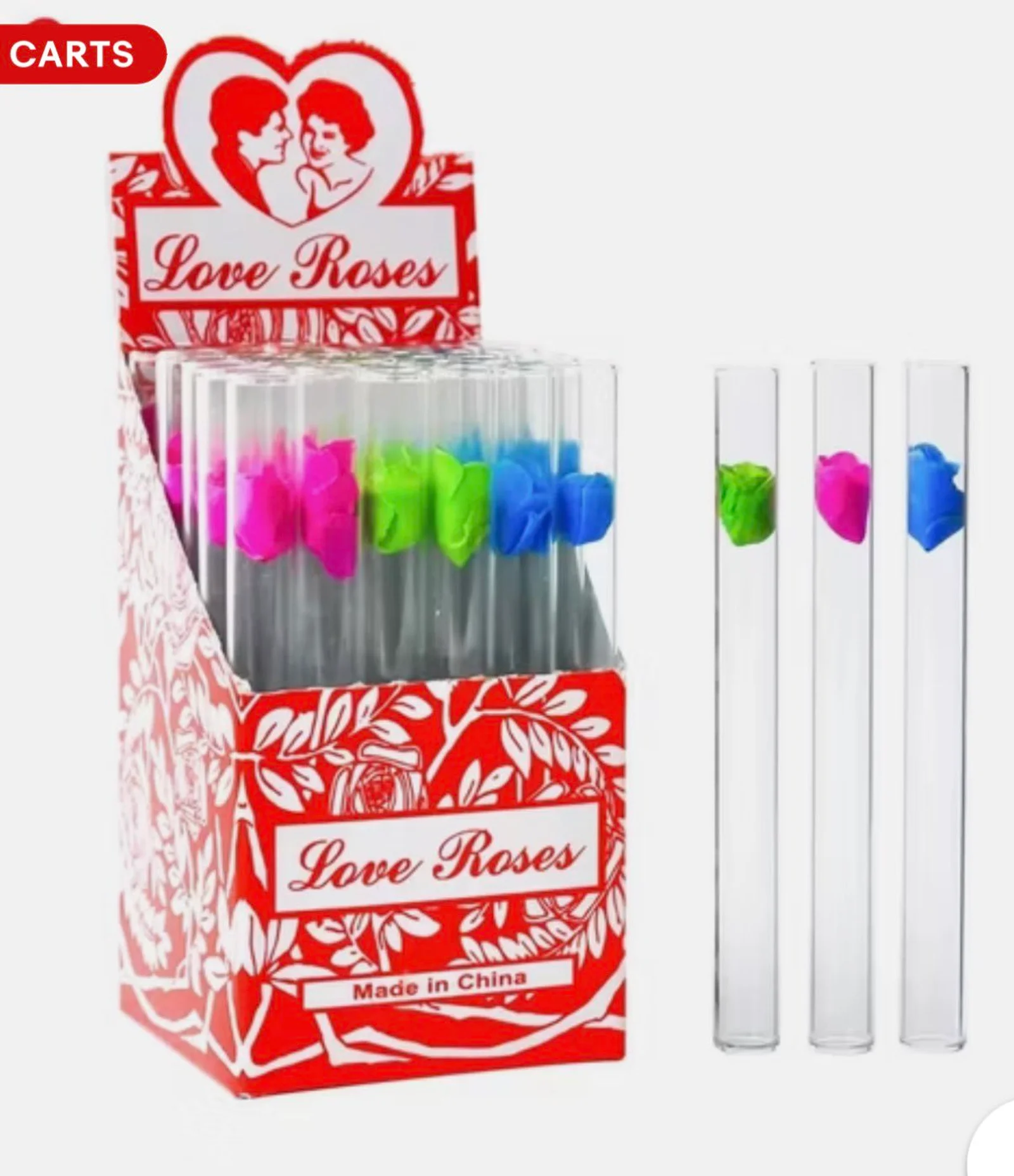
Among the many maladies associated with her long-term crack use, Rhea suffered from peripheral neuropathy. She told me the painful condition was induced by an allergic reaction she had to cocaine mixed with lidocaine, a numbing agent often used for legitimate purposes as a nerve block. She’d lose feeling in her extremities: fingers, toes, nose, the tips of her ears. When the weather turned cold or she smoked too much, her nose and ears blew up like balloons. Now Rhea was living with me. I was gone much of the time, traveling for family, or business, or just trying to disappear. But when I was home, the two of us interacted like a deranged, crack-addled version of The Odd Couple, her Felix Unger neatnik habits crashing against my slobbier Oscar Madison tendencies. She commandeered the TV and only watched those true-crime shows, with the volume turned way up. It drove me insane. I’d wear headphones, or pace the room and shout for her to turn the damn thing down. The angriest I ever got at her was when she took a belt I loved and cut it in half to fit her size-nothing waist. Rhea weighed maybe eighty-five pounds soaking wet. I probably bugged her more than she bugged me. She got mad when I left dirty clothes on the coffee table or spilled vodka on a rug. When I wasn’t traveling, she left the apartment more than I did; after so many years on the streets, being confined inside for too long made her itchy and claustrophobic. That time on the streets took its toll, of course. She’d limp from an infection in her ankle, or arthritis would flare up in her hips. Sometimes bursitis almost immobilized her; the pain she had to endure just to get up could be excruciating. I’d take her to an emergency room if it became unbearable. Otherwise, I’d go to a CVS to pick up prescriptions she got from a clinic, antibiotics for whatever infection she was prone to. It was heartbreaking. Mainly, however, we just planted ourselves on the couch and smoked a ton of crack. For endless hours, day after day, it was the same numbing ritual, over and over and over: pipe, Chore Boy, crack, light; pipe, Chore Boy, crack, light; pipe, Chore Boy, crack, light. A world of previously invisible commonplace objects became indispensable accoutrements to our sacramental routine. The pipe we used most often, called a stem, was actually a made-in-China glass tube that comes with a decorative paper rose inside. Sold as a tchotchke and referred to as a “glass rose,” it’s used to smoke crack. The tube is the same length and width as a 100-millimeter cigarette, and so can be carried surreptitiously in a pack of cigarettes. Chore Boy is a spun-copper scouring pad. Packaged in orange boxes displaying a cartoon boy wearing blue overalls and a backward-facing red cap, Chore Boy is designed to clean pots and pans. Addicts, who call it “choy,” use it as a screen to hold the crack in their rose pipes. Rhea always lit the choy first to burn off any chemicals. At DC bodegas frequented by addicts, clerks conveniently hand you a pipe and choy together when you order a “one-and-one.” Archmere Academy, Georgetown, Yale Law—and here I was, ecstatic with my new knowledge of rose pipes, Chore Boy, and one-and-one.
Biden, Hunter. Beautiful Things: A Memoir (pp. 150-152). (Function). Kindle Edition.
How he survived this period is a mystery. The Bidens, it becomes clear, pride themselves on their raw emotional strength. Perhaps lacking it himself, Hunter is clearly drawn to such strength, and he alternatively describes his brother Beau, his father Joe, and his wife Melissa as variations of his “rock.” He talks about how incredibly strong his father is—“he’s strong, he’s so so strong”—able to take literally anything. Lacking a human rock, Hunter turns to another kind of rock, crack. And it’s there where Hunter shows off his own version of the trademark Biden strength—withstanding levels of substance abuse that would kill a normal person. When push comes to shove, even in the very pit of his addiction, Hunter can still pull it together for a meeting with the King of Jordan.
I would head to Amman to lobby King Abdullah II, one-on-one... I sat down across from the bright, personable king, a descendant of the Prophet Muhammad, with thoughts of my hotel room’s minibar intermittently racing through my head. I was determined during the trip to regulate my drinking. I kept it private inside my room, walking the tightrope between being debilitated by the DTs because I didn’t drink enough, and drinking too much to be effective. Now, I was sweating beneath my shirt but not through my jacket. I was fully engaged: thoughts of those vodka mini-bottles back at my hotel were quickly subsumed by the gravity of our conversation. Lives were on the line. The discussion went on for nearly an hour, just the two of us. When we finished, King Abdullah spoke briefly with Rick, who then took the lead as we met in another part of the palace with one of the king’s aides and had a more detailed discussion about programs the WFP hoped to implement in Zaatari. Not long after we returned to the States, King Abdullah let many of the isolated refugees in Syria into Zaatari. My meeting was not the only determining factor in persuading him; there were many others advocating for these desperate, proud people. But it clearly helped. More important, considering my personal battles at the time, I hadn’t blown it. I hadn’t cost innocent lives. That accomplished, I needed to get back to my apartment, uncap a bottle, lock the door.
Biden, Hunter. Beautiful Things: A Memoir (pp. 116-117). (Function). Kindle Edition.
Things get worse and worse for Hunter. He continues living in high end hotels until they kick him out for cooking crack with large groups of black hoodlums. In one instance, he finds himself facing a gun on Skid Row, a place that he described as truly the end of the line (“There was no fucking poetry at all”).
Even in that crazed world, there’s no master network available to someone who’s up twenty-four hours a day, smoking every fifteen minutes, seven days a week. Nobody can attend to those needs. No matter how big a dispensation system somebody like me pieced together, there were always gaps in the service. This downtown tent city filled in those gaps. The first time I returned there alone I found the cut between the two tents that I’d watched my Air Force buddy slip through. As makeshift and chaotic as the layout seemed, there was a remarkable logic and consistency to it. I went through and stepped around people curled up on thin pieces of cardboard. Beyond them, I noticed a tilting, unlit tent. I pulled back a flap. It was pitch-black. All I saw was the gun pointed at my face. I stood there unfazed: I assumed I was in the right place. If the guy squatting there had a gun, he had something worth protecting. Turned out I was right. I told him I’d been there before with Joe, or whatever name I gave him for the homeless guy who’d brought me there previously. His reply: “Who the fuck you talking about?” So I just asked if he had any hard. “Oh,” he said. He lowered the gun, rummaged around, and pulled out a bag. He never even got up. I saw somebody else lying to his right, sound asleep, snoring softly. I only bought a little because he only had a little, but it was enough to hold me over until the rest of the miserable, bloodsucking world I now belonged to was up and back to work. I walked straight to my car and slipped inside. I was shaking and ashamed. Then I lit up. Thirty seconds later, I was numbed and flying and no longer ashamed at all—until the next time.
This itinerant period lasts for about three years, cooking crack at the Chateau Marmont or the Beverly Hills Hotel, getting kicked out, screaming at the receptionist for racism toward his shady guests, repeat. His “friends” would routinely rob him during multi-day no sleep crack benders. Then the hotel would be forced to politely say, “I”m sorry, we need the room for another booking.”
The Crash
I have this theory about darkness and greatness. Greatness, the holiest act, isn’t just about creation. It’s the act of bringing something from the darkness of non-existence into the lightness of being. But darkness is a gradient. The further you get into it, the more deranged and awful things get, and the harder it is to return to the light to share what you’ve discovered. However, the further you go into the dark, the greater the truth and beauty that you’re able to bring back. The deeper the pain, the greater the beautiful things.
The pattern is oddly consistent. Elon’s first child dying. Bezos and Jobs are orphans. The president of France is married to a man. It’s like when you decide to become great, you really do make a Devil’s Bargain—you must be ready to endure levels of pain and desolation that normal humans cannot. And only if you can still stand up into the light are you rewarded with the opportunity to transcend. There is no such thing as a great man who has lived an easy life.
Hunter’s first real memory is the car accident that killed his mother. He experienced it next to his older brother Beau Biden, the “good one,” with whom he had a very close relationship until Beau died of a brain tumor at 46. He then ended up in a relationship with Beau’s widow, who dumped him pretty viciously during his struggles with drugs.
I’ve had a single flash of memory from the earliest and most consequential moment of my life. I can’t be sure how much of it is a composite of family stories and news accounts I’ve heard or read through the years, and how much of it is actual repressed memory finally trickling up to the fore. But it’s vivid. It is December 18, 1972. My dad has just won the race for junior U.S. senator from Delaware—he turned thirty three weeks after the election, barely beating the Senate’s age requirement before taking his oath in January. He is in Washington, DC, that day to interview staff for his new office. My mother, Neilia, beautiful and brilliant and also only thirty, has taken me; my big brother, Beau; and our baby sister, Naomi, Christmas-tree shopping near our fixer-upper house in Wilmington. Beau is almost four. I’m almost three. We were born a year and a day apart—virtually Irish twins. In my mind’s eye, this is what happens next:
I’m seated in the back of our roomy white Chevy station wagon, behind my mother. Beau is back there with me, behind Naomi, whom we both call Caspy—pale, plump, and seeming to have appeared in our family out of nowhere thirteen months earlier, she was nicknamed after one of our favorite cartoon characters, Casper the Friendly Ghost. She’s sound asleep in the front passenger seat, tucked into a bassinet. Suddenly, I see my mother’s head turn to the right. I don’t remember anything else about her profile: the look in her eye, the expression of her mouth. Her head simply swings. At that same moment, my brother dives—or is hurtled—straight toward me. That’s it. It’s quick and convulsive and chaotic: as our mother eased the car into a four-way intersection, we were broadsided by a tractor trailer carrying corncobs. My mother and little sister were killed almost instantly. Beau was pulled from the wreckage with a broken leg and myriad other injuries. I suffered a severe skull fracture. The next thing I remember is waking up in a hospital with Beau in the bed next to mine, bandaged and in traction, looking like he’s just been clobbered in a playground brawl. He’s mouthing three words to me, over and over: “I love you. I love you. I love you.” That’s our origin story. Beau became my best friend, my soul mate, and my polestar since those virtually first conscious moments of my life. Three weeks later, inside our hospital room, Dad was sworn into the Senate.
Biden, Hunter. Beautiful Things: A Memoir (p. 11).
Beautiful Lives
The title Beautiful Things recalls a passage from Curtis Yarvin, from his famous hobbits and elves piece, “You Can Only Lose the Culture War.”
“We know who are the hobbits and who are the elves. We know who is on top and who is on the bottom. (Of dwarves and orcs, we shall not speak.) We know what the elves want: they want to live beautiful lives. We know what the hobbits want: they want to grill and raise kids.”
The “just want to grill” part of this became more famous, but the beautiful lives bit is what always stuck with me. I think it evinces something about the motivations of our new gay technocratic elite. In White Lotus Season 2, a nefarious homo discusses beauty with Jennifer Coolidge, "I live for beauty," says Coolidge's character. "I'd also die for beauty," responds the sinister degen, "Wouldn't you?” as if to say that any means—manipulation, murder, destruction of youth—are worth it when beauty is the end. Our new tech elites are driven by a video-game-like desire to see all beautiful things, acquire all items, experience all experiences, complete all side quests. Of course, this is always shorthand for sex and drugs.
Hunter is most definitely a beautiful things seeker, but unlike the Yarvinian technocrat, Hunter yearns to find it in the recesses of the ghetto. This perspective defines our mainstream liberal elite who, like their communist forebears, dream night and day of teaming up with gangbangers to eradicate the Christian white Kulaks. Hunter repeatedly reveals this morality in the Fuentes interview—imagine being a black man, he keeps saying, just imagine the disenfranchisement, the pain of being excluded, the fury at the system. It’s all indulgence, imagination—the secrets of the noble savage must be snorted to be beheld. Experience checked. Points gained.
It’s about eight months before his father wins the Dem primary for President of the United States; the perfect amount of time for Joe Biden’s deeply problematic son to clean up in time for the spotlight. And Hunter’s binge does, finally, come to an end, on the roof of the Petite Ermitage in LA (a place I myself have gotten day-drunk several times). It’s a pool and party scene for twenty and thirty-something bourgeoisie, a place where the bottom half of the top spends their dad’s car dealership money pretending to hang out with actual stars. It’s like a junior varsity Chateau Marmont, and indeed, Hunter only ends up there, smoking crack alone in the bathroom in the middle of the afternoon, because he gets kicked out of Chateau. Then, finally, his fairy godmother intervenes.
My $300-a-night room looked like somebody set off a bomb in a crack house. As I always did, I rented the room a day at a time, unwilling or incapable of planning any further ahead than that. I’d call the front desk each morning to ask for another night’s extension…When I made my usual call to the front desk a little later to re-up for another night, however, I was told my room had been booked in advance for the next week and there was nothing else available. I was used to this; it happened all the time. I was the guy by the pool who got up every ten minutes to duck into the bathroom and smoke crack. I was the guy who sat by himself at the bar and piled up a $400 tab without buying drinks for anyone else. The staff must’ve thought, “How is that guy still standing?” As much as I thought I was in control, I wasn’t fooling anybody. Four or five days into a stay, I’d call the desk to reserve another night and be told there were no more rooms at the inn. Everyone was polite; they were always well-mannered. No one ever formally threw me out—though the Chateau eventually blacklisted me, putting me on their infamous unofficial rogue’s lineup that included the likes of Britney Spears, if that gives you an idea of how out of control I was. Now, the Petit Ermitage asked me to vacate my room by 11 a.m. There was no way I could pack up my wreckage by then, and I had no idea where to go next. I missed the morning deadline and had it extended to 1 p.m., then to 3. In the meantime, I settled into a shaded lounge chair by the rooftop pool and tried to pin down my next move. I slipped away every twenty minutes to hit the crack pipe in my room, on the same floor just down the hall. I finally got a bellman to help me round up my belongings and hold them for me in the lobby. At one point, a young, trim, artsy guy in a chaise lounge next to mine struck up a conversation. He’d done the same thing the day before, even though I’d made it clear I didn’t really want to talk with anyone. It was a tight-knit, very L.A. scene up there that I wanted nothing to do with—I hadn’t made new friends in three years unless they were involved with drugs. But here he was again, yakking away. This time he was with a tall, blond Daryl Hannah look-alike and a photographer friend. He’d obviously had too many drinks. “Here’s the most interesting person at the pool,” he greeted me as he sat down this time. “What’s your story?” He then proceeded to tell me his: all about his burgeoning career as a painter and sculptor. I nodded once in a while: I’d probably already drunk a quart of vodka that day, smoked crack continuously, and was operating on ten hours of sleep for the week. I don’t know how long he went on. The only thing I remember is that all of a sudden one of the trio turned to another and said, “You know who Hunter should meet? He should meet your friend Melissa.”
Biden, Hunter. Beautiful Things: A Memoir (pp. 227-229). K(Function). Kindle Edition.
Melissa turns out to be a beautiful blonde Jewish scenester with some fake media job carefully described as “aspiring documentary filmmaker” in the book. Whether Melissa is who she told Hunter she was is for another article, but we can be sure that she was at the very least waiting for precisely such an opportunity to marry into the highest ranks of global society, and she springs immediately into action.
By the time we left, the tree lights strung around us twinkled in the gathering dusk. The scene had turned magical. I drove Melissa to meet up with a friend at the Chateau Marmont—thank God all I got was a smirk and a nod from one of the valets—and we went from there to a birthday party for another friend of Melissa’s at a nearby Mexican restaurant. Everyone was gathered around one big table. Amid all the unfamiliar faces, I felt a familiar twitch. I’d been so enraptured during dinner that I hadn’t hit the pipe all night. It was the longest I’d intentionally gone without using since I’d landed back in L.A. Now, before sitting down, I told Melissa I was going to run out to get a birthday gift, and assured her I’d be right back. I drove to the hotel and headed up to my room. Before locating my pipe, I settled into a chair near the window, took a deep, reflective breath, and closed my eyes for just a moment, pausing to absorb everything that had happened that evening. When I opened them again, it was 7:15 a.m. I panicked. I thought I’d blown my one chance at salvation. I fumbled around for my phone and saw a text Melissa had sent sometime after I left the restaurant the night before. “Is everything okay?” I texted back immediately to say how sorry I was. I told her I’d returned to my room exhausted and fell asleep. I promised it was an honest mistake. Fifteen long minutes later, Melissa replied. “Glad you’re okay. What are you up to today?” “Spending time with you?” I typed hopefully. Melissa asked if I wanted to come by her apartment and go from there to get breakfast. I raced over and apologized fifty times for flaking out the night before. She insisted it was no problem. We sat for a minute on the couch inside her modest one-bedroom in a pink stucco complex just up the street from the Petit Ermitage, whose verdant rooftop pool was visible from the fourth-floor walkway outside her front door. I lowered my head into her lap, then didn’t wake up until that night. Opening my eyes and seeing that she was still there, I remember telling her, with utter relief and without equivocation or exaggeration, “That’s the first time I’ve slept in three years.” From that day on, Melissa nursed me back to health. Nursed me back to life. The first thing she did: took my phone, my computer, my car keys. She took my wallet. She deleted every contact in my cell that wasn’t my mom, dad, aunt, or uncle—anybody whose name didn’t contain Biden. Gangbangers, bouncers, valets—all gone. If you weren’t blood, you were out. When I protested that lifelong friends were getting erased in the massacre, Melissa calmly countered that they’d find a way to reach me if they were truly lifelong friends. She reset the password on my laptop and didn’t tell me what it was, ensuring that I had to go through her to use it. She dumped out all of my crack. I couldn’t go to the bathroom without her following me inside, sure that I’d hidden something in there. I had. I’d wake up in the middle of the night and she’d tail me into the living room. I’d insist I was fine, that I just couldn’t fall asleep, hoping that she’d head back to bed. I only wanted a minute to rifle through my bags for whatever residual dope I could find. I didn’t realize she’d already gone through every bag I owned and tossed out anything that resembled a drug, from Advil to my unused Lexapro. The vultures didn’t wait long to call and knock. Their cash cow was missing, and they wanted me back. They said I owed them money and tried to intimidate Melissa if I didn’t pay up. She turned to steel. She was merciless. She went through my bank records and checked off charges, like the $15,000 worth of purchases at a Best Buy in the Valley, where one of my dealers lived. She then told my former compatriots in debauchery in no uncertain terms that if they showed up at her door or tried to get in touch with me again she was calling the police and would otherwise turn their futures into a living hell. The South African beauty with the bottomless blue eyes made that crystal fucking clear. She changed my number and within weeks would find a house for us tucked high in the Hollywood Hills. She pushed away everyone in my life connected to drugs. It was all on Melissa. It’s no picnic trying to monitor and manage an addict.
Biden, Hunter. Beautiful Things: A Memoir (pp. 235-238). (Function). Kindle Edition.
And it is here that the tragedy of Hunter Biden becomes most apparent. The only begotten son of the super strong patriarch didn’t even have the strength to save himself. From his brother’s widow to Rhea to rehab to the DNC—he was always monitored, taken care of, controlled. So of course his worldview, like so many other liberal elites, is anchored not in religion, not in freedom, not even really in progress, but in naïveté. They want to be led around by the nose. They want to be taken advantage of by criminals, because criminals take control.
Hunter Biden is not a great man—he knows this. What he is is a good man. He really does want to tell the truth. He really does want to help people. He wants to articulate the beauty of the world, he wants to share beautiful things with people. More than anything, he wants to connect with people that he perceives to be poor, disenfranchised, oppressed. But what’s missing here is agency. Can a person really have morals if they have no agency first?
Thus, in the interview, he’s completely mogged by Fuentes, who most certainly has his own carefully crafted morality. Compared to Fuentes, Hunter’s attempts at being “real” don’t work. He comes off as phony, rehearsed, and weak, while Fuentes seems stable, funny, and real.
The people controlling Hunter want to draw a parallel between him and Fuentes, both to elevate Hunter in the hopes of him becoming an influencer, and in order to couple political rebellion with degeneracy. But does Hunter really care about this project? Not at all. He’s letting himself be used, just as he has been his entire life, by people who he’s never had the courage to confront. Ironically, his father also ended up as a puppet in the end.
But at least he tried. At least Hunter actually explored the depths of the lowest class that his compatriots pretend to care about. He went all the way in, and survived. His binges were the closest thing to “being himself” he could ever truly get—the one place he couldn’t be controlled. Hunter doesn’t care about cultivating white men for the Dems! He just wants to be back in that DC apartment with Rhea, writing poems about the beauty of rocks and rock bottom.