I Spent Six Hours in the Shopping Simulator
“Something something Baudrillard…something something simulacra…”
By Denzel Rust · November 24, 2026 · 12 min read
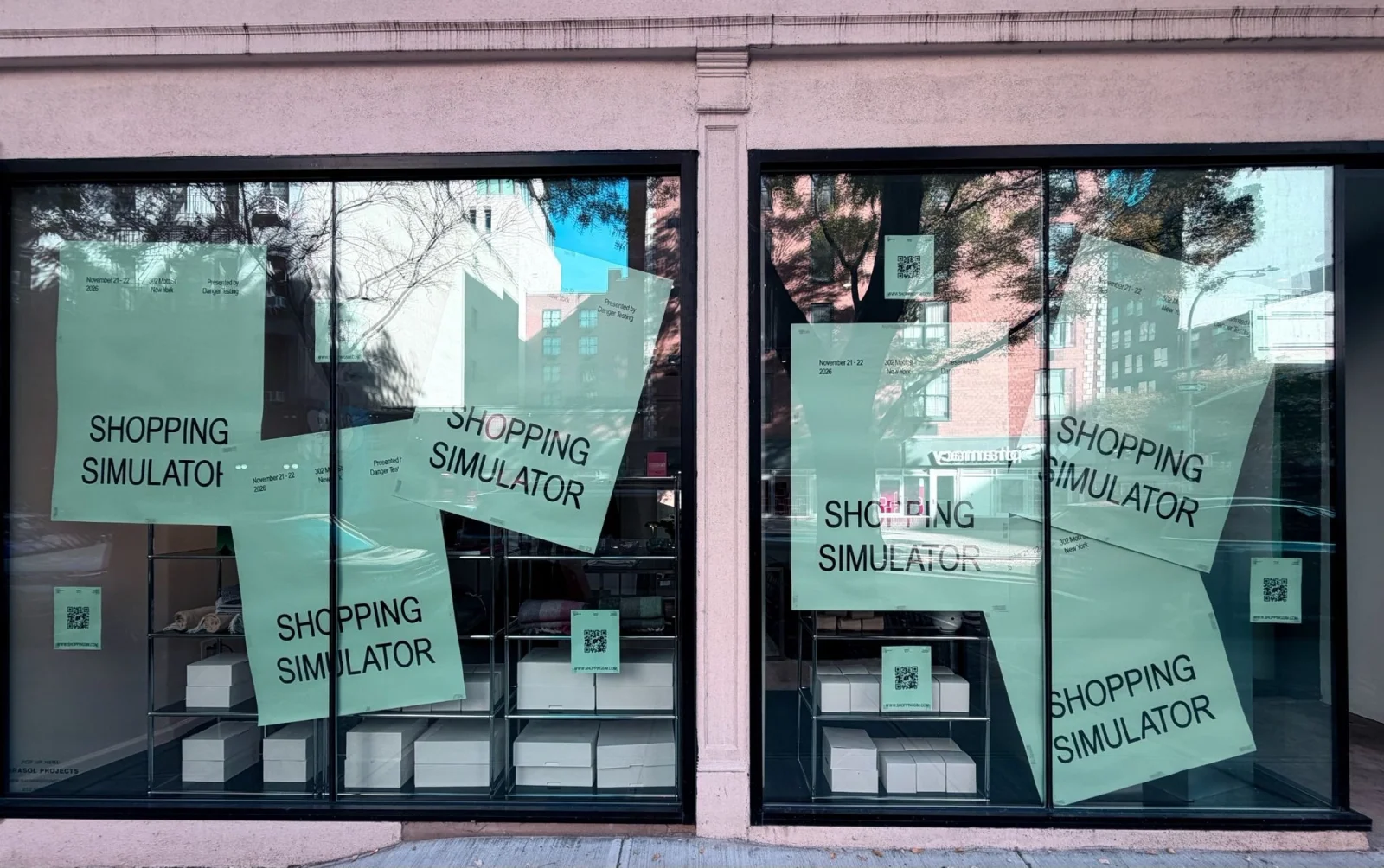
I’m first in line for the Shopping Simulator, a fake pop-up store social experiment happening on the border of NoHo and NoLita. The premise is simple. Walk in, browse, select, approach the register, pay zero dollars, and then walk to the entrance, where an employee confiscates your item and puts it back on the shelf.
“I walked here, and I saw so many fucking lines,” says Peter, a young retiree standing behind me. “And fucking things, and being in line has become a thing, and I don’t do lines!”
“I fuckin’ hate lines,” I agree.
“But I’m into this line. This is a good line for me.”
“Because it’s funny.”
“Yeah, because it’s funny.”
On my own walk over I saw lines outside bakeries, matcha shops, and a three-blocker outside of Warby Parker. West Village trustafarians and high-powered Wasians in the leather-jacket-short-skirt-high-boot Zara uniform waiting to buy viral $60 rye bread, $38 coffee, or a $68 slices of Pizza. The New York line now contains it’s own controlled opposition, with angry reviewers waiting 45 minutes to humiliate everyone behind them.
Most people make a devil’s bargain. They afford living here by giving up on enjoying it. Waiting in line becomes high status, a way to signal that you’re one of the non or semi-working rich who can throw their time away. You stand, in single file, behind retractable barricades, to prove that you are free.
“I’m an attention nerd,” says Peter, “and what I would suggest is that there actually is an excess of attention, even though we think there isn’t.”
He explains to me and the guy behind him that he got rich selling his ad agency at the age of 36. He says if he were in charge of the Shopping Simulator, he would have just paid another 50 actors to line up behind us and generate hype.
“As far as I understand, there’s no rules in marketing,” he says. “Just guarantee the win and don’t even tell the client.”
I ask him who’s the greatest “attention generator” of all time.
“There’s no question,” he says. “MrBeast.”
The door opens.
“You guys can come inside.”
HOUR ONE
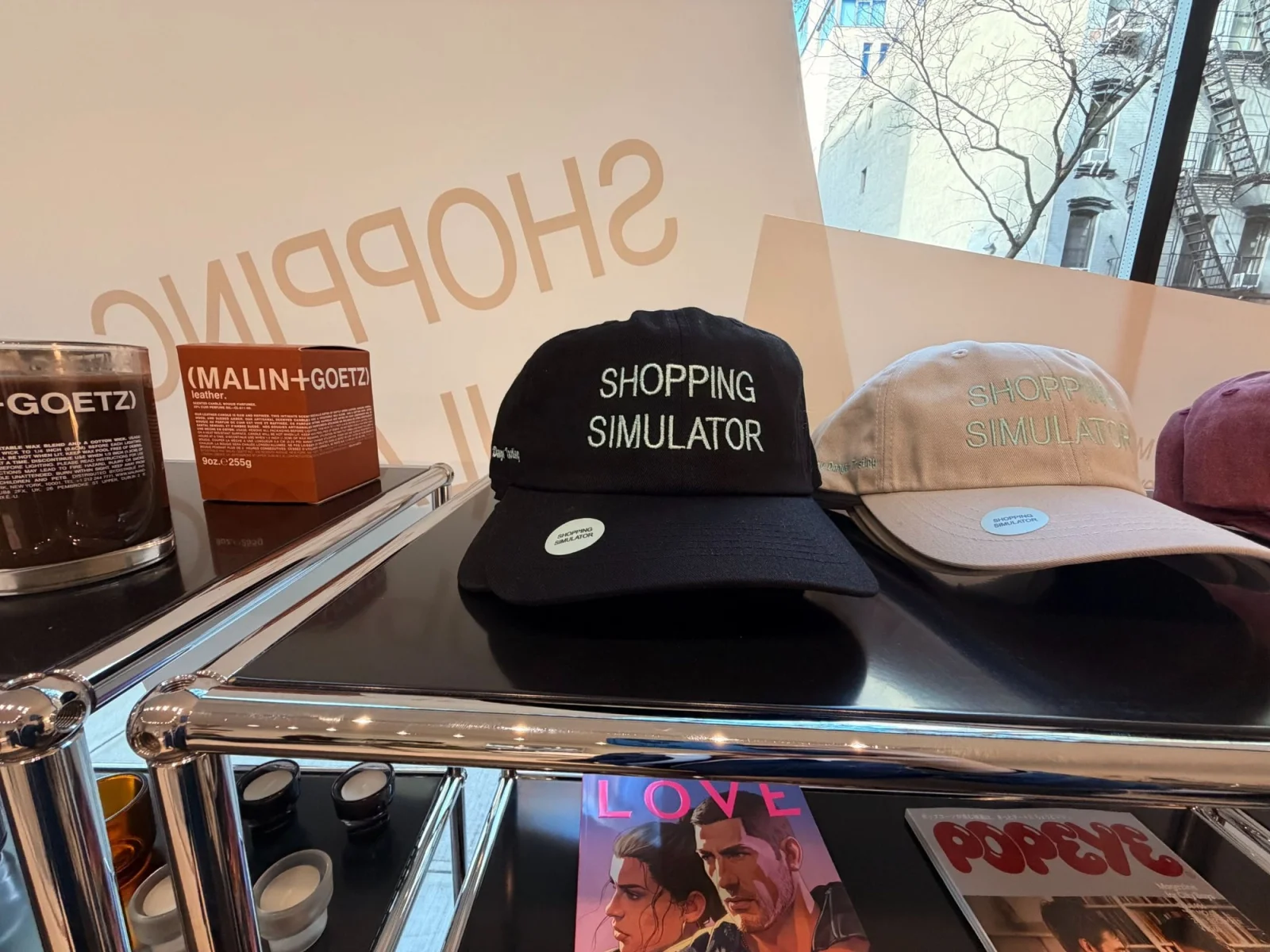
The Shopping Simulator is a generic parody of a pop-up. There are scented candles, branded baseball caps, wool scarves, bespoke bowls and plates, jewelry, face sprays, and two of the signature freestanding clothing racks with ashy-textured hoodies on finely carved white oak-tone hangers. Within about three minutes, I’ve seen it all, but I can’t decide what to not buy.
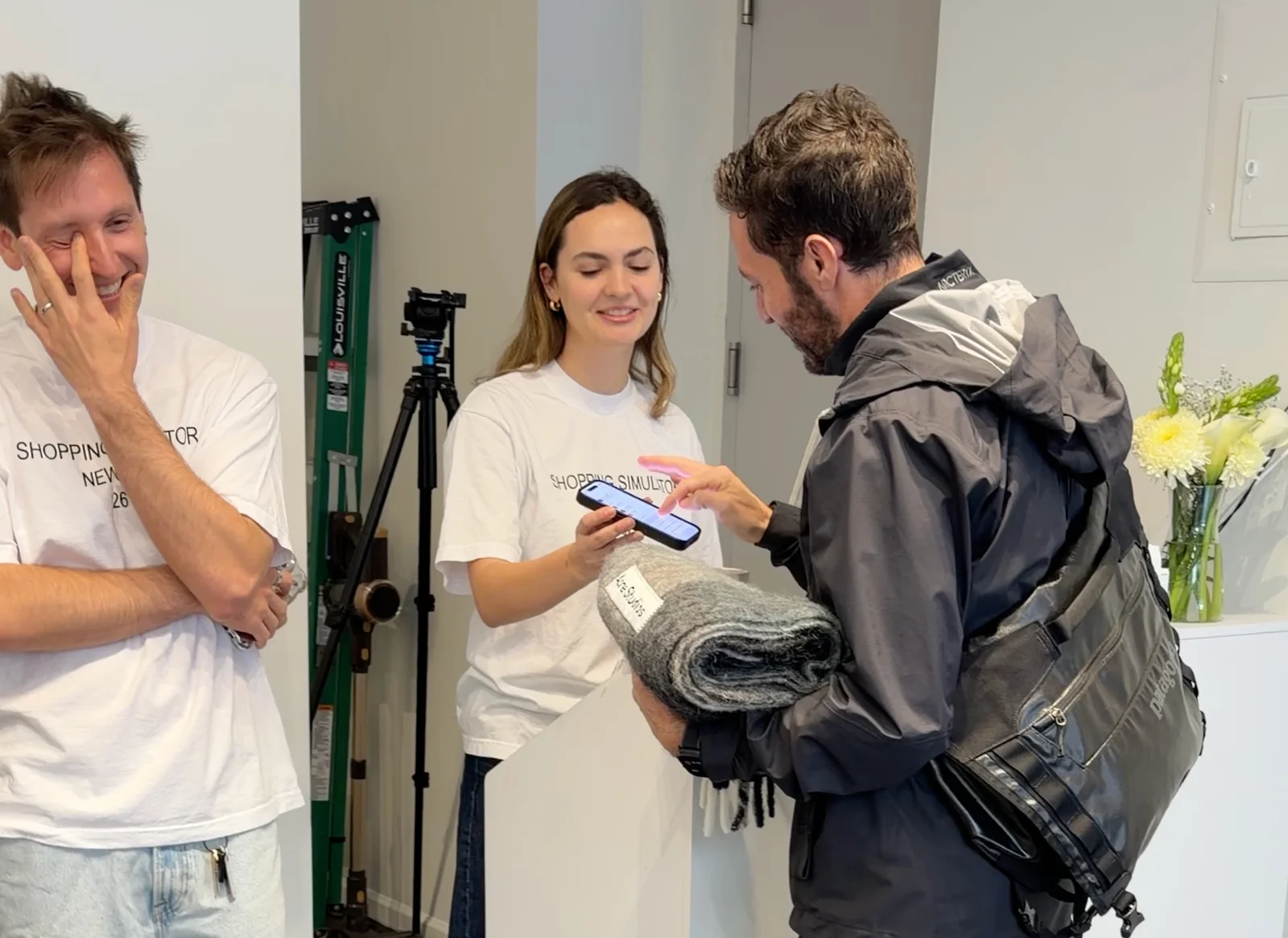
“I’ll take this,” Peter says, handing the checkout girl a scarf.
“Okay, just swipe here,” she responds. “But don’t worry, we won’t charge you.”
He swipes.
“Oh…” she says. “So I think it might have accidentally gone through.”
“So you just charged me $400 for this?”
“Yeah. Apologies. What’s your Venmo? I’ll send it back.”
They settle up. A glitch in the simulation. The girl hands him a fake receipt and takes a fun Polaroid. Ha ha. How cute. How pleasing. We all get to live in Manhattan-post-scarcity-happy-hour world. He walks to the front door and hands his wool scarf back to an employee, who places it back on the shelf. A thirsty Sudanese child dies of arrhythmia. Crows circle overhead before eating its eyes.
HOUR TWO
I have been walking in circles in the dorm-sized simulator for over an hour now. I still can’t decide what to buy. The lo-fi house repeats ad nauseam. The fluorescents drip cold blue light down my boiling optic nerves.
“Can I help you with anything?” asks an attendant.
“No, sorry,” I say. “It’s just really hard to choose.”
A Chinese woman (as in a woman who is from China) comes into the store and starts looking at one of the $70 candles. An employee walks up to her and asks if she has any questions. In patchwork English, she asks if she can buy just the candle without having to buy the holder it’s placed in. The attendant explains that she can’t actually buy the candle at all. She stares blankly at him. What the fuck do you mean? she emotes. I am in America. I am in a store. There’s a fucking price tag. Give me the candle.
They fruitlessly argue. She leaves in frustration.
“You come here often?” I ask a blonde looking at some plates.
“Oh, all the time.”
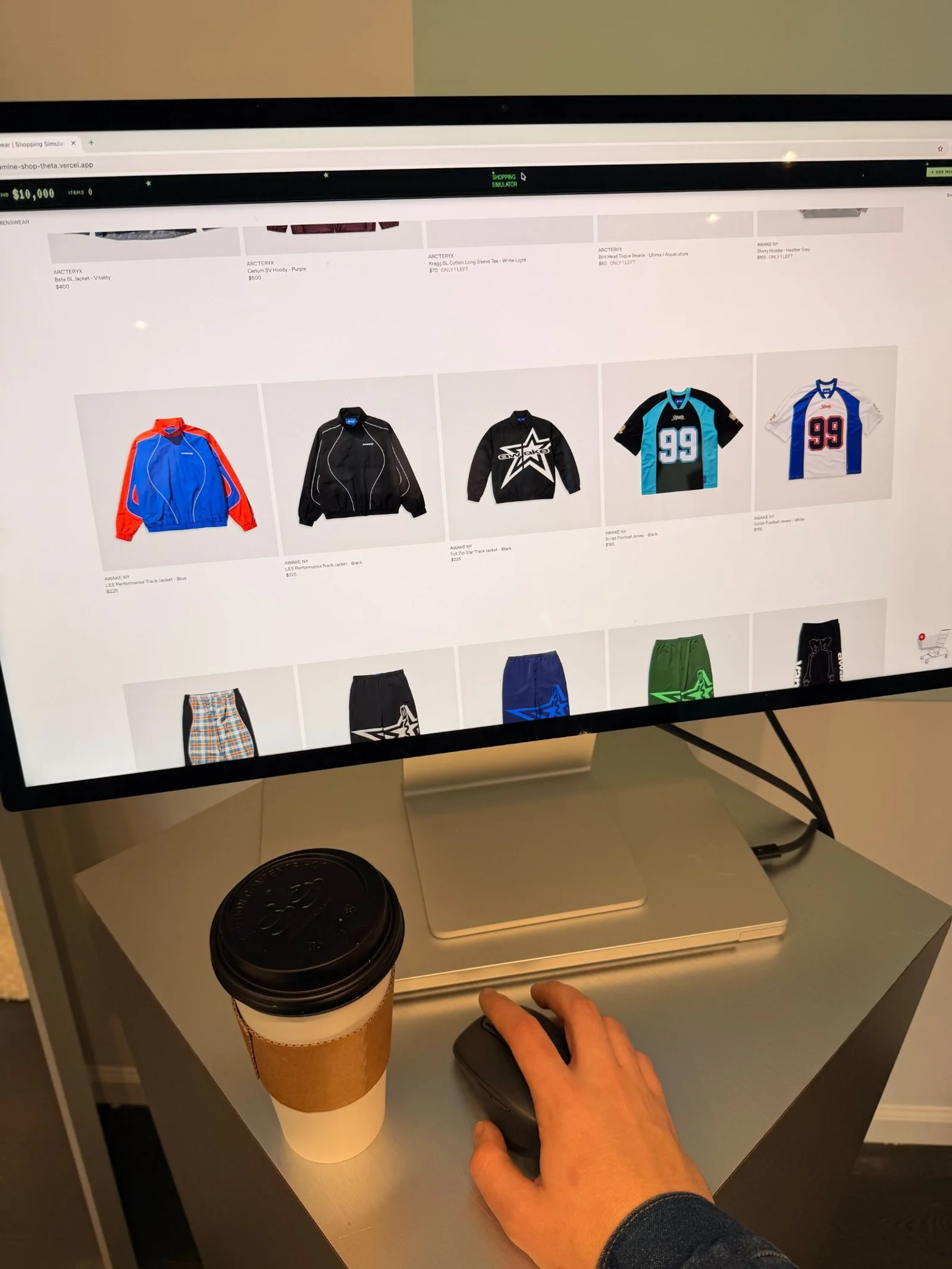
A computer by the register offers an online shopping simulator. This derails my selection further. I scroll through the hundreds of items, considering the price and quality of each one, but just keep adding them to and removing them from my cart in an endless samsaric cycle of indecision.
HOUR THREE
Maybe the candle. Maybe the scarf. I’m not just a journalist covering the event. I’m a consumer. I’ve been trusted with the enormous responsibility of supplying the world with demand. Just a few more laps. A few more times around the glass display table in the center of the room with the branded T-shirts and the flower display. The security guard looks at me like a potentially active shooter. The staff avert their eyes.
A New York Post reporter asks the security guard if anyone has been able to shoplift.
“Oh no,” he says. “If anybody tries to do that, Imma tackle ’em.”
Meanwhile, a guy grabs everything off both hangers, walks up to the counter, and says he wants to buy it all. What a goofball. What a jester. While the checkout girl reluctantly places the entire clothing inventory into a dozen checkout bags, he walks over to the sunglasses stand and puts each of them on his face.
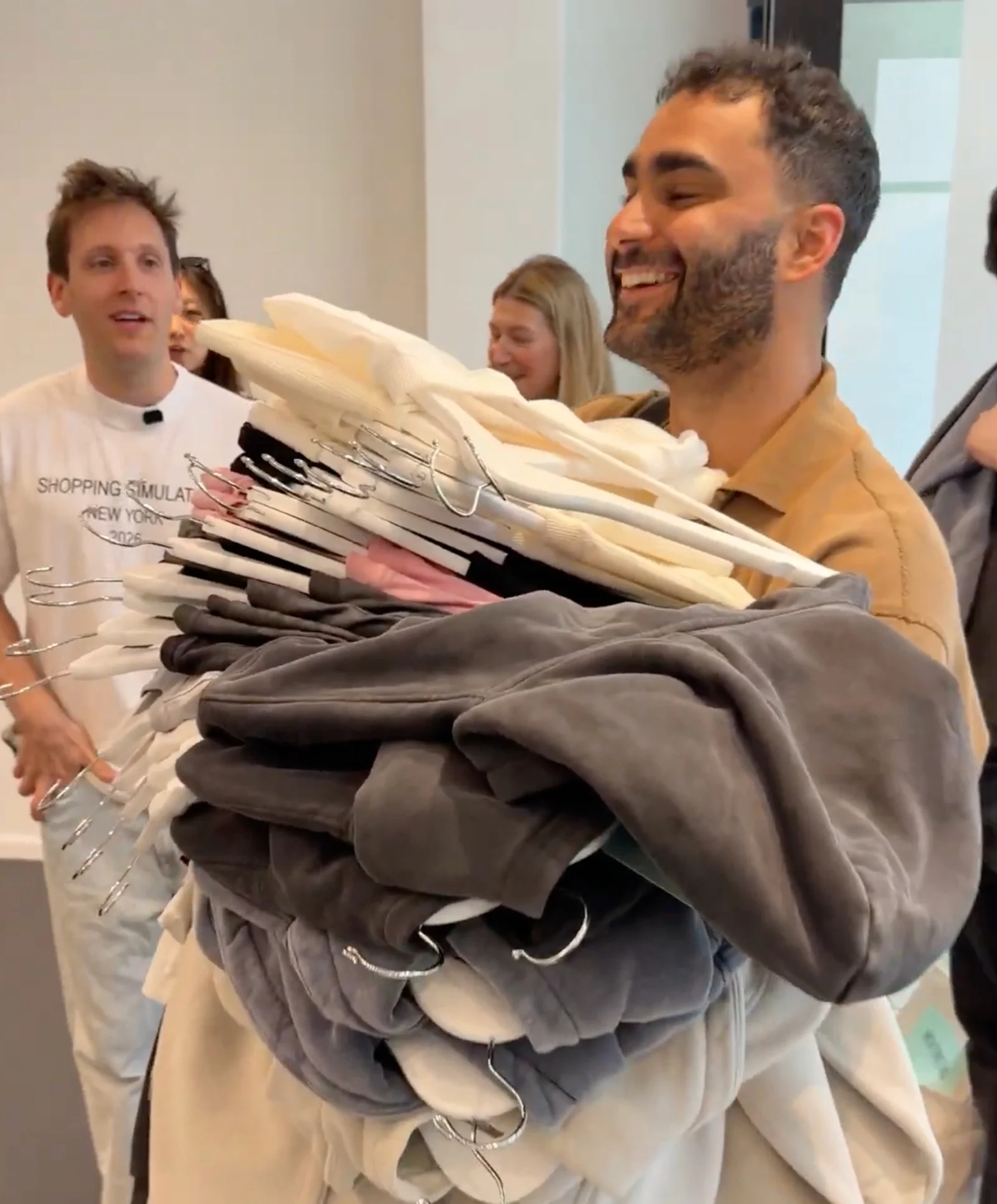
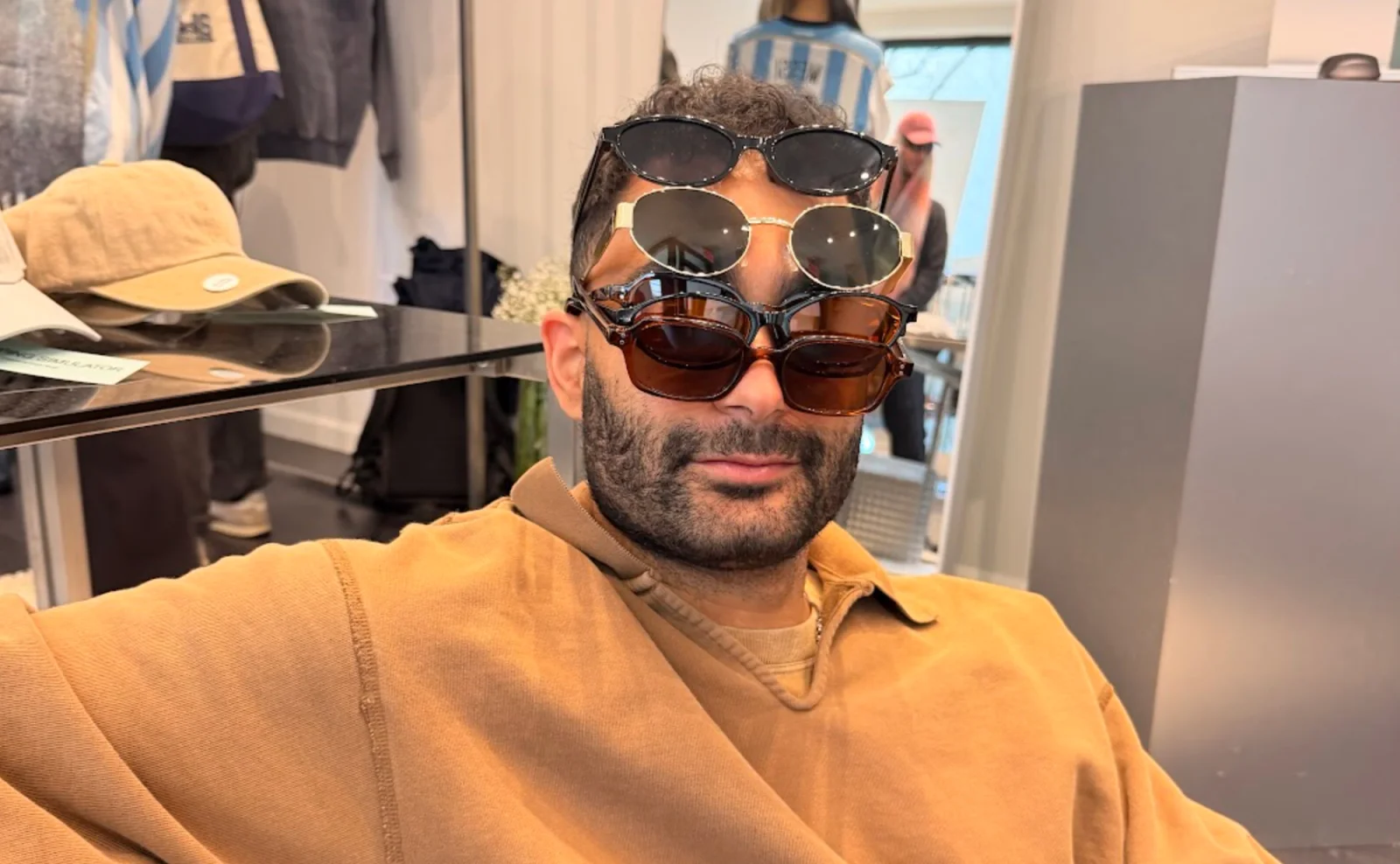
The staff prints his receipt. $2,215.00 total. He picks up all the bags, carries them three feet to the entrance, then sets them down and leaves. A seamstress in Dhaka jumps off the roof of a textile factory. The U.S. national debt reaches $40,710,362,119,823. A black hole swallows a star.
To escape the voices in my head, I walk over to a tall blond guy and a Wasian woman. He likes her, but she doesn’t like him. They ask me questions about the store, but how could I answer them? I can’t even choose what to buy.
“I guess my question is, what exactly is the social experiment?” she says. “It kind of reminds me of those fake DoorDash apps. There’s these apps where you can, like, add a bunch of food to your cart, but you don’t actually buy it. It’s just the experience of, like, browsing. It’s fun.”
“Is this your boyfriend?” I ask her.
“No,” the guy says casually.
“No,” the girl says very matter-of-factly. “I guess he can be my simulated boyfriend while we’re here in the store.”
HOUR FOUR
My feet hurt. My eyes twitch. I read the entire label of the MALIN+GOETZ cannabis-scented candle. It has a cotton wick and uses a vegetable wax blend. The faces of the Wasian staff and clientele look completely identical to me. Even more than normal. I look in the mirror. I’m Wasian as well.
“It’s like using daddy’s credit card but without having to worry about my relationship with my father,” says a fashion bro to the camera.
A livestream broadcasts the entire simulation. The competing lenses of the video crew, the security cameras, and the TikTokers converge into a hall of floor-length mirrors.
A lotion bottle hits the ground and snaps me out of psychosis.
“Oh no!” says a woman in front of the cracked dispenser.
“You break it, you buy it,” jokes Max Siegman, the architect behind the store.
I look at the poster on the wall. BRAT-inspired Arial font minimalism over a light turquoise monochromatic background reads “Presented by Danger Testing,” the company footing the bill.
“We’re building mobile apps sort of as performance art,” Max tells me. “The idea is, like, we’re here in New York, the pop-up capital of the world. Give everyone all the dopaminergic benefits of shopping without any of the financial burden. Perhaps people will come away having felt something.”
Max refuses to call this what it is: a MSCHF rip-ff marketing demo. A stunt to reel in clients. Despite his LinkedIn history as a “Founder,” “Partner,” “Investor,” and “Business Operations & Strategy Associate,” he speaks only of altruism.
The dopaminergic checkout girl gives me a better answer.
“If you’re a VC, then we’re a tech company. If you’re a brand, then we’re an art collective.”
Outside the store, a large Muslim family with a stroller stops in front of the display. They stare at the poster, brows furrowed, before continuing down Mott St.
HOUR FIVE
Deep childhood traumas are beginning to resurface. Everyone speaks in tongues. The cannabis candles are groping me. The ash-texture hoodies are holding me down while the tote bags buttfuck my mind and ass. I can hear the theme song to A Clockwork Orange as another pleather-covered Wasian takes a Polaroid with her fake receipt. I was born in this store and I lived an entire life here. A guy asks, “What’s your return policy?” and everyone laughs. They’re laughing at me. Someone’s moving all the items around just slightly when I’m not looking.
“Something something Marx… something something Baudrillard… something something simulacra,” I hear a girl say to her friend.
Time for a cig. I tell the staff I’ve almost decided what to buy and I’ll be right back. Outside, the world is larger than ever, and the sky is a million miles high. While a group of friends chats about their not-shopping experience, a guy approaches them and begs for change.
We make eye contact. He beelines over.
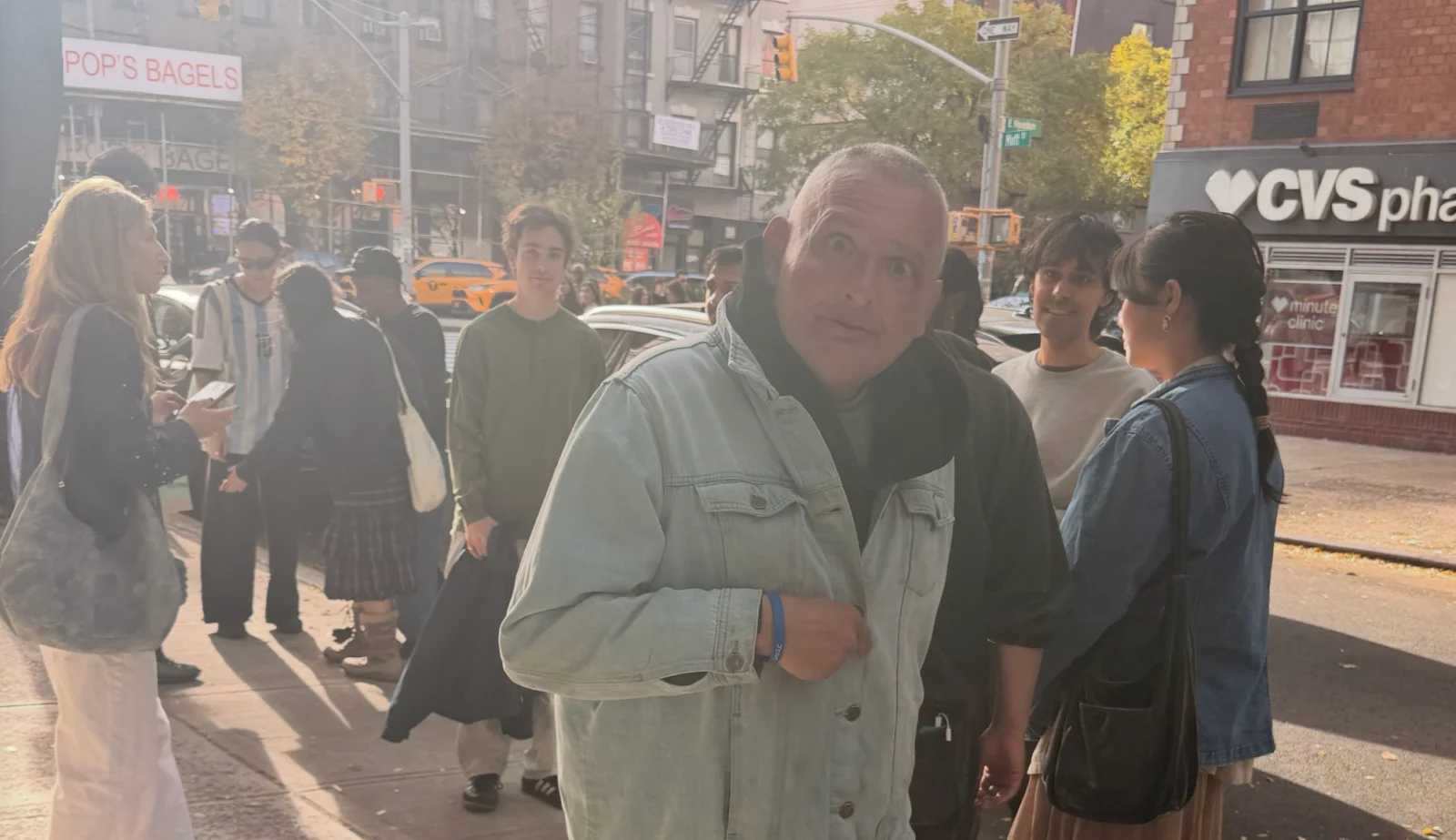
“Oh noo!” he says, pointing to my cock. “Need a zip!”
“Oh, thanks,” I say, noticing his fly’s down as well. “So do you.”
We zip together. I can smell him. Everyone is looking at us. We’re being gangstalked. He asks me for a cig. I offer him a job.
“Wanna make 10 bucks?” I ask.
“Oh yaaa!” he says.
“OK. You just gotta go in that store and buy something. They won’t charge you. It’s like a free store. Well, it’s not free. It’s just that you don’t pay. You just give the stuff back. It’s, like, fake.”
He looks at me like I’m a homeless schizophrenic.
“Just buy something. You don’t need money.”
“Okie!” he says.
I follow the nice, totally sane man into the store. The employees look concerned, but they can’t ask him to leave just for being a nonpaying customer. He tries on a hat.
“Looks great!” I say.
He walks up to the counter and starts talking to the checkout girl. After enduring a long monologue, she hands him the hat and takes his picture. His eyes go wide. He’s having a great time.
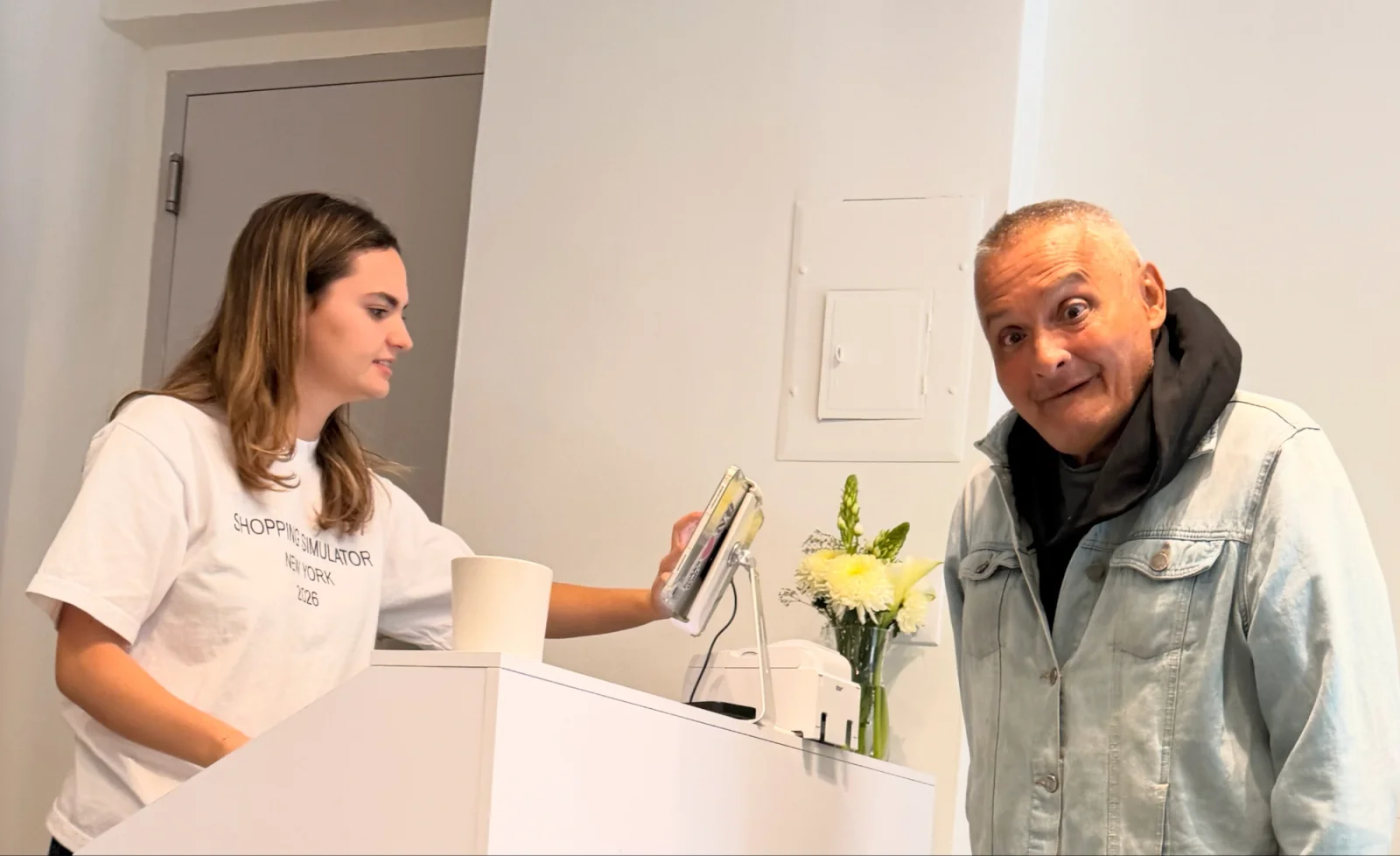
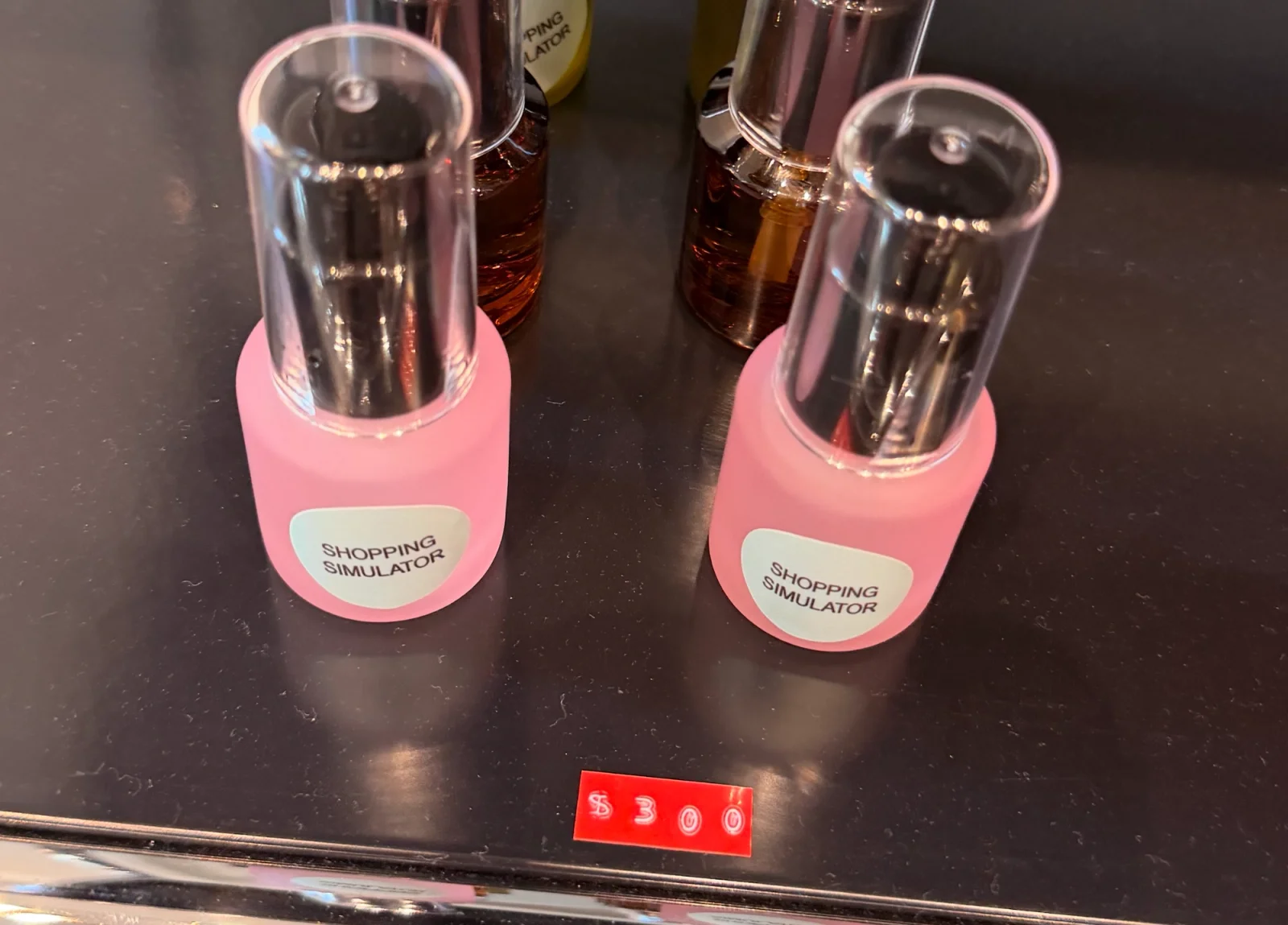
Everyone in the store is watching him. With the security guard’s attention diverted, I slide one of the $300 face sprays into my back pocket.
The homeless guy gives his hat back to the employee at the door after I explain the concept to him a few more times. Outside, I give him $10. We enjoy a final cigarette before he happily waddles away.
HOUR SIX
Indians scattered on dawn’s highway bleeding. Ghosts crowd the young child’s fragile eggshell mind. I have memorized the label of the MALIN+GOETZ candle. I’ve walked 26,975 steps. The sheer Wasianness of it all. The sweet promise of death.
The Shopping Simulator, in practice, is a mirrored Berlin Wall between America A and America B. In my six hours of confinement, I saw only two kinds of people. The ones who saw it on Instagram or X, RSVP’d to the Partiful, know about Nathan Fielder, and live in a frictionless dream world of recursive inside jokes. And the ones who exist in reality—the Chinese woman, the Muslim family, and the guy I gave 10 bucks. The punchline is instant or never lands at all.
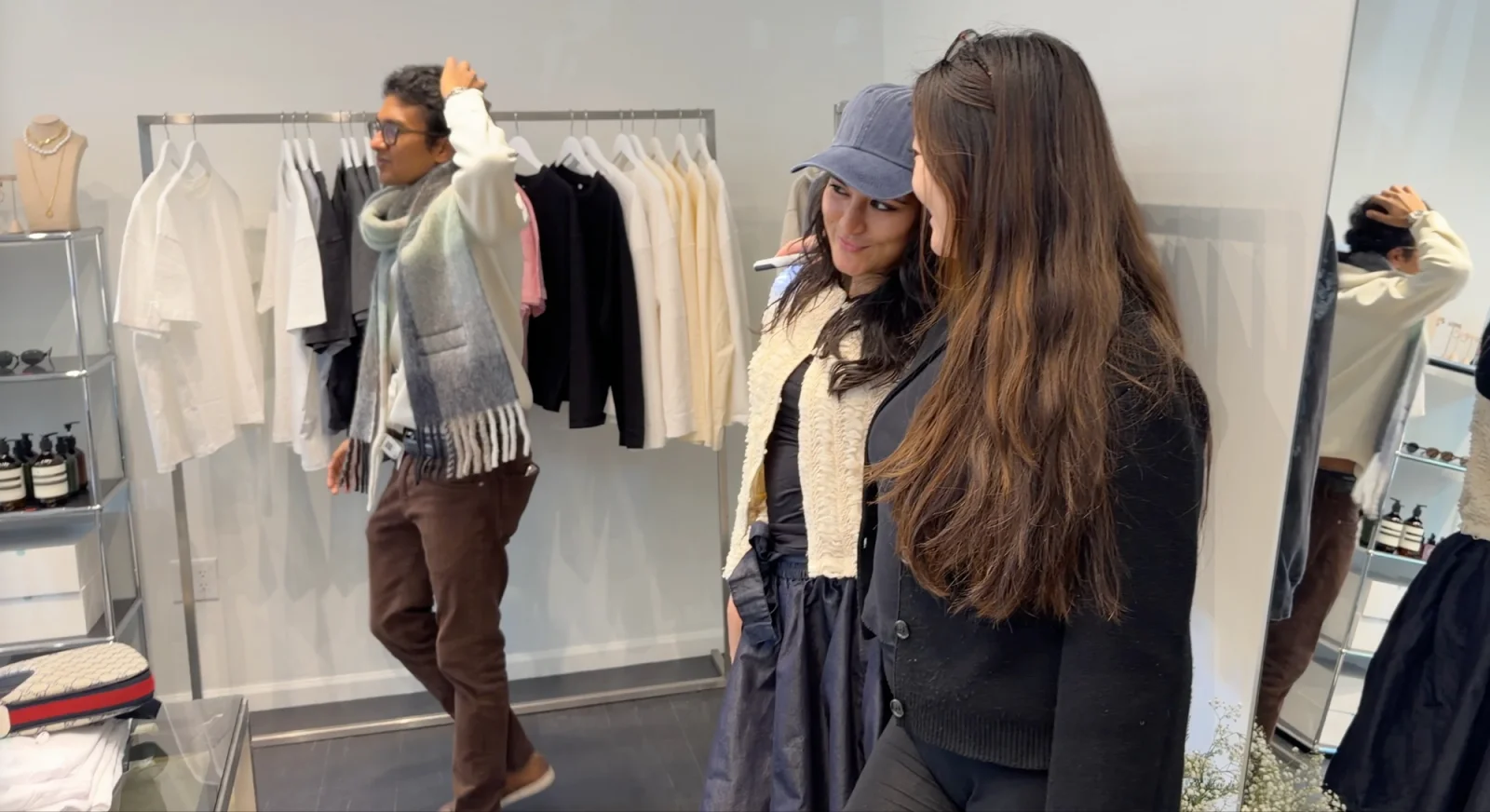
Birb walks in. Of course she does. She’s the one who threw the Peptide Party and is a fixture of the intersection between art and technology and the Holocaust that the Shopping Simulator similarly occupies.
“I want you to meet my friend,” she tells me. “She looks like a Chinese honeypot.”
“Commercial fetishization,” says the honeypot.
“Consumptive edging,” replies Birb.
Max warns that the place is closing in five.
Given the time constraint, Birb decides to run the simulation in reverse. She’s going to not buy an item first and then meet me outside to form a “mimetic line” post-closure. We’re going to see if people join for absolutely no reason. If standing in line is truly high status, it won’t matter that the store is closed.
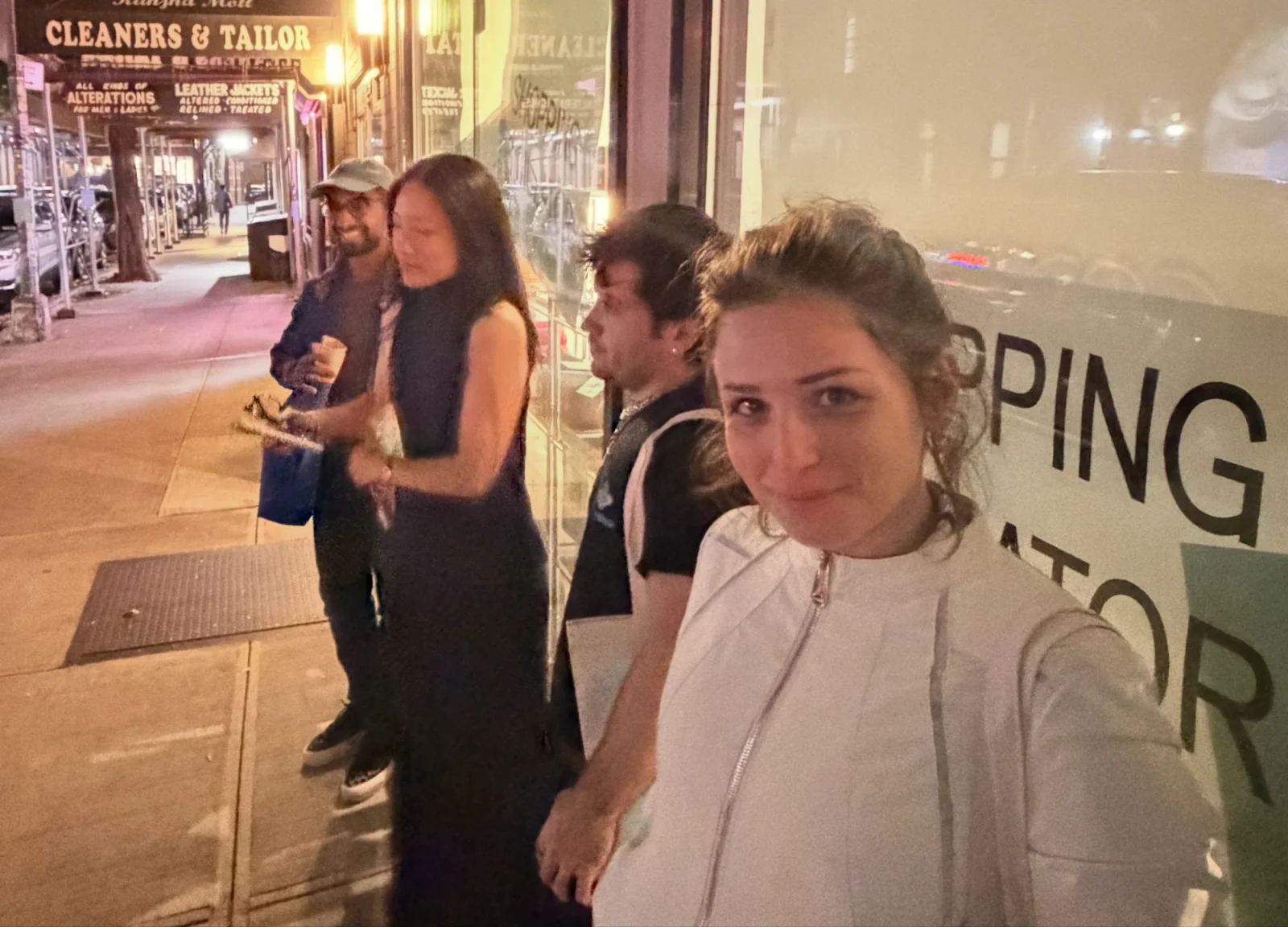
“Lately, I’ve been just waking up and going to sleep whenever I feel like it,” she tells me. “I have the freedom to do nothing with my time rather than trying to optimize or get output.”
“That’s the ultimate flex,” says her friend, also standing in line. “To just not even know what time it is at all.”
But I know exactly what time it is. Almost hour seven.
We loiter outside the now closed Shopping Simulator. Within minutes, a line forms behind us. Customers exit the store, then wait to get in. The line becomes a single-file comments section. People talk about their experiences, compare notes, and eagerly disagree.
This is the real product on sale. The interpretation. Prepackaged opinion fodder for the overeducated commentariat. The fusion of Wasian performance capitalism with Jewish psychoanalysis. Jasian dialectics. The anecdote. The take. Something something Marx… something something Baudrillard…
An image portrays reality, then corrupts reality, then masks the absence of reality, then bears no resemblance to reality at all. This is the nature of a simulacrum. The absence of an original and the presence of pure simulation. But that’s not what this is. This is something weirder. A secret fifth thing where the explicit aim of engineering a simulacrum ends up folding in on itself and creating something new. Something with a different set of rules.
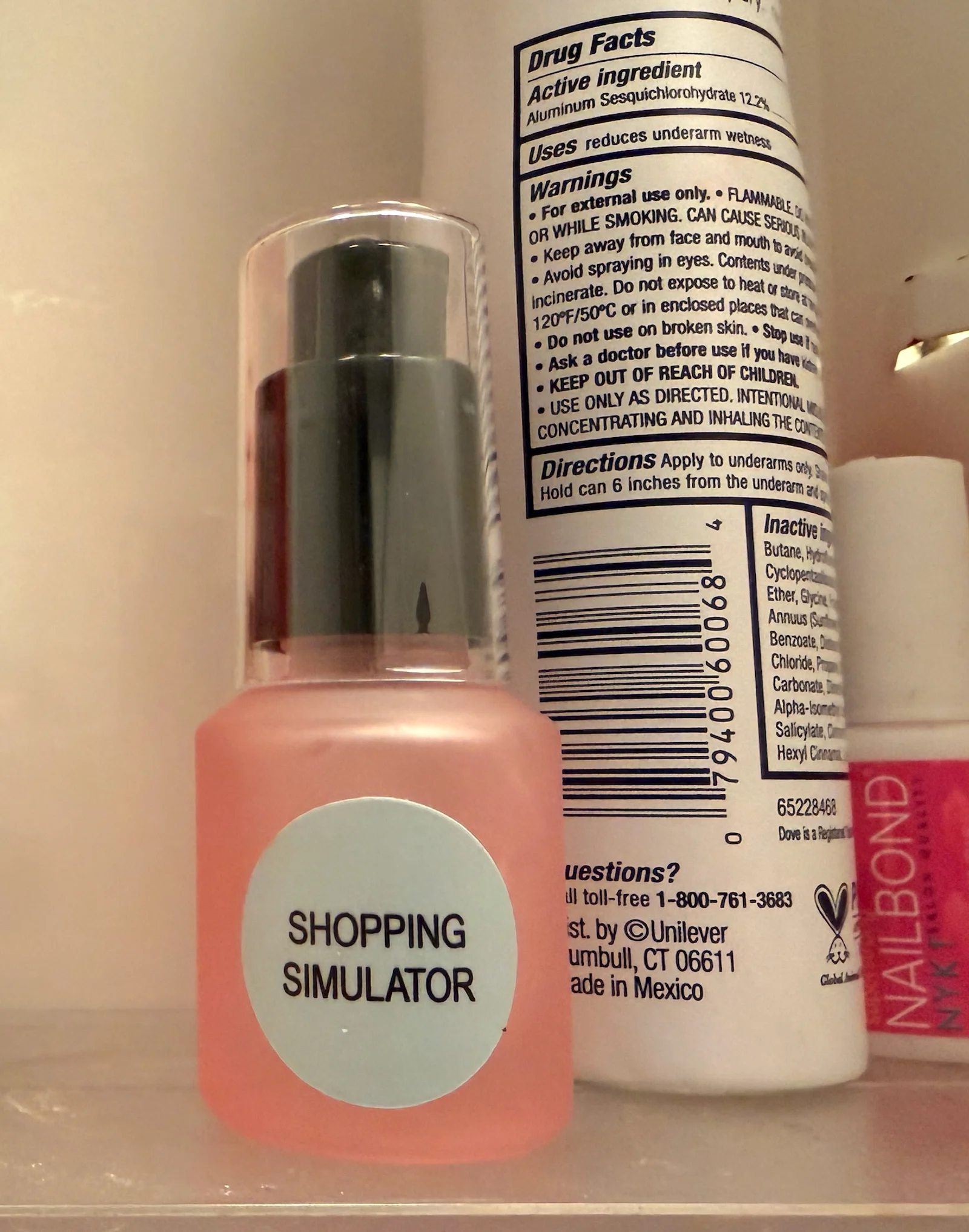
I get home, place my shoplifted face spray in the medicine cabinet, and swing the mirror shut.